Astral projection demons are the hostile beings people report meeting during out-of-body experiences, from the things that climbed onto Robert Monroe’s back to the astral parasites in older occult books. Here’s what those reports actually say, and how people try to protect themselves.

People who try to leave their bodies don’t always come back talking about light and love. A lot of them come back talking about something that was waiting for them.
That’s the part of the astral projection story that doesn’t make it onto inspirational posters, and it’s been in the books for a long time. Robert Monroe felt something climb onto his back in broad daylight. Older occult writers warned about larvae and thought-forms that stick to you. Folklore all over the world has a figure that sits on your chest in the night and will not let you move.
Search around today and you’ll find the same questions under a few different names: astral projection demons, dark entities during an OBE, astral parasites. So let’s hop right into it, shall we?
Leaving the Body, On Purpose or Not
An out-of-body experience, or OBE, is pretty much what it sounds like. You feel your awareness slip out of the physical body and look at the room, or somewhere else, from a different place. Occultists have called that “astral projection” for a long time, and people use the two phrases interchangeably now.

Robert A. Monroe was a radio broadcasting executive who started having these experiences in 1958, without asking for them. In 1971 he published Journeys Out of the Body, the book that pretty much put the phrase “out-of-body experience” into everyday paranormal talk. That same year he founded the Monroe Institute in Virginia.
Monroe divided what he found into three “Locales.” Locale I was the ordinary physical world, the “Here-Now.” Locale II was a non-material region he said was ruled by thought. “As you think, so you are,” he wrote. Locale III was stranger still, another physical-matter world that wasn’t quite this one. He was not the first person to try to map this.
In 1929, a young American named Sylvan Muldoon teamed up with the psychical researcher Hereward Carrington on The Projection of the Astral Body. Muldoon traced his first projection to age twelve, in 1915, at a Spiritualist camp in Clinton, Iowa.
He said he woke into a “powerless, silent, dark and feelingless condition,” then found himself floating above the bed. “There were two of me!” he wrote. He saw what he called an “elastic-like cable” running from the forehead of the body on the bed to the back of the head of the one standing up. He thought he was dying. Then the cord yanked him back, and every muscle in the physical body jerked. People still talk about that silver cord like it’s a lifeline.
A few years earlier, an English writer named Hugh G. Callaway, publishing as Oliver Fox, had already put his own accounts in The Occult Review in 1920, later collected in the 1939 book Astral Projection. According to Carrington’s summary of those articles, Fox’s first conscious projection didn’t last long. A kind of panic set in, he heard a strange “cerebral click,” and he snapped back into a body that would not move at first.

Fox also listed possible dangers, among them obsession. The (quote on quote) “experts” would probably wave that off. The people who have actually been out there tend not to.
Astral Projection Demons: The Things That Climb On You
Monroe did not write like a mystic. He wrote like a guy taking notes, which is one reason his scarier episodes get under my skin.
On the morning of April 18, 1960, he was on the couch in bright daylight, able to see the clock, when he lifted a little way out of his body and watched a small figure, about three feet tall, walk up “like a boy swinging onto his favorite horse” and climb onto his back. He could see the leg hanging over him, and he could feel it. He dropped back into the physical and started writing. If that was a hallucination, he said, it was a very real one, with two senses reporting.

Ten days later it happened again. “I started out carefully—and felt something climb on my back!” He grabbed what felt like warm, rubbery flesh, pulled, and it stretched. Then a second one climbed on. He yanked them both off, floated into the middle of the office holding one in each hand, and looked at them. “Each turned into a good facsimile of one of my two daughters,” he wrote.
He said he knew immediately that this was “a deliberate camouflage on their parts to create emotional confusion” and to use his love for his kids against him. Crossing himself did nothing. The Lord’s Prayer did nothing. He screamed for help. A man in a dark robe eventually walked up, picked the two beings up, and they went limp in his arms. When Monroe sat up, the room was empty.

The next day he was still turning it over, wondering if it was a dream laid over waking consciousness, or thought-entities he had somehow made himself. “I still don’t know what they are,” he wrote.
The encounters didn’t stop. In August 1960, just as he was getting underway, several “things” attached themselves to him in the dark. “They seemed almost like small fish, about eight or ten inches long, and they attached themselves like the parasitic ‘sucker’ fish in the ocean.” He pulled them off. They came back. Later he decided there was almost a layer of these “suckers,” and that if he stayed still they drifted away, while fast movement brought them clustering back. Bait in an ocean of fish, he said.

That layer is the passage people quote when they talk about astral projection demons. Monroe wrote that in trips to Locale II, you often have to pass through a region close to ordinary waking life. “It is a gray-black hungry ocean where the slightest motion attracts nibbling and tormenting beings.” If you move slowly and don’t react, you get through. If you fight, more of them rush in.
“Could this be the borders of hell?” he asked. He said it would be easy to come away thinking demons and devils lived there. “They seem subhuman, yet have an evident ability to act and think independently. Who and what are they? I don’t know.”
He also recorded a hotel-room fight in July 1960, with his wife asleep beside him, against something he couldn’t see that “fought at the animal level” and seemed “about four feet long, like a large dog.” Only after he hurled it out the window did he realize his hand was through the closed glass.
Dark entities during an OBE were not a side note in Monroe’s work. They were sitting right in the middle of it.

Astral Parasites and the Older Books
People online reach for the phrase “astral parasites” a lot, and I get why. Monroe’s sucker-fish layer sounds like it. But the idea is older than the internet by a century or more, even if the wording has shifted.
In the mid-1800s, the French occultist Éliphas Lévi wrote about “larvae” in Dogme et Rituel de la Haute Magie, translated by A. E. Waite in 1896 as Transcendental Magic. Lévi said the astral light “brings to our evocations and to the conjurations of goetic magic such swarms of larvae and phantoms.” Talking later about the aerial bodies left after death, he added, “We enter into connection with larvae, with dead or perishing substances, by this operation.”
C. W. Leadbeater, in the 1895 Theosophical manual The Astral Plane, described leftover shells, “vitalized shells,” and what he called artificial elementals. Human thought, he said, seizes the plastic “elemental essence” around us “and moulds it instantly into a living being of appropriate form.” A person who dwells on one desire, he wrote, may form “an astral attendant which, constantly fed by fresh thought, may haunt him for years.”
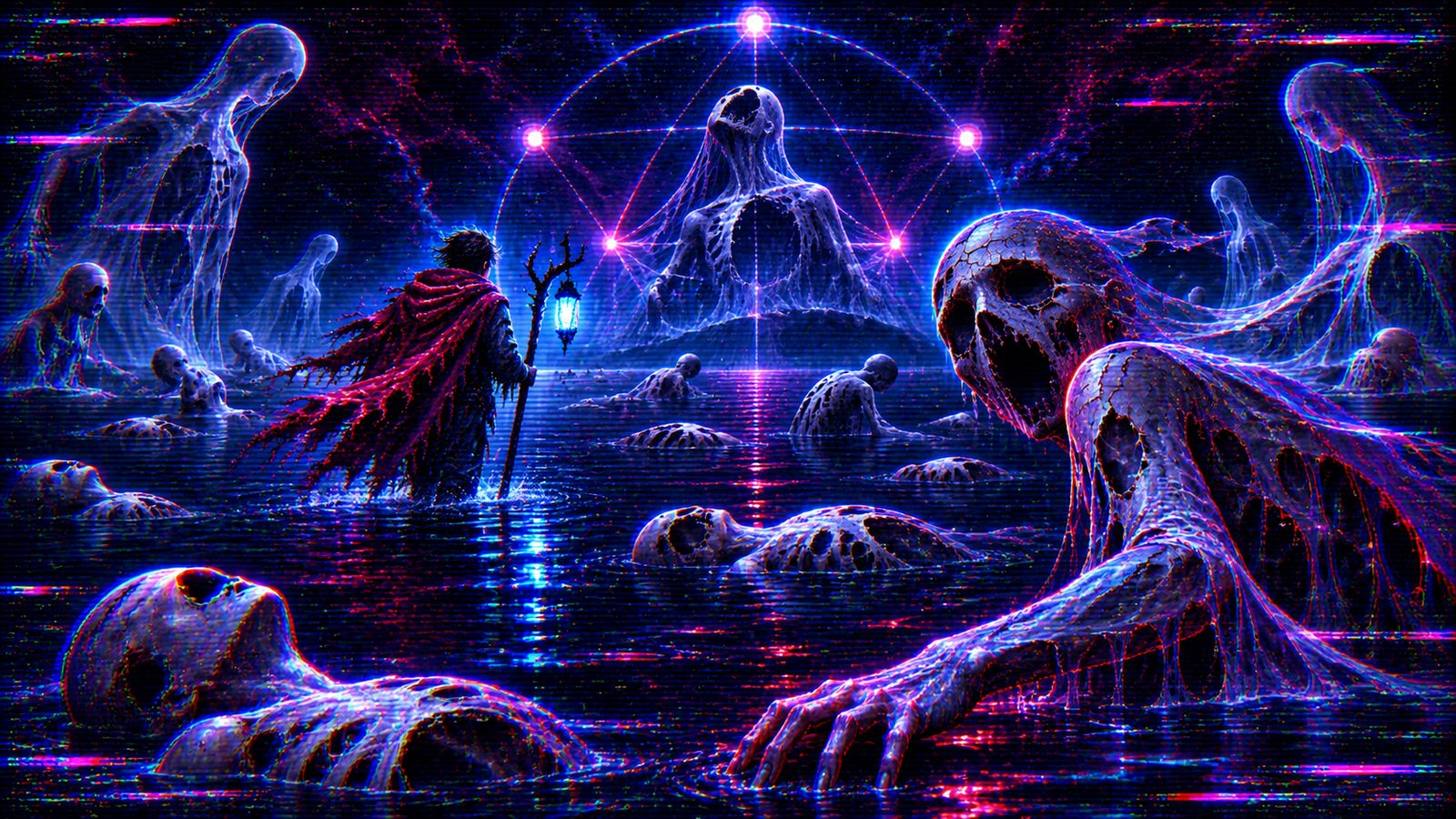
The nastier ones do not just hover. Artificial elementals that escape control, he said, seek to prolong their lives “by feeding like vampires upon the vitality of human beings.” He also classed certain leftovers of the dead as “minor vampires” that drain vitality from anyone they can influence. That is pretty much the astral parasite idea, just in Victorian Theosophical clothing.
In 1901, Leadbeater and Annie Besant even tried to paint what thoughts look like. Their book Thought-Forms is full of weird, vividly colored plates, including one labeled “Sudden Fright.”
Dion Fortune, in Psychic Self-Defence (1930), was a lot more practical about it. She distinguished ordinary thought-forms from “artificial elementals,” which, once made, “possess a distinct and independent life of their own.” She also used the word parasitism. In close relationships where one person is being drained, she wrote, the cases “may more justly be described as parasitism than vampirism. Such psychic parasitism is exceedingly common.” She reserved “vampirism” for deliberate attack.
Fortune said the opening move of almost any occult attack is the same, whether the thing coming at you is “a discarnate entity,” “a demon from the Pit,” or something closer to home. “Until the aura is pierced, there can be no entrance to the soul, and the aura is always pierced from within by the response of fear or desire going out towards the attacking entity.” If you can hold that reaction, she said, the edge of the aura stays impenetrable.
I don’t know how you prove any of that in a lab. I do know Fortune, Leadbeater, Lévi, and Monroe are all, in their own ways, describing hangers-on. Things that feed on you and get stronger if you panic.
The Old Hag, Shadow People, and the Thing on Your Chest
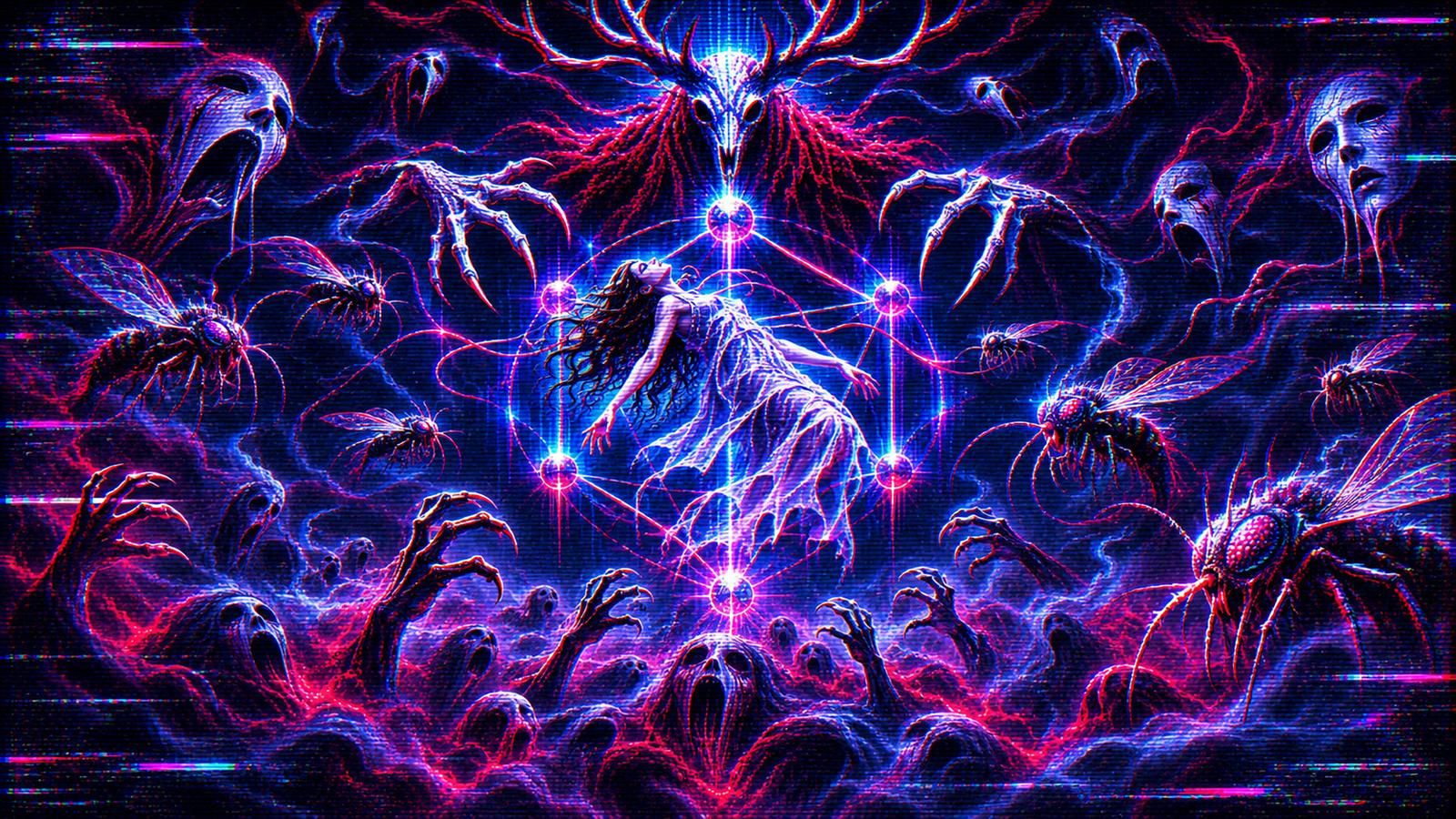
Folklorist David J. Hufford spent years collecting accounts of what people in Newfoundland call the Old Hag. His 1982 book, The Terror That Comes in the Night, is still the one to read on this. The pattern keeps showing up the same way. You feel awake. You can see the room as it really is. You cannot move. And you are terrified. Often there’s a sense of a presence, pressure on the chest, trouble breathing, or a figure in the room. Sometimes that figure is an old woman. Sometimes it isn’t clearly anything.
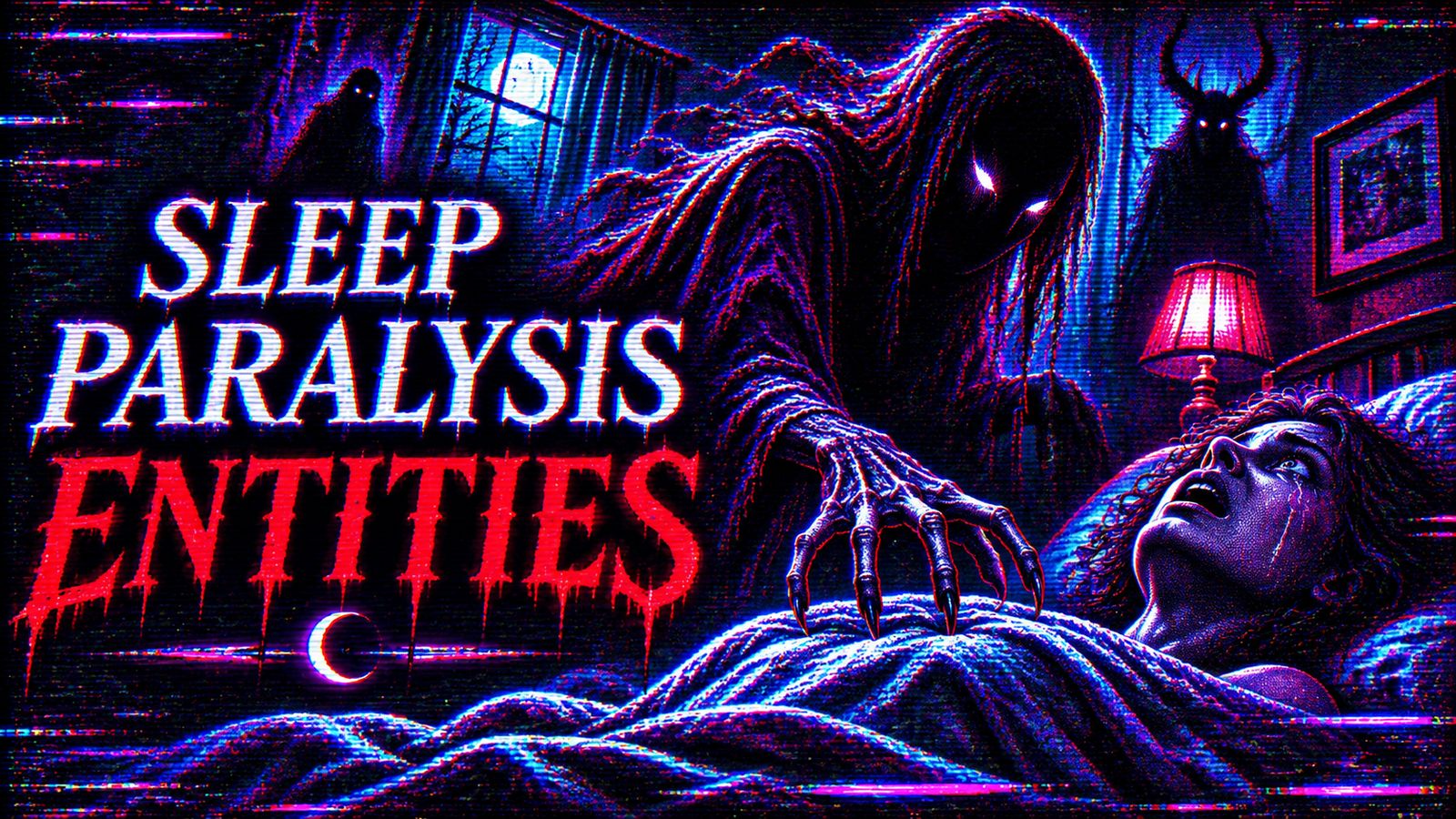
Hufford estimated that about 15 percent of people have an experience like this at some point. He also found it in people who had never heard of the Old Hag tradition at all. That mattered to him. His argument was that the experience comes first, and the folklore grows up around it, not the other way around.
The mainstream herd is pretty sure they already solved this one. The American Academy of Sleep Medicine describes sleep paralysis as a brief inability to move or speak while falling asleep or waking, sometimes with vivid, frightening hallucinations. Fair enough. That may describe the state the body is in. It does not really explain why so many people, in so many places, report a hostile presence, a weight on the chest, and a figure standing in the room. I’ve written about that same pattern, and the older names for it, in The Dream Demons that inspired Freddy Krueger.
Hufford looked at the sleep research. He still took the witnesses seriously, and he still treated the Old Hag as a real experience, not a fairy tale people talked themselves into.
A lot of people today call the dark figures in these episodes shadow people. The name is newer than the experience. The older words were nightmare, mare, hag, incubus. Germanic folklore has the Alp, another night visitor that sits on the chest and makes it hard to breathe. Fuseli painted it in 1781, a woman thrown back on the bed, a squat thing crouched on her chest, a horse’s head coming in through the curtains. You can hang that painting in a museum and call it Romanticism. Hang it next to a modern OBE report and you may feel a little less sure.

Sleep paralysis, the Old Hag, and those early projection stages Muldoon and Fox described all involve a body that will not move, a sense of being awake, and, pretty often, the feeling that you are not alone in the room. Monroe’s early projections started with vibrations and a kind of paralysis too. I don’t know if that makes them all the same thing. After you read enough of these accounts, though, “just a dream” starts to feel pretty thin.
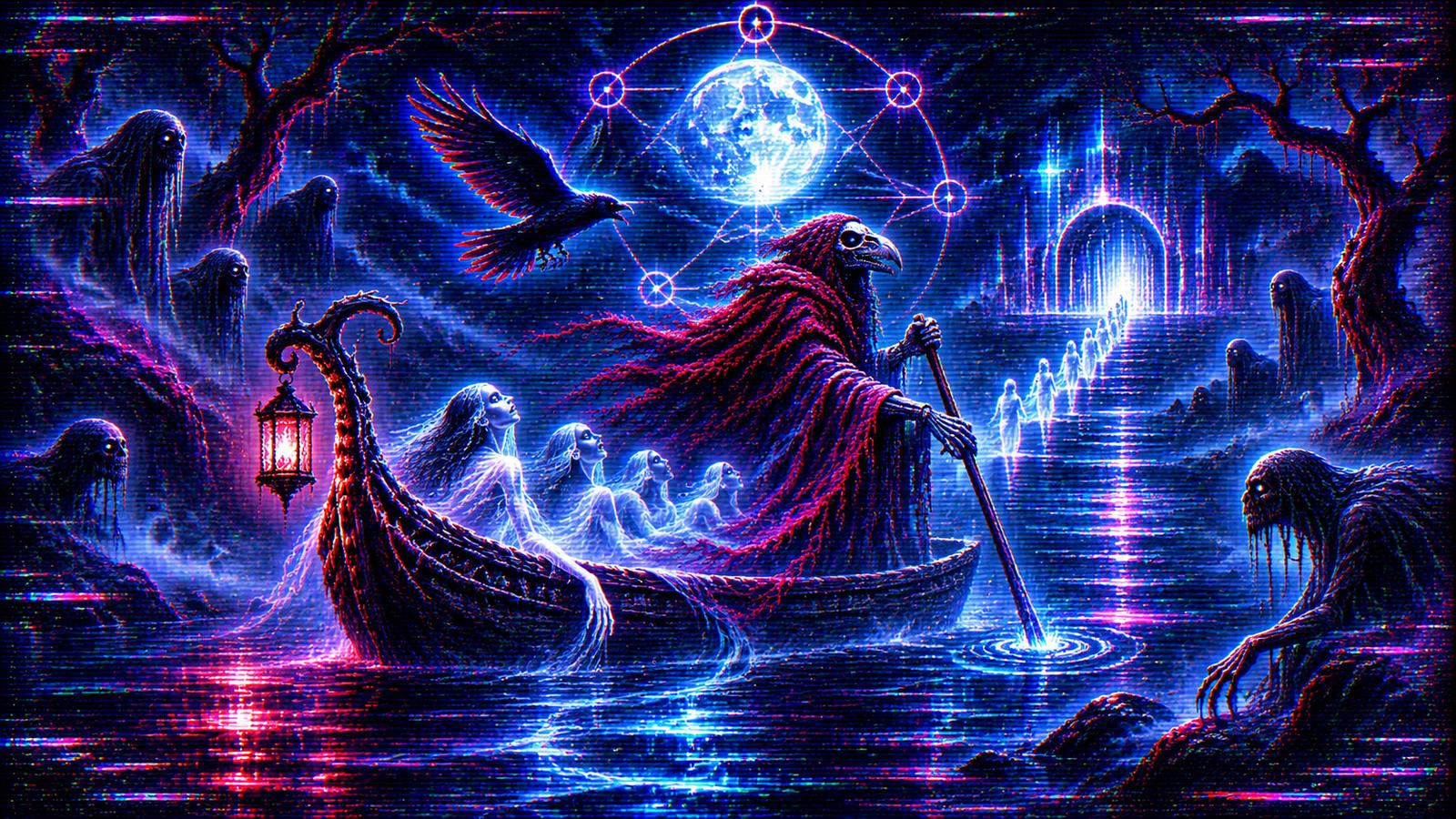
Far too many people have woken up unable to move, with something sitting on them, for me to shrug it off.
Holding the Line
So what do people actually do when this happens?

Monroe learned by terrified trial and error. The method that finally got him through the hungry ocean was almost insultingly simple. He learned to move slowly, not react, and wait. When he stayed still in the sucker-fish layer, the things detached and drifted off. When he thrashed, more of them came.
Traditional gestures did not save him in that office encounter, which I find weirdly important. He crossed himself. He said the Lord’s Prayer. The little beings were, in his words, amused. What seemed to help, a little, was focused thought, and later, simply not feeding them his panic. “As you think, so you are” cuts both ways out there.
Fortune’s advice points in the same direction. Do not answer with fear or desire. She also recommended a magic circle, saying a banishing by itself is less effective than a banishing done inside a circle, because the circle keeps what you’ve pushed away from flowing right back in. The version she was willing to print in Psychic Self-Defence is basically visualization plus will. You steady yourself, imagine a sword of power, and draw a circle of pale golden light until the ring holds. Fortune didn’t pretend that’s a guaranteed shield. She said extraordinary conditions need someone with experience. Still, the lore keeps coming back to this. You set an intention and picture a boundary, and you try not to panic, because panic seems to feed whatever is there.
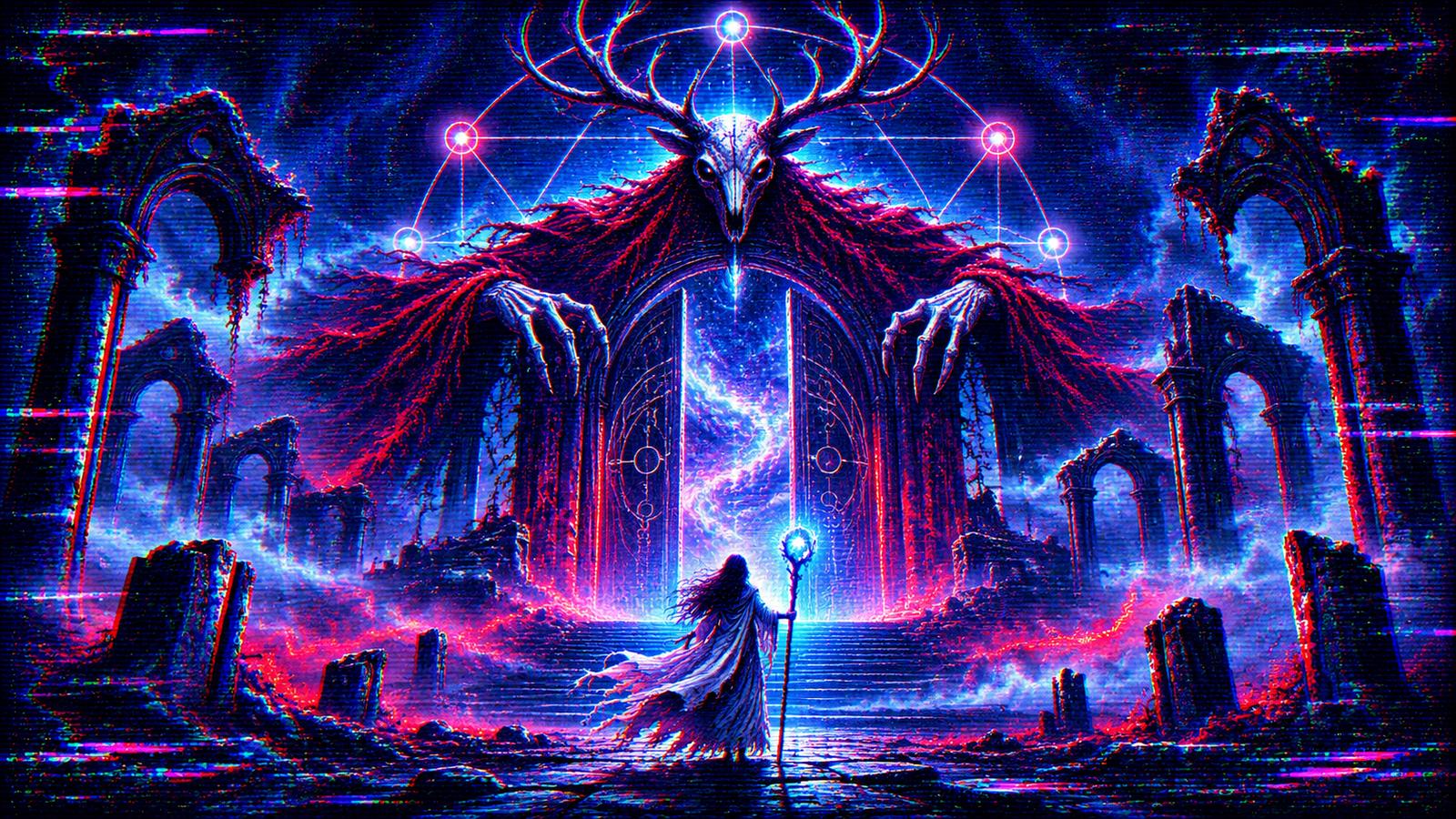
In any case, nobody I trust in this subject talks about wandering out of the body like it’s a tourist trip with no weather.
So… What Are These Things?
I am not even going to pretend I have a tidy answer for you.
They might be independent beings living close to the physical world, which is what Monroe wondered when he asked if he’d brushed the borders of hell. They might be thought-forms we build and then cannot control, which is what Leadbeater and Fortune laid out, and what Monroe himself considered after the things on his back put on his daughters’ faces. They might be the leftover “shells” and larvae of the older books, or even the same presence behind the Old Hag and the shadow people.
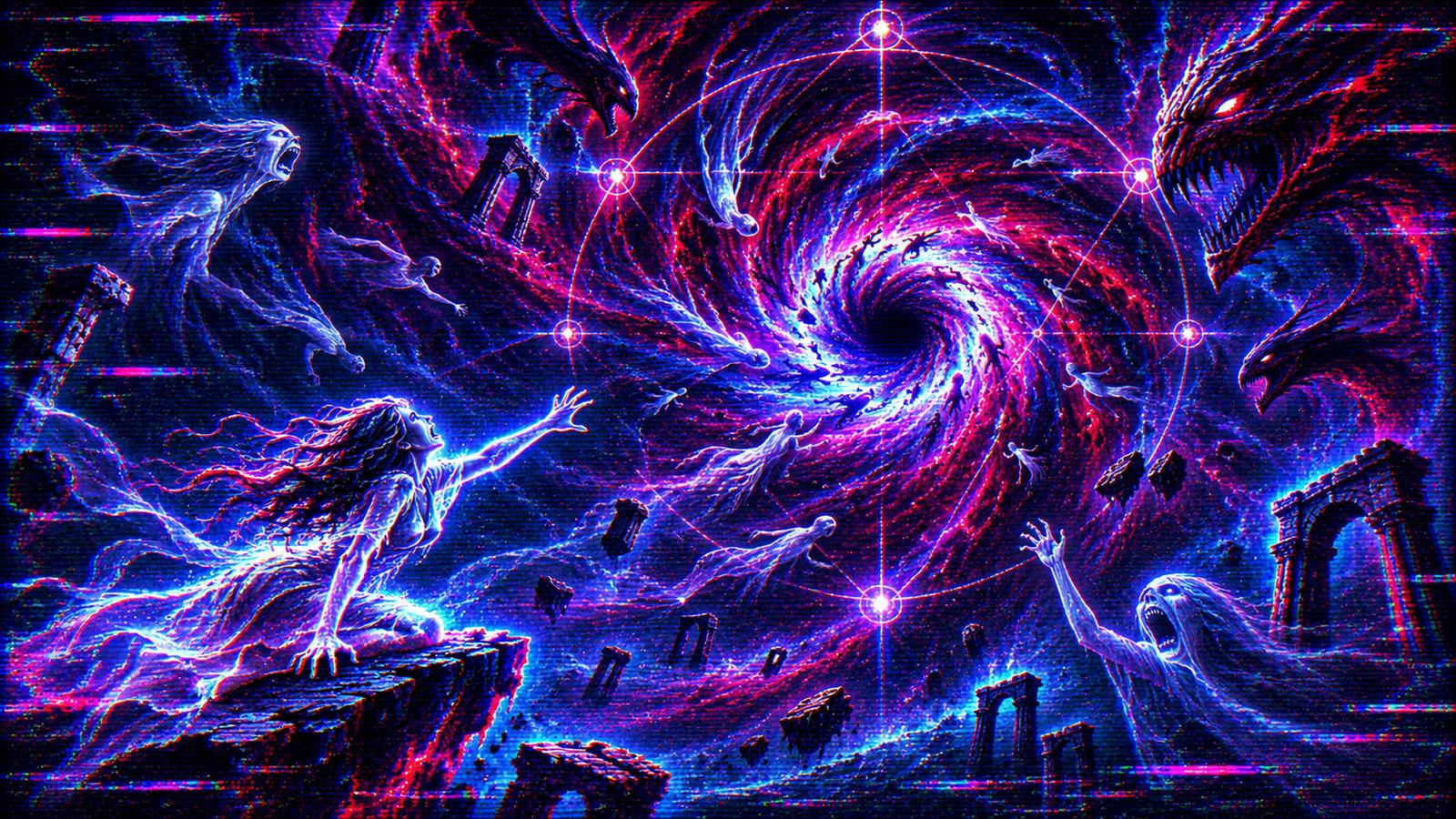
Or some mix of those, which, to say the least, would be a wild thought to fall asleep with. What I keep coming back to is how stubborn the reports are. The centuries change, and the vocabulary changes, but the clinging and the pressure, and that sense of something hungry just on the other side of waking, stay REALLY consistent. That is a lot of smoke for there to be no fire.
If you’ve had an experience like this, you’re not the first, and you’re not crazy for taking it seriously. What do you think climbed onto Monroe’s back? Sleep well tonight. Or, you know, try.
And if you want more high strangeness like this, come listen to Cryptic Chronicles, and visit crypticchronicles.com.
FAQ
People use that phrase for hostile or subhuman beings reported during astral projection and out-of-body experiences. Robert Monroe described a “gray-black hungry ocean” close to ordinary waking life, full of “nibbling and tormenting beings.” He said most people would come away thinking of demons and devils, and he did not claim to know what they actually were.
They’re the unwelcome company some people report once they feel they’ve left the body. In Monroe’s notes that includes figures that climbed on his back, a layer of clinging “sucker” fish, and at least one animal-like attacker in a hotel room. Older occult writers talked about similar hangers-on as larvae, shells, and artificial elementals.
“Astral parasites” is the modern label for entities or thought-forms said to cling to a person and drain vitality. C. W. Leadbeater wrote about escaped elementals and “minor vampires” feeding on human vitality. Dion Fortune called unconscious draining “psychic parasitism” and said it was “exceedingly common.” Monroe’s clinging “sucker” fish belong in the same conversation.
It depends who you ask. Mainstream sleep medicine describes a brief paralysis while falling asleep or waking, sometimes with frightening hallucinations. Folklorist David Hufford documented the Old Hag as a consistent experience of wakefulness, paralysis, fear, and often a presence or figure, including in people who had never heard the folklore. Many people now call those figures shadow people. The bodily state may overlap. The presence itself is the part that still hangs in the air.
In the lore, panic is considered an opening. Monroe got through the worst layer by moving slowly and not reacting. Fortune said the aura is pierced from within by fear or desire, and she recommended a banishing done inside a visualized circle of light. Intention and a steady mind matter more than a fancy ritual.
Sources
- Robert A. Monroe, Journeys Out of the Body (1971). The Monroe Institute
- The Monroe Institute, “History” and “Out-of-Body Myths, Legends & Facts”
- Sylvan Muldoon and Hereward Carrington, The Projection of the Astral Body (1929). Summary and quoted passages in the Psi Encyclopedia entry on Sylvan J. Muldoon
- Oliver Fox (Hugh G. Callaway), articles in The Occult Review (1920), later collected in Astral Projection (1939). Carrington’s summary appears in Muldoon and Carrington, 1929.
- Éliphas Lévi, Dogme et Rituel de la Haute Magie, trans. A. E. Waite as Transcendental Magic (1896)
- C. W. Leadbeater, The Astral Plane (1895)
- Annie Besant and C. W. Leadbeater, Thought-Forms (1901)
- Dion Fortune, Psychic Self-Defence (1930)
- David J. Hufford, The Terror That Comes in the Night: An Experience-Centered Study of Supernatural Assault Traditions (University of Pennsylvania Press, 1982). Publisher page
- American Academy of Sleep Medicine, “Sleep Paralysis”



0 Comments