Forget the chubby cherubs on a greeting card. The angels of the oldest texts have six wings, burn like fire, and in at least one story they come down to Earth and wreck everything.
Angels Are Way Weirder Than You Think
Picture an angel. You probably got a pretty person in white robes, big feathery wings, a halo, and a calm look on their face. Centuries of church art burned that image into our heads.
The ancient texts tell a very different story.
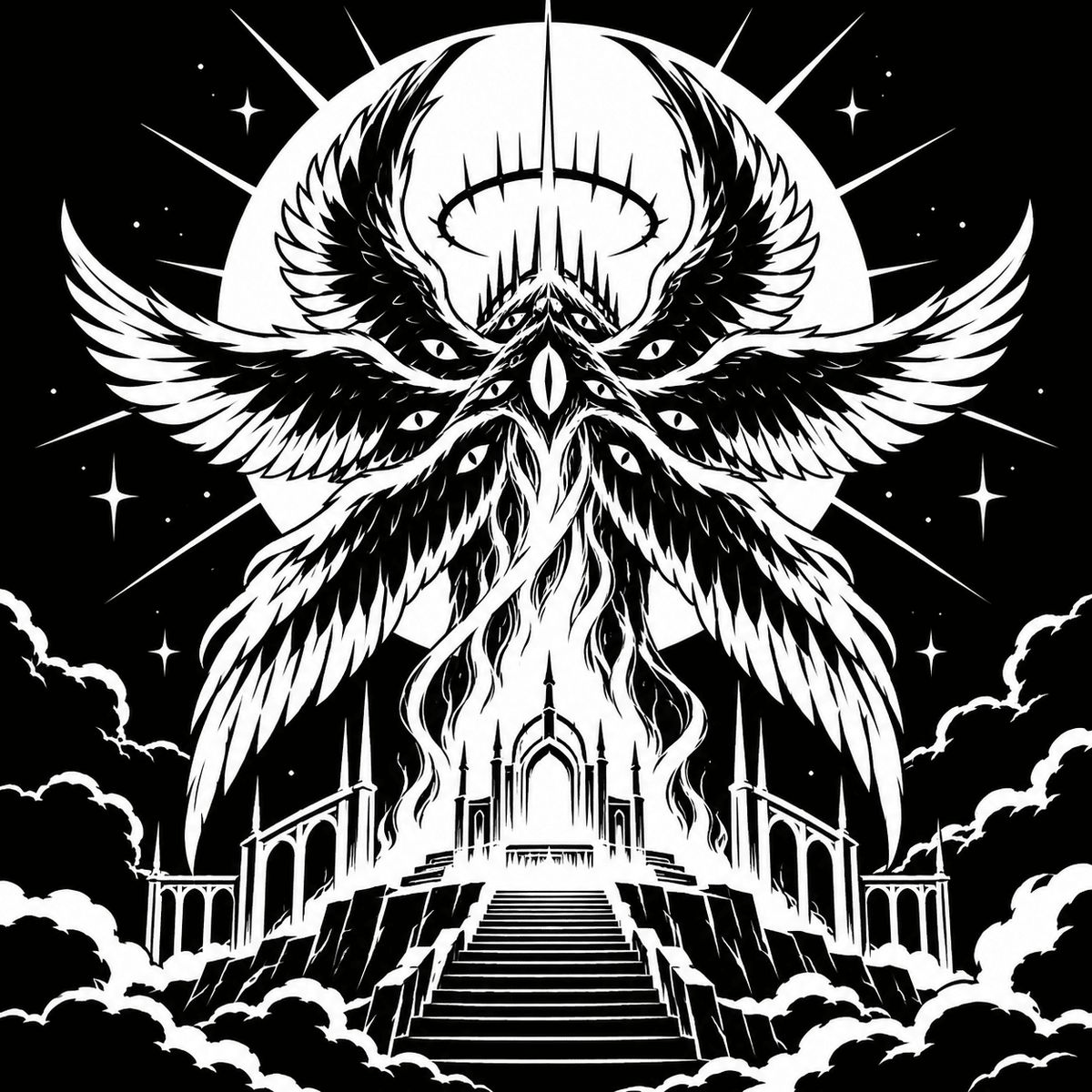
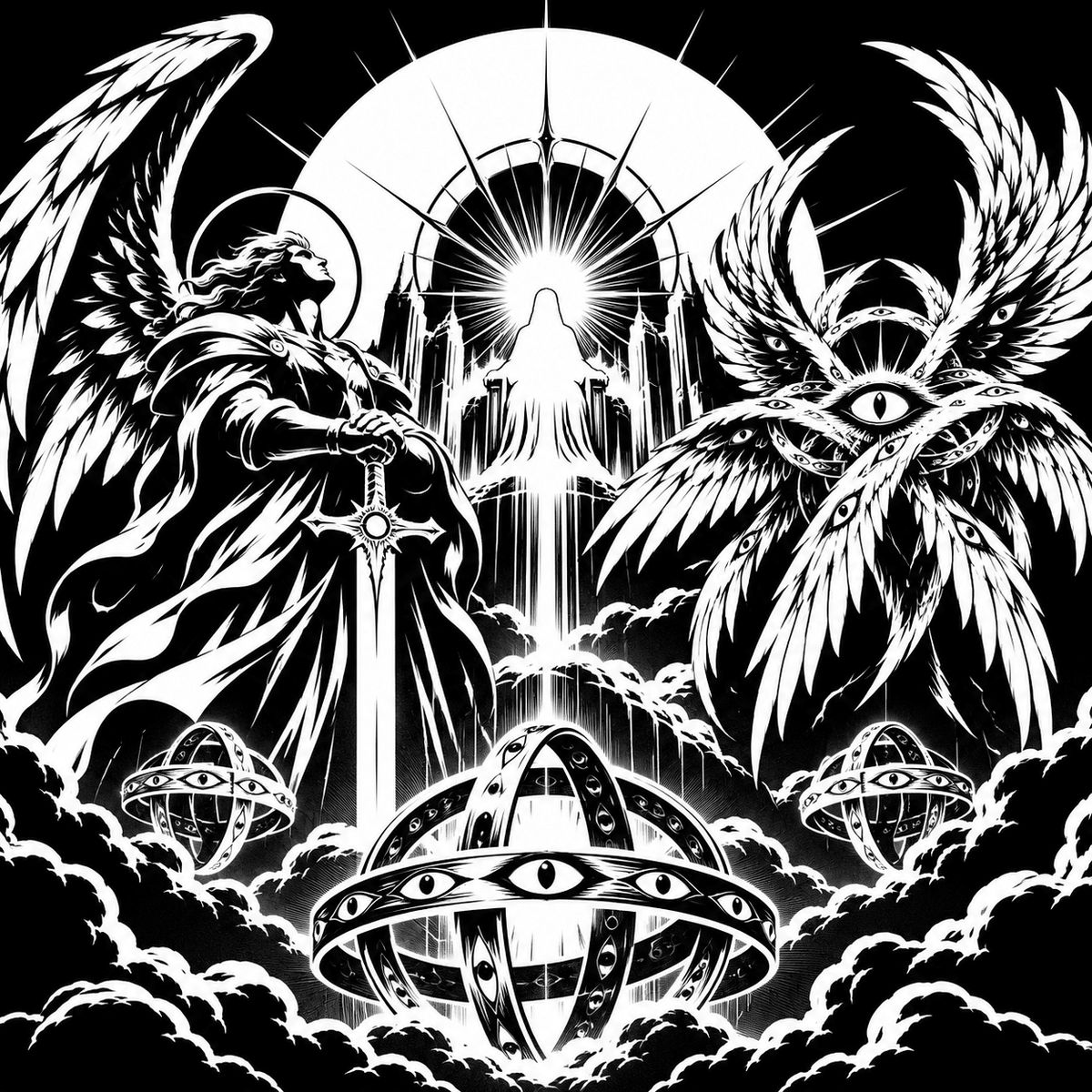
Isaiah sees Seraphim with six wings: two covering their faces, two covering their feet, two for flying, all calling out “Holy, holy, holy” (Isaiah 6:2–3). Ezekiel sees living creatures wrapped in fire, next to giant wheels inside wheels, and the rims are full of eyes (Ezekiel 1). Elsewhere angels show up looking like ordinary guys, or like warriors, and the first thing they usually say is “don’t be afraid,” which tells you a lot.
These aren’t Renaissance babysitters. In Jewish, Christian, and Islamic tradition, angels are messengers, guardians, and enforcers. In Jewish mysticism and Western esotericism they go even further: they guard the gates of heaven, run the celestial spheres, and hand out hidden knowledge about how creation works.
The study of all this is called angelology, and it’s thousands of years deep. So let’s hop right into it, shall we? Because the question underneath it all is a fascinating one: what if there’s a whole hierarchy of intelligences sitting between us and the divine?
What Is Angelology?
The word comes from the Greek angelos, “messenger,” plus logia, “study.” Same deal in Hebrew: mal’akh also just means messenger. Originally that was a job description, not a species. A mal’akh could be a human messenger or a heavenly one depending on the passage.
Over time, though, angels became their own class of being, and the study of them split into a few overlapping reality tunnels:
- Biblical angelology: what the scriptures actually say angels do.
- Theological angelology: what angels are, and where they fit in creation.
- Mystical angelology: heavenly palaces, divine names, visions, and hierarchies in Jewish mysticism and related traditions.
- Ceremonial (esoteric) angelology: prayers, sacred names, seals, and rituals used by people who want to actually work with angels.
A theologian and a ceremonial magician can be looking at the exact same angel and see two totally different things. Keep that in mind for the rest of this.
Where Belief in Angels Comes From
Angelology’s roots go deep into the ancient Near East, where gods were imagined with royal courts full of messengers and attendants. The Hebrew Bible keeps some of that: God surrounded by a heavenly host that delivers messages, protects people, and carries out judgment.
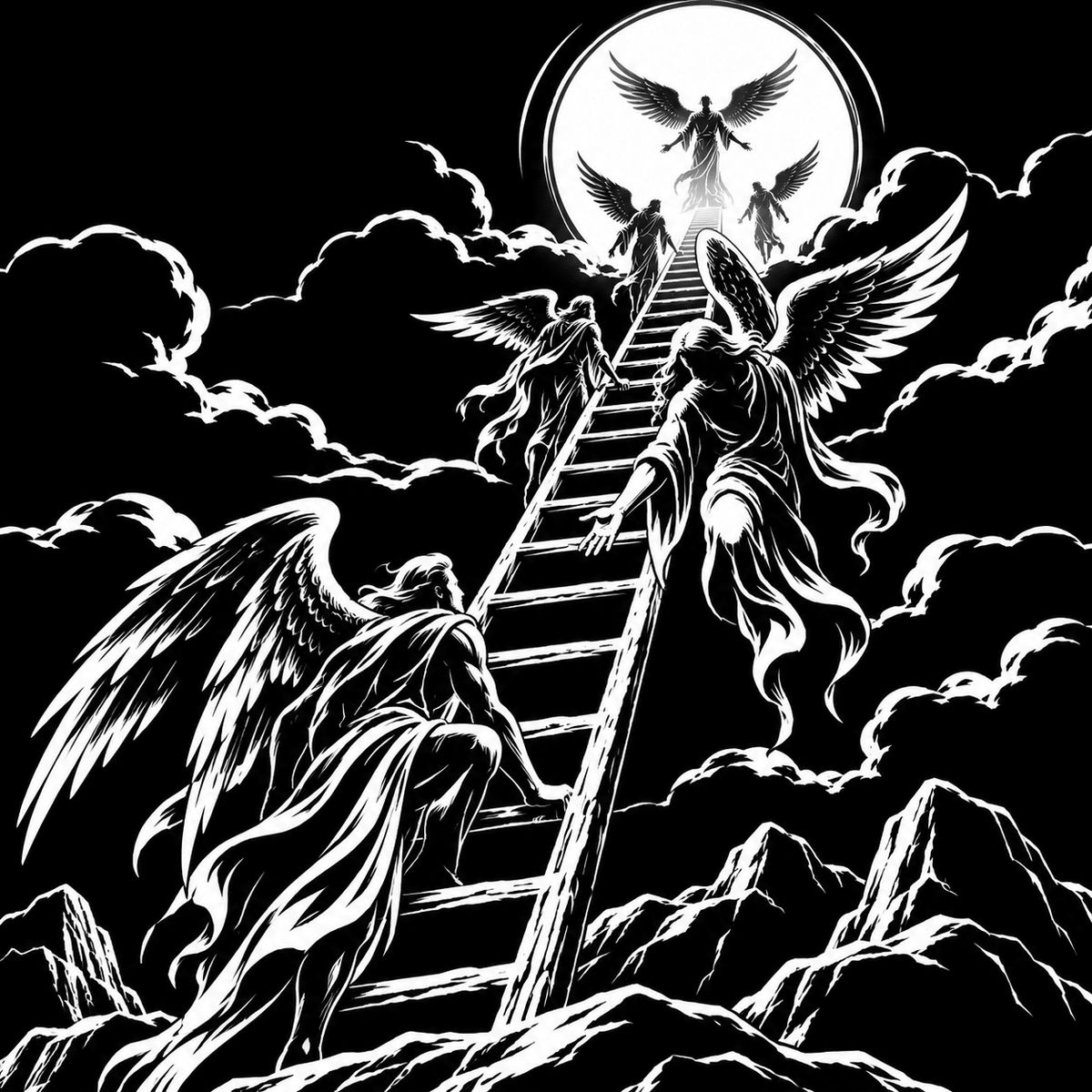
One of my favorite images is in Genesis 28. Jacob dreams of a ladder, or a stairway, going from Earth up to heaven, with angels going up and down it. Think about that. Heaven and Earth aren’t sealed off from each other. There’s traffic.
During the Second Temple period (roughly 516 BCE to 70 CE), Jewish writers really went deep on this. The books of Enoch, Daniel, and other apocalyptic texts start naming angels, mapping heavenly journeys, and describing wars in the spirit world. That’s the foundation almost everything later builds on.
The Nine Choirs of Angels: Heaven’s Org Chart
The most famous angel hierarchy in the West is the Nine Choirs of Angels. The names come scattered around the Bible (Paul mentions thrones, dominions, principalities, and powers in Colossians 1:16 and Ephesians 1:21), but the person who arranged them into three tiers of three was a Christian mystic writing around the late 5th or early 6th century under the name of Dionysius the Areopagite. Scholars call him Pseudo-Dionysius, since he wasn’t actually the Dionysius converted by Paul in Acts 17.
His book, The Celestial Hierarchy, pictures divine light flowing down through the ranks. The closer to God, the more directly you soak it up; the further down, the more your job is passing it along to the world.
First Hierarchy: Closest to the Throne
1. Seraphim, the Burning Ones. The name comes from the Hebrew root for “burn.” They’re tied to divine love and the sheer intensity of God’s presence. Isaiah’s six-winged beings.
2. Cherubim, the Guardians. Not the baby cherubs from Valentine’s Day. Biblical cherubim are intimidating. They guard the way to the Tree of Life with a flaming sword in Genesis 3:24, they’re carved onto the Ark of the Covenant, and Ezekiel describes them with four faces. Later Christian writers tied them to wisdom and knowledge.
3. Thrones. Divine authority, stability, and judgment. A lot of people online say the Thrones are Ezekiel’s wheels full of eyes. That’s a later interpretation, though, not something Ezekiel actually says.
Second Hierarchy: Running Creation
4. Dominions (or Dominations). The middle managers of heaven: they keep the chain of command in order.
5. Virtues. Divine strength in action. Some later writers connect them with miracles, but descriptions vary a lot.
6. Powers. Order versus chaos. Later traditions make them defenders against hostile spirits, though nobody totally agrees on their job.
Third Hierarchy: The Ones Who Deal With Us
7. Principalities. Guardians of nations and peoples. Daniel 10 has a wild scene where an angel is held up for 21 days by “the prince of the kingdom of Persia” until Michael comes to help. Angelic princes over whole nations.
8. Archangels. The big messengers who show up for major revelations. How many there are and who they are depends on which tradition you ask.
9. Angels. The front line, closest to humanity. This is where most of the guardian angel ideas come from.
It’s a beautiful picture: not a big empty gap between God and us, but a ladder of beings passing light down. Just remember it’s one theologian’s synthesis, not a map everybody agrees on.
The Great Archangels (and a Couple of Strange Ones)
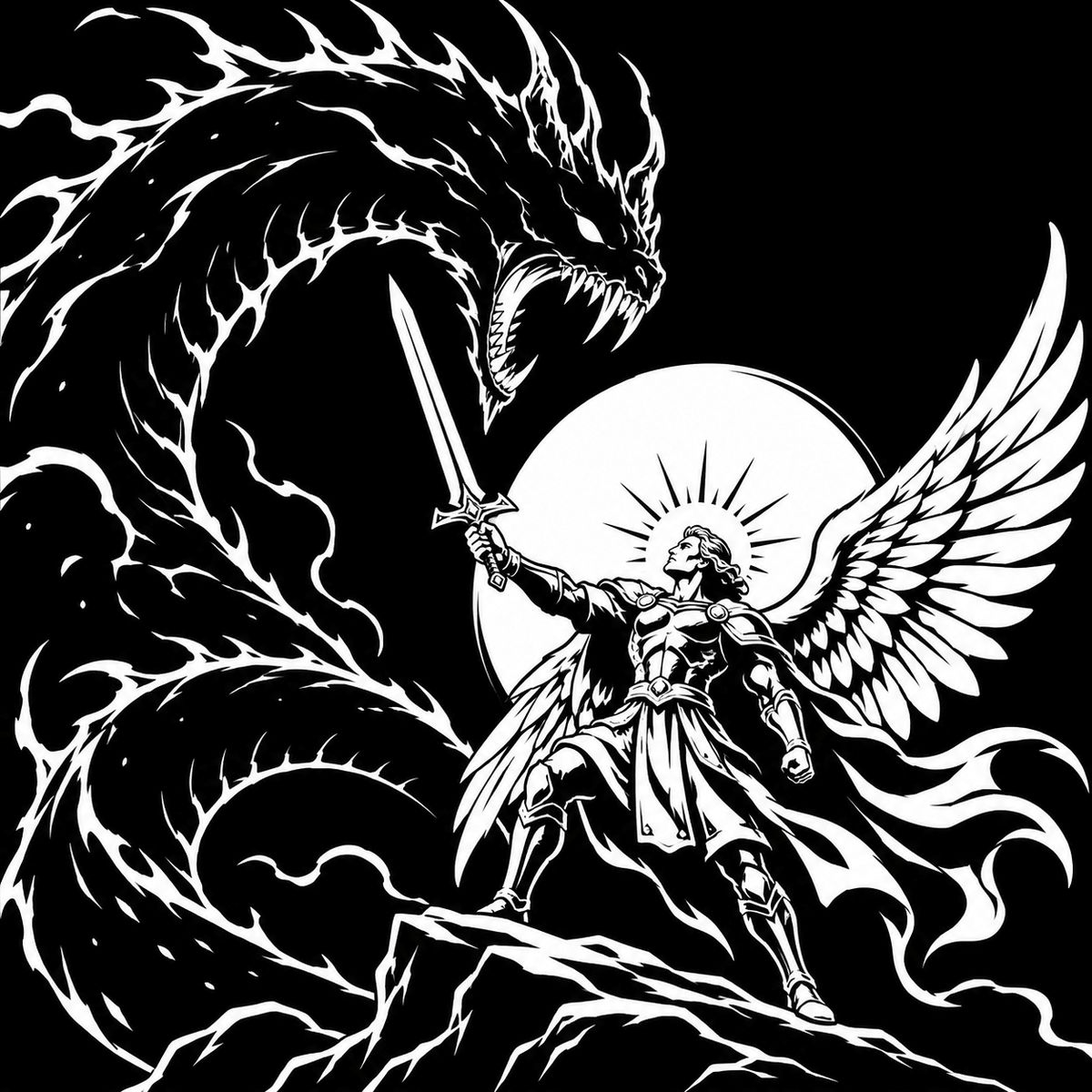
Michael, “Who is like God?” Shows up in Daniel, Jude, and Revelation, where he fights the dragon in Revelation 12. In Christian tradition he’s heaven’s warrior and protector.
Gabriel, “God is my strength.” Interprets visions for Daniel (Daniel 8–9) and announces the births of John the Baptist and Jesus in Luke 1. The messenger’s messenger.
Raphael, “God heals.” The star of the Book of Tobit, where he travels in disguise with young Tobias and helps heal his father’s blindness. He reveals himself as “one of the seven angels who stand ready and enter before the glory of the Lord” (Tobit 12:15). Tobit is in Catholic and Orthodox Bibles but not most Protestant ones. Fun connection for anyone who heard our Hermes Trismegistus episode: some esoteric traditions tie Hermes/Thoth to Archangel Raphael.
Uriel, “God is my light” (sometimes “Fire of God”). Not in the Protestant or Catholic Bible, but he’s all over 1 Enoch, where he guides Enoch through the heavens, and he appears in 2 Esdras. He’s tied to illumination and decoding heavenly mysteries, and his status varies by church.
Raziel, “Secret of God.” Now it gets interesting. Jewish mystical legend says Raziel gave Adam a book of heavenly secrets. A real book called Sefer Raziel HaMalakh (The Book of Raziel the Angel) exists, full of cosmology, divine names, and magical material. But the version we have is a medieval compilation, first printed in Amsterdam in 1701, not something that actually came down from Adam.
Metatron, the Heavenly Prince. One of the strangest figures in Jewish mysticism. In 3 Enoch (also called Sefer Hekhalot), Metatron is a hugely exalted being, sometimes called “the lesser YHWH,” and the text identifies him as Enoch himself, transformed into an angel. That’s a specific mystical tradition, though, not mainstream Jewish or Christian doctrine.
The Watchers: When Angels Came Down
Not every angel story is about obedient messengers. This next one is genuinely unsettling.
Genesis 6:1–4 has a super short, super weird passage about “the sons of God” taking human wives, and the Nephilim showing up. 1 Enoch, in the section called the Book of the Watchers, tells the full version.
Two hundred angels called the Watchers come down on Mount Hermon, led by Shemihazah (also spelled Semjaza). They take human wives. Their kids are giants who eat everything until they turn on people. Meanwhile another leader, Asael (linked with Azazel in related traditions), teaches humans metalworking, weapons, cosmetics, and other forbidden arts, and things spiral from there.
The fallout is huge. The Watchers get bound and condemned, the spirits of their giant offspring become evil spirits that roam the Earth, and the Flood follows. If you’ve listened to our Nephilim series, you know how deep this rabbit hole goes.
These stories shaped later Jewish and Christian ideas about fallen angels and where evil comes from. 1 Enoch isn’t in most Jewish, Catholic, or Protestant Bibles, but it is scripture in the Ethiopian Orthodox Tewahedo Church, and Jude 14–15 actually quotes it. You really can’t overstate how important it is to angelology.
Jewish Mysticism: Chariots and Heavenly Palaces
Jewish mysticism takes angelology somewhere much more visionary, mainly through Merkavah and Hekhalot literature.
Merkavah means “chariot,” as in the fiery throne-chariot from Ezekiel’s vision. Hekhalot means “palaces,” as in the halls of heaven. In these texts heaven isn’t some peaceful cloud paradise. It’s a series of palaces with angelic gatekeepers, and getting through means knowing the right sacred names, prayers, and seals, and having done the spiritual prep. The mystic is trying to reach the Throne, and it’s dangerous.
These traditions fed into Kabbalah, where angels get connected to the Sephirot, the ten emanations through which divine energy flows into creation. Later, Kabbalah would have a massive influence on Western esotericism.
The 72 Angels of the Shem HaMephorash
This is one of the coolest pieces of ceremonial angelology.
Shem HaMephorash means something like “the explicit” or “distinguished” Name. In early rabbinic sources it refers to the special name of God that only the High Priest said out loud. Later mystics connected it with an expanded 72-fold Name of God.
Here’s how that works. Exodus 14:19–21, the verses right before the Red Sea parts, are three verses that are each exactly 72 Hebrew letters long. Write the first verse forward, the second backward, the third forward again, stack them, and read down the columns. You get 72 three-letter combinations.
Later Jewish and Christian esoteric writers turned each combination into the name of an angel by adding endings like -el or -iah: Vehuiah, Jeliel, Sitael, Elemiah, Mahasiah, Lelahel, and so on. Renaissance occultists and later ceremonial magicians layered on zodiac degrees, planets, virtues, and ritual uses. In modern practice, individual angels get linked to things like courage, wisdom, protection, healing relationships, or clear communication.
Just to be totally clear: Exodus doesn’t list 72 angels. The system grew out of centuries of interpretation, which honestly makes it more interesting. It’s a perfect example of scripture, Kabbalah, Renaissance occult philosophy, and modern magic all getting tangled together.
Angels Beyond Judaism and Christianity
Islam has a rich angelology of its own. Angels, mala’ika, are created from light, and believing in them is one of the core articles of faith. Jibril (Gabriel) brings the Qur’an to the Prophet Muhammad. Mika’il (Michael) is named in the Qur’an (2:98). Other angels record every person’s deeds, take souls at death, and question the dead in the grave. Islam doesn’t use the Nine Choirs, so its angels have to be understood on their own terms.
Zoroastrianism has the Amesha Spentas, the “Bounteous Immortals,” six divine beings (seven, counting Ahura Mazda in some lists) who embody qualities like truth and good mind. They often get compared to archangels, and some scholars think Persian ideas influenced Jewish angelology during and after the Exile. Still, it’s its own system, and they aren’t just archangels with different names.
Angels and Ceremonial Magic
In the Renaissance, angels moved into the magician’s toolkit. Heinrich Cornelius Agrippa‘s Three Books of Occult Philosophy (complete edition 1533) lays out the universe in three worlds: elemental, celestial, and intellectual/divine. Sacred names, numbers, and symbols connect the levels. Agrippa includes the Dionysian choirs and the 72 angels of the Shem HaMephorash.
Later on, the Hermetic Order of the Golden Dawn and other Western esoteric schools built whole systems of angelic names, correspondences, and ritual on top of that. And if you heard our John Dee episode, you know how far Renaissance angel-contact went.
What a lot of people miss is that for many practitioners, angel magic isn’t about ordering up miracles. It’s about refining yourself: asking for wisdom instead of just information, courage instead of just making fear go away, self-mastery instead of control over other people. A lot of traditions stress purification, prayer, and contemplation before any serious ritual work.
Then there’s the Holy Guardian Angel, a concept from The Book of Abramelin that Crowley and others picked up, about building a relationship with a personal guiding intelligence or your own higher self. Different schools read it differently, and it’s not the same thing as the guardian angel from Sunday school.
Whether you believe any of this produces real supernatural effects is up to you. It isn’t scientifically established, but the manuscripts and systems themselves are a huge part of the history of Western esotericism.
Stillness Before Contact
Across a lot of these traditions, one principle keeps showing up: learn to control your attention.
Some modern angel-magic systems start with exercises to quiet the mind and get fully present: aware of your breath, your body, the space around you, and your intention. Practitioners say it builds the focus and receptivity you need for ritual. Skeptics can look at the exact same practice and just call it meditation and attention training. Either way, it works on you.
That idea fits the old literature, too. Again and again, divine knowledge is something you prepare for, not something you grab.
So… What Are Angels, Really?
This is the big one.
- Traditional Judaism, Christianity, and Islam: angels are real spiritual beings serving God, though each tradition describes them differently.
- Mystical traditions: celestial intelligences, expressions of divine activity, parts of the structure of reality itself.
- Modern esoteric views: universal principles, or intelligences you can meet through ritual and altered states of consciousness.
- Psychological views: powerful symbols coming up in dreams, visions, and the religious imagination.
These don’t all fit together, and none of them answers everything. What’s undeniable is that angels have shaped philosophy, art, mystical practice, and the whole Western occult tradition for thousands of years. They’re close enough to bring us messages and far enough away to scare the hell out of us.
The Messengers Behind the Veil
Angelology is way bigger than a guardian angel watching over your shoulder. It’s flaming Seraphim, eyes on wheels, princes of nations, fallen Watchers, a man who became Metatron, and 72 names hidden in three verses of Exodus. From Ezekiel’s chariot, to Pseudo-Dionysius’ hierarchy, to the heavenly palaces of the Hekhalot mystics, to Agrippa and the Golden Dawn, it’s all humanity trying to figure out how the visible and invisible worlds connect.
For believers, angels are real servants of the divine. For practitioners, they’re a framework for spiritual work. For historians, they show how ideas about heaven and cosmic order changed over the centuries.
Even after all those centuries of argument, though, the angels are still a mystery. The oldest texts never describe heaven as empty or quiet. It’s full of fire, light, voices, movement, and intelligences we can barely wrap our heads around. If those visions are even a fragment of something real, this ineffable universe we call home is a lot stranger than we think.
It all starts with one simple word: messenger. Behind it is a whole universe of mysteries.
Want to go deeper? Check out these episodes of Cryptic Chronicles: Archons (Episode 98), on Gnostic angels and the rulers of this world; The Teachings of Hermes Trismegistus, Part One (Episode 95) and Part Two (Episode 96); and the Nephilim series for more on the Watchers. For the darker side of the spirit world, try our Demonology episode, and for more on angels, read Angelology: Unveiling the Mysteries of Angelic Beings, Vehuiah: The Angel of Will, and Angel Communication.
Until next time, stay curious, stay strange, and keep exploring the unknown.
Sources
- Isaiah 6; Ezekiel 1 and 10; Genesis 3:24, 6:1–4, 28:10–17; Daniel 8–10; Luke 1; Jude 9, 14–15; Revelation 12 (Bible Gateway): https://www.biblegateway.com/
- Exodus 14:19–21 (Hebrew text, Sefaria): https://www.sefaria.org/Exodus.14.19-21
- Tobit 12:15 (USCCB): https://bible.usccb.org/bible/tobit/12
- 1 Enoch, Book of the Watchers, trans. R.H. Charles (Sacred Texts): https://sacred-texts.com/bib/boe/
- 3 Enoch / Metatron (Jewish Encyclopedia): https://www.jewishencyclopedia.com/articles/10728-metatron
- Pseudo-Dionysius, The Celestial Hierarchy (Sacred Texts): https://sacred-texts.com/chr/dio/index.htm
- “Angelology” (Jewish Encyclopedia): https://www.jewishencyclopedia.com/articles/1521-angelology
- “Shem ha-Meforash” (Jewish Encyclopedia): https://www.jewishencyclopedia.com/articles/13541-shem-ha-meforash
- Sefer Raziel HaMalakh (Wikipedia overview): https://en.wikipedia.org/wiki/Sefer_Raziel_HaMalakh
- Agrippa, Three Books of Occult Philosophy (Esoteric Archives): https://www.esotericarchives.com/agrippa/agrippa1.htm
- Qur’an 2:98 (Quran.com): https://quran.com/2/98
- “Amesha Spenta” (Wikipedia overview): https://en.wikipedia.org/wiki/Amesha_Spenta

0 Comments