A Swedish king lies down to sleep. Almost right away he tells his men the nightmare is riding him. They grab his head, and the thing tramples his legs until they nearly break. They grab his feet, and it presses down on his head until he dies. According to the 13th-century Ynglinga saga, that’s how King Vanlandi of Uppsala went out, and the worst part is the backstory. His abandoned wife paid a sorceress named Huld to send it.
So that’s the question I can’t shake. What if the thing sitting on your chest at 3 a.m. was sent?
Dream lore is the huge, old, worldwide body of belief that says we aren’t alone when we sleep. Gods walk into dreams wearing faces we trust. Spirits come down from the moon to deliver prophecy. Demons sit on chests. The dead give tours of the cosmos. And, honestly, the weirdest part is that in 2021 a group of scientists proved something from outside can get into a dream and get an answer back. We’ll get there.
If you read our piece on Castaneda’s Flyers and mud shadows, or the old dream demons that inspired Freddy Krueger, you already know the night has company. This one goes all the way down the rabbit hole, from Plutarch’s moon to a sleep lab in Illinois.
Who Said Dreams Come From the Moon?
The closest match I could find is Plutarch, the Greek philosopher who was also a priest of Apollo at Delphi, writing in the late first and early second century. I couldn’t find any ancient writer who says the literal sentence “dreams come from the moon.” But Plutarch gets pretty close, and his version is creepier.
In his dialogue On the Face Which Appears in the Orb of the Moon, the moon is where souls go after death. The spirits he calls daemons live there too, and they don’t stay put. “They descend hither to take charge of oracles, they attend and participate in the highest of the mystic rituals, they act as warders against misdeeds and chastisers of them.” So the beings who run prophecy commute from the moon to us.
And the leftover soul up there is basically dream-stuff. “The substance of the soul is left upon the moon and retains certain vestiges and dreams of life as it were.” Some souls spend their time “as it were in sleep with the memories of their lives for dreams.” In the same myth, spirits serve the sleeping Titan Cronus on a far western island, and “the prophecies that are greatest and of the greatest matters they come down and report as dreams of Cronus.”
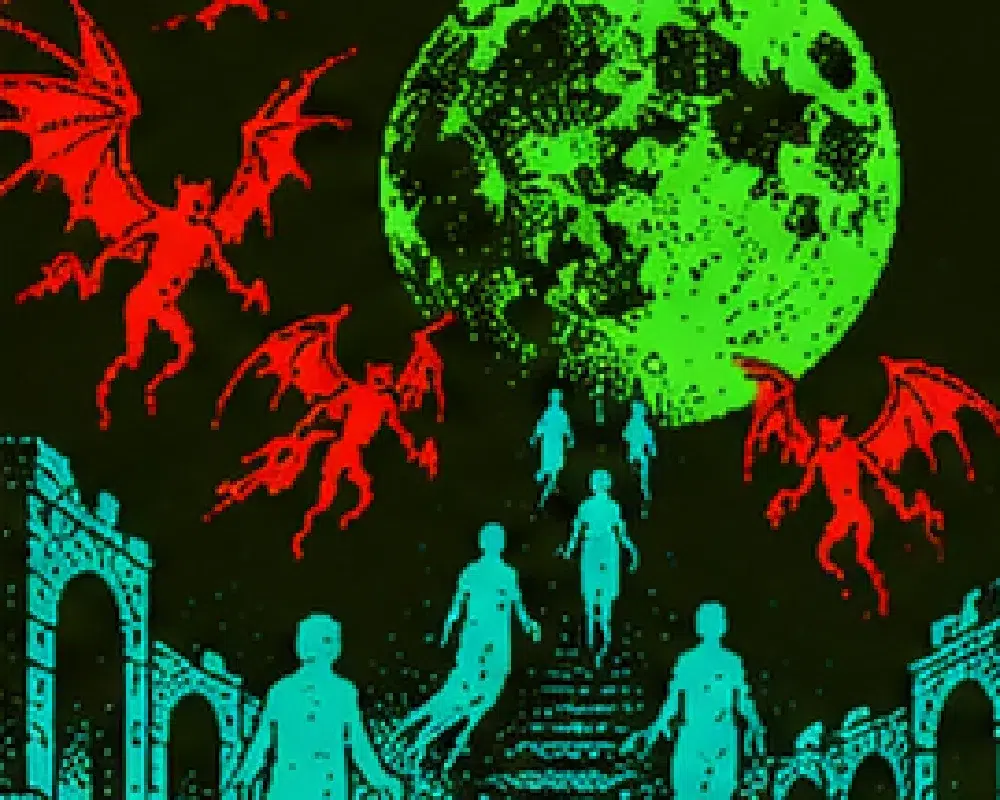
Plutarch wasn’t the only one who thought the air was crowded. Writing in the third century, Diogenes Laertius reported this Pythagorean teaching: “The whole air is full of souls which are called genii or heroes; these are they who send men dreams and signs of future disease and health.” Dream-sending spirits, parked in the sky between us and the moon. I mean, that gets under my skin a little.
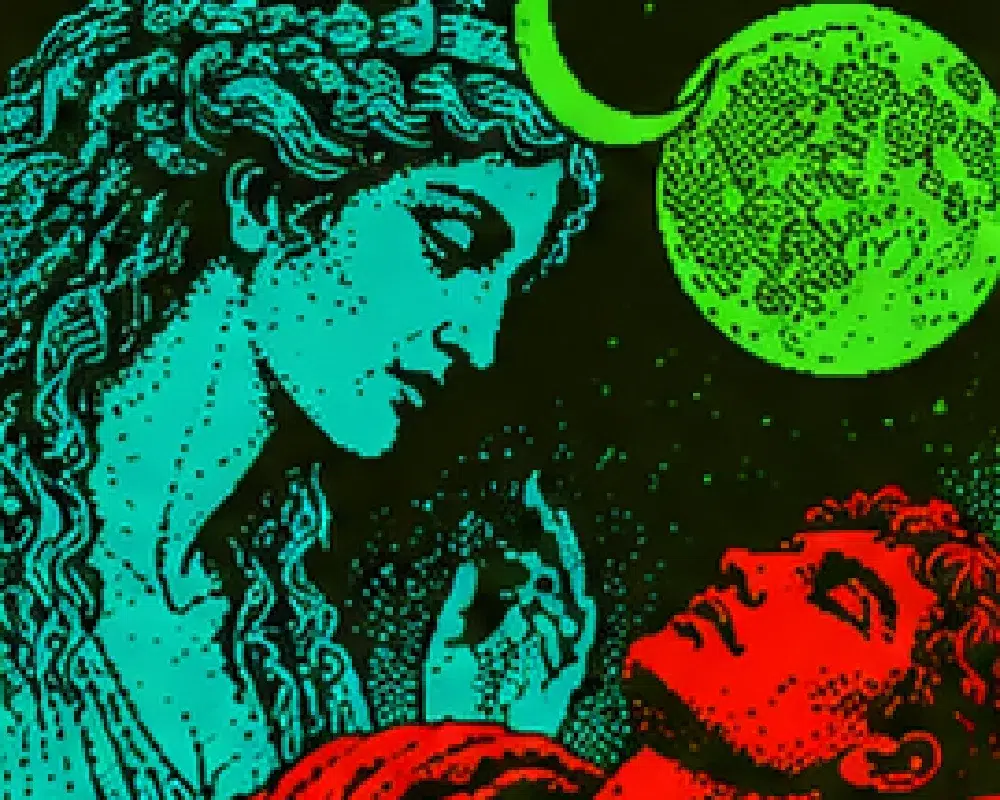
Plutarch even names a famous sleeper. Some souls on the moon dream “as did the soul of Endymion.” Endymion is the shepherd the moon goddess Selene fell for, and in the myth he ends up in an endless sleep. The moon’s boyfriend is a man who never wakes up. You honestly couldn’t design a better mascot for this article.
The Greeks Thought Dreams Were Somebody
Here’s where it gets wild. For the old Greeks, a dream wasn’t something your brain cooked up. It was a being.
In Hesiod’s Theogony, the “tribe of Dreams” are children of Nyx, the Night, born with no father. Their siblings include Hypnos (Sleep) and Thanatos (Death). So Dream, Sleep, and Death are literally brothers and sisters, according to the Oneiroi entry. That’s one family you don’t want over for Thanksgiving.

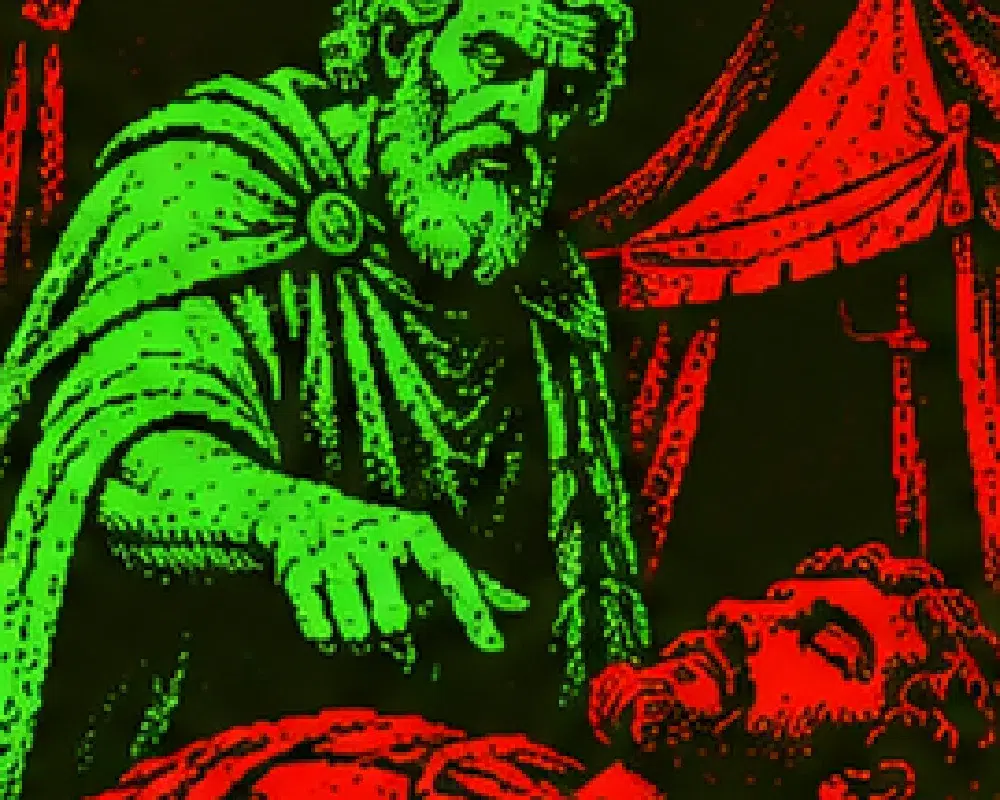
And they had jobs. In Homer’s Iliad, Book 2, Zeus sends a Dream to King Agamemnon’s tent. It stands over the sleeping king’s head, takes the shape of Nestor, his trusted old counselor, and pushes him toward battle. That’s the oldest “something walks into your dream wearing a familiar face” story I found, and it’s a god doing it on purpose to mislead a king.
Ovid later gave Sleep a thousand sons. Morpheus appears in dreams in human form. His brother Phobetor shows up as beasts, and his name literally means “frightener.” The gods called him Icelos. A third brother, Phantasos, takes the shape of things. So if you’ve ever had a nightmare about a dog that wasn’t quite a dog, the Greeks had a name for the guy who sent it.
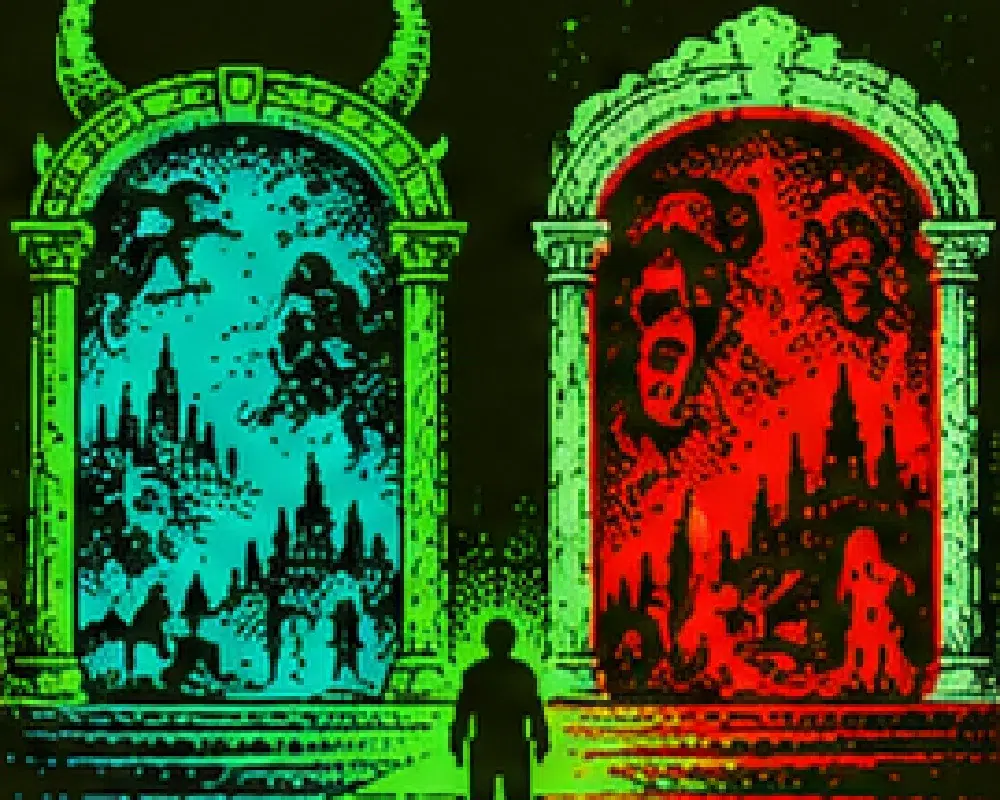
Then there’s the security system. In the Odyssey, Penelope says dreams come through two gates. According to the Loeb translation quoted on Wikipedia’s Gates of horn and ivory page, “Those dreams that pass through the gate of sawn ivory deceive men, bringing words that find no fulfillment. But those that come forth through the gate of polished horn bring true issues to pass, when any mortal sees them.” It’s a pun in Greek, where horn sounds like “fulfill” and ivory sounds like “deceive.” Virgil reused the gates in the Aeneid, and he sends his hero back out of the underworld through the ivory one. The false one.
The Odyssey also puts a “land of dreams” past the streams of Ocean, right next to the Asphodel Meadows where the dead live. Dreams and the dead are next-door neighbors. And the Epinomis, a dialogue attributed to Plato or one of his students, says the in-between spirits have had “various types of encounters with humans, whether through dreams in sleep or in audible communications through divine voices or prophecies” (quoted at Footnotes2Plato).
The Island Where Dreams Live
Lucian of Samosata took all of this and ran. His True History, from the second century, is a wild satire where the crew sails to the moon (Endymion is its king, and he’s at war with the Sun, as one does). Later, in Book 2, they land on the Island of Dreams.
According to the translation at Elfinspell, the island itself is “not unlike a dream,” and “as we approached it, it retreated and fled farther away.” The city has four gates, two more than Homer gave it. Two face the Plain of Idleness, “one of iron and the other of brick: through these pass all the fearsome, cruel, bloody dreams.” Bats are the only birds on the island. There’s a Temple of Night on the right as you walk in, and a Palace of Sleep on the left.
Then Lucian drops the line that made me sit back in my chair. “Many of them we recognised as having appeared to us long ago, who approached us and greeted us as familiar friends.” The dreams remember you.

Sleeping in the God’s House
If dreams are visitors, you can invite them. That’s dream incubation, and the ancient world did it on an industrial scale.
Over 300 temples of the healing god Asclepius have been found across Greece, according to Wikipedia’s Asclepieion article. The sick slept in a dormitory called the abaton and waited for the god to show up in a dream. Harmless Aesculapian snakes roamed the halls. And at Epidaurus, the 4th-century-BCE cure inscriptions read like a case file of dream visitations.
A woman named Cleo had been “with child for five years.” She slept in the Abaton, walked out, and gave birth to a son who “immediately after birth, washed himself at the fountain and walked about with his mother.” A blind man named Alcetas dreamed the god opened his eyes with his fingers, and “At daybreak he walked out sound.”
My favorite is Ambrosia of Athens, blind in one eye, who walked around the sanctuary and “laughed at some of the cures as incredible and impossible.” In her dream, the god stood beside her, said he’d cure her, and asked her to dedicate a silver pig “as a memorial of her ignorance.” She walked out healed. I love that. The original skeptic gets humbled, and the god sends her a bill.
And one man with a terrible sore on his toe fell asleep outside, and “a snake issued from the Abaton and healed the toe with its tongue.” When he woke, he said he’d seen a beautiful youth treating his toe. The people standing there saw a snake. He saw a person. Pretty wild.
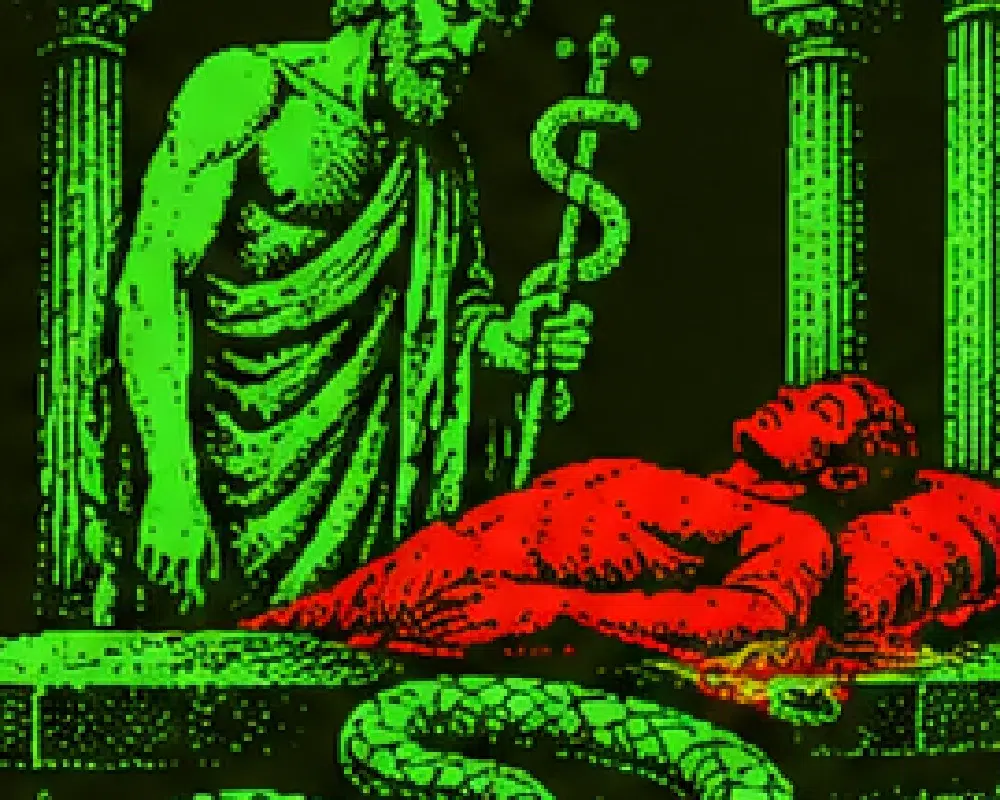
Egypt has its own version, carved in granite. According to Wikipedia’s Thutmose IV article, the young prince stopped to rest under the head of the Great Sphinx, which was buried up to its neck in sand. In his dream, the Sphinx promised him the throne if he cleared the sand away. He did, he became pharaoh, and he set up the Dream Stele between the Sphinx’s paws.
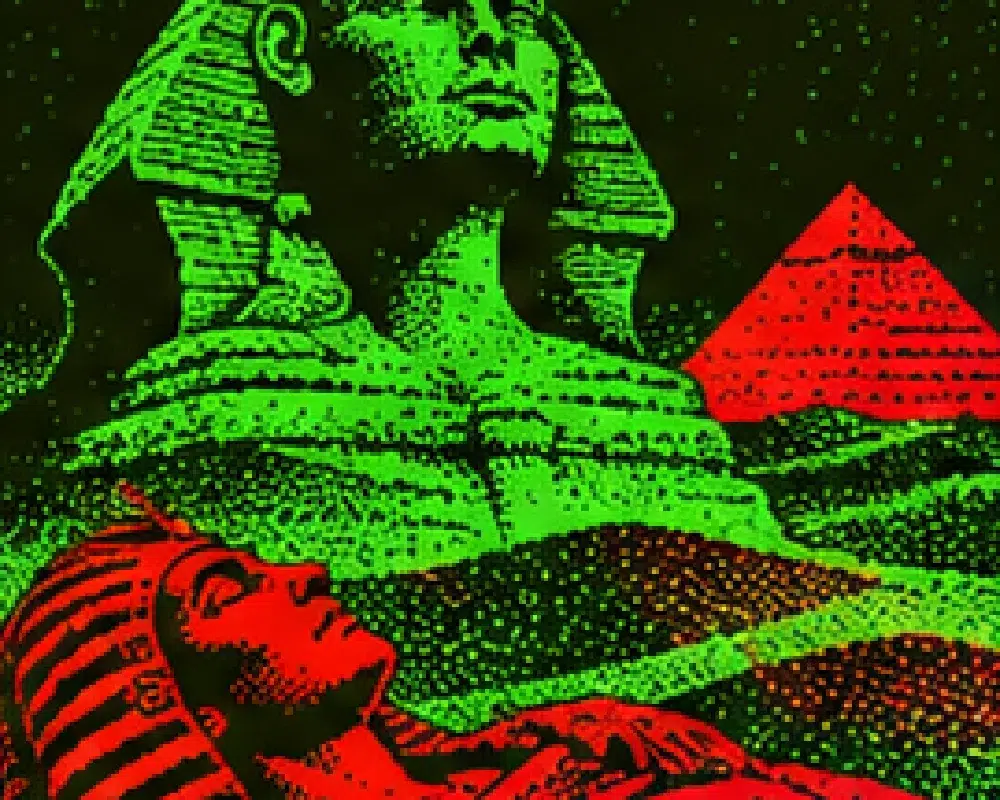
Then there’s the most personal dream record from the ancient world. In the 160s BCE, a recluse named Ptolemaios lived shut inside the Serapeum at Memphis and wrote down his dreams, dated, along with his teenage brother Apollonios. From the translation at Attalus, one entry reads, “The dream which Ptolemaios saw on the festival of the moon.” In another, “Two men stood next to me, saying, ‘Ptolemaios, take the money for the blood.'” Who were the two men? He never says. The BBC calls these papers some of “the most intimate records to come down to us from antiquity.”

A Neoplatonist philosopher named Synesius of Cyrene, who was later chosen bishop of Ptolemais in 410, wrote a treatise called On Dreams and sent it to Hypatia of Alexandria. His whole pitch is that dreams are a free oracle for everybody. From the Fitzgerald translation at Livius, “In order to enter upon this no man need pack up for a long journey or voyage beyond the frontiers, as to Pytho or to Hammon. It is enough to wash one’s hands, to keep a holy silence, and to sleep.” He also told readers to keep a “night book,” which is basically the first dream journal advice on record.
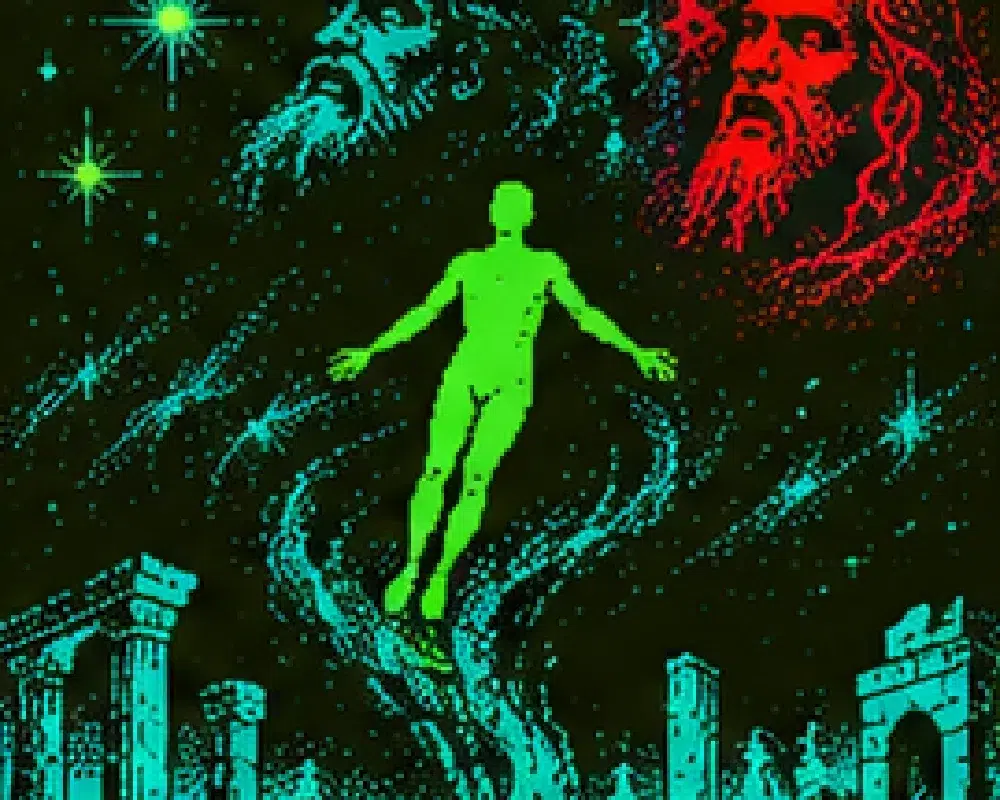
A few decades later, Macrobius wrote a commentary on Cicero’s Dream of Scipio, where a Roman general is visited by his dead grandfather and shown the cosmos from “a high place full of stars.” Macrobius sorted dreams into five types, including the nightmare, the apparition, and the oraculum, the oracular dream. Medieval writers used that same scheme for about a thousand years. Which tells you how seriously people took the visitors.
The Thing That Sits on Your Chest
Now for the part that, honestly, keeps people up at night.
The Latin word incubus comes from the idea of something lying on top of you while you sleep. Medieval Europe believed incubi and succubi visited sleepers, that a union with one could produce a half-demon child, and that the wizard Merlin was fathered by an incubus. Exorcism was supposed to help. But the Franciscan friar Ludovico Maria Sinistrari wasn’t so sure. Incubi, he wrote, “do not obey exorcists, have no dread of exorcisms, show no reverence for holy things.”
Further north it was the mara. In Germanic and Slavic lore, the mare “sits, walks, or ‘rides’ on people’s chests while they sleep, bringing on nightmares.” That’s where the “mare” in nightmare comes from, and it has nothing to do with horses. Which brings us back to King Vanlandi. The mara that killed him didn’t wander in. It was conjured by a sorceress and sent. A literal dream assassination.
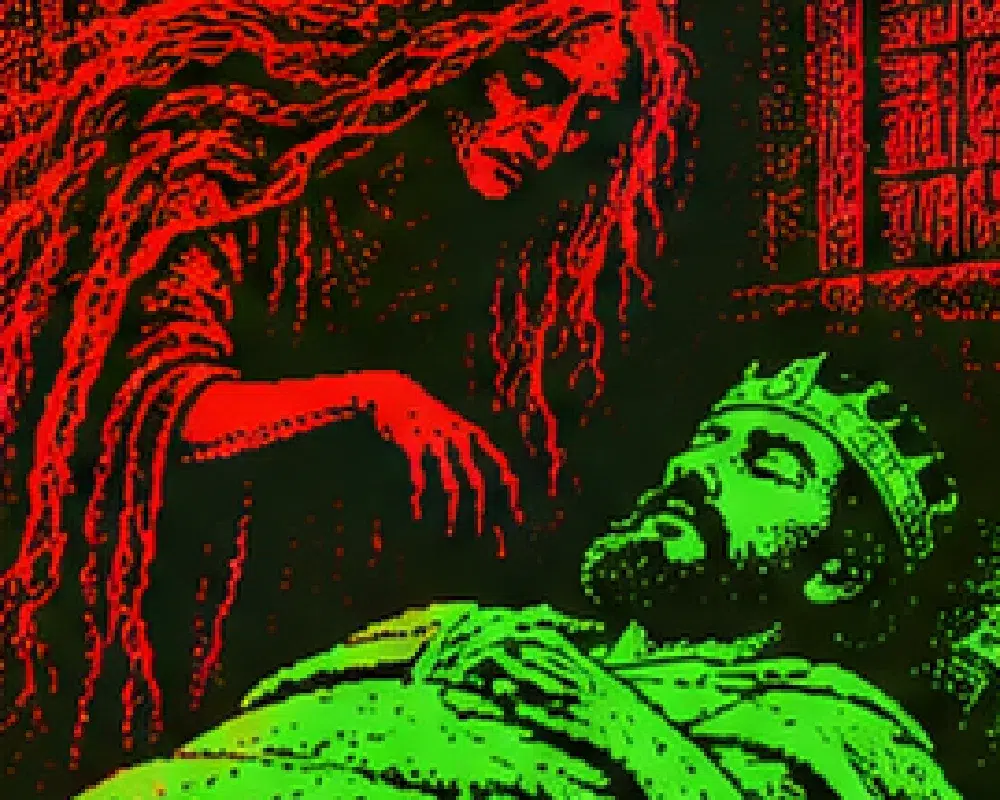
In Newfoundland they call it the Old Hag. Folklorist David Hufford studied it, and his 1982 book, The Terror That Comes in the Night, studies what Penn Press describes as “a psychologically disturbing event in which a victim claims to have encountered some form of malign entity while dreaming (or awake).” What makes Hufford so important is that he started from what witnesses actually went through, and he took them at their word. And the witnesses kept describing the same thing.
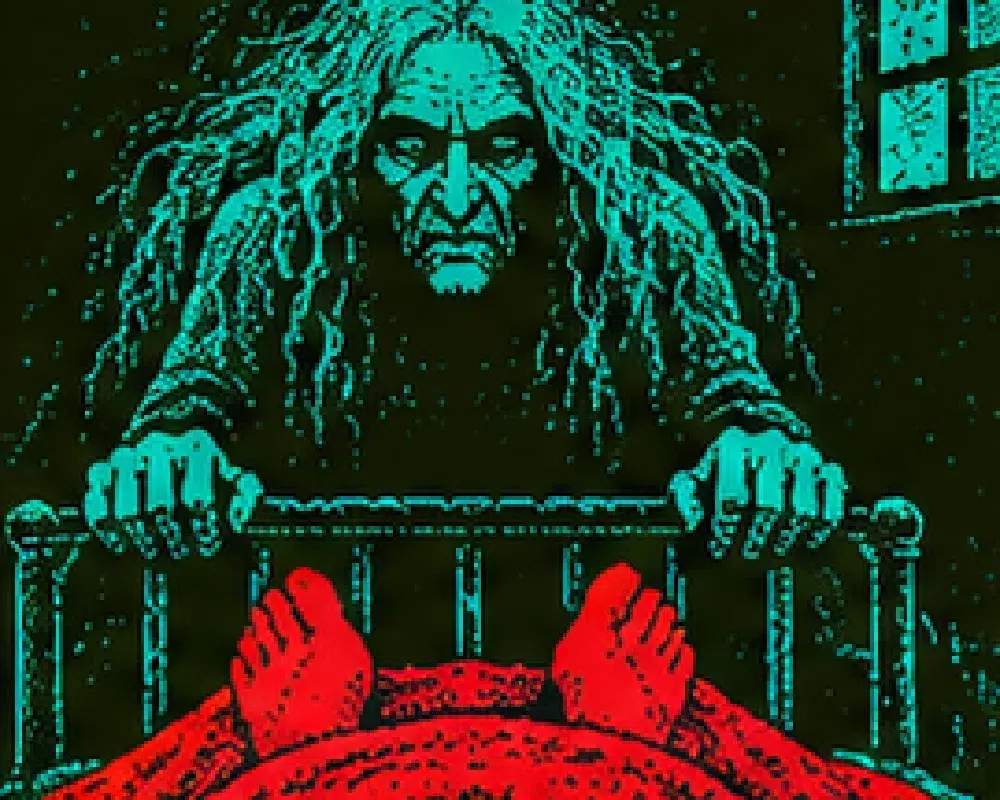
And here’s the part I can’t get past. The same attacker shows up everywhere. According to Wikipedia’s sleep paralysis entry, in Japan it’s kanashibari, literally “metal binding,” with dangerous visits from a childlike yōkai called a makuragaeshi, “pillow flip,” sitting on the chest. In Cambodia it’s “the ghost pushes you down,” tied to visits from dead relatives. The Hmong call the pressing spirit the dab tsog.
In the Philippines it’s the batibat, an ancient, enormous, tree-dwelling female spirit. She usually comes after people when the tree she lives in gets cut down, “especially when their tree is made into a support post for a house.” So she moves in with you, and then she sits on you. (If Filipino night-terrors are your thing, our Manananggal piece is right there.)
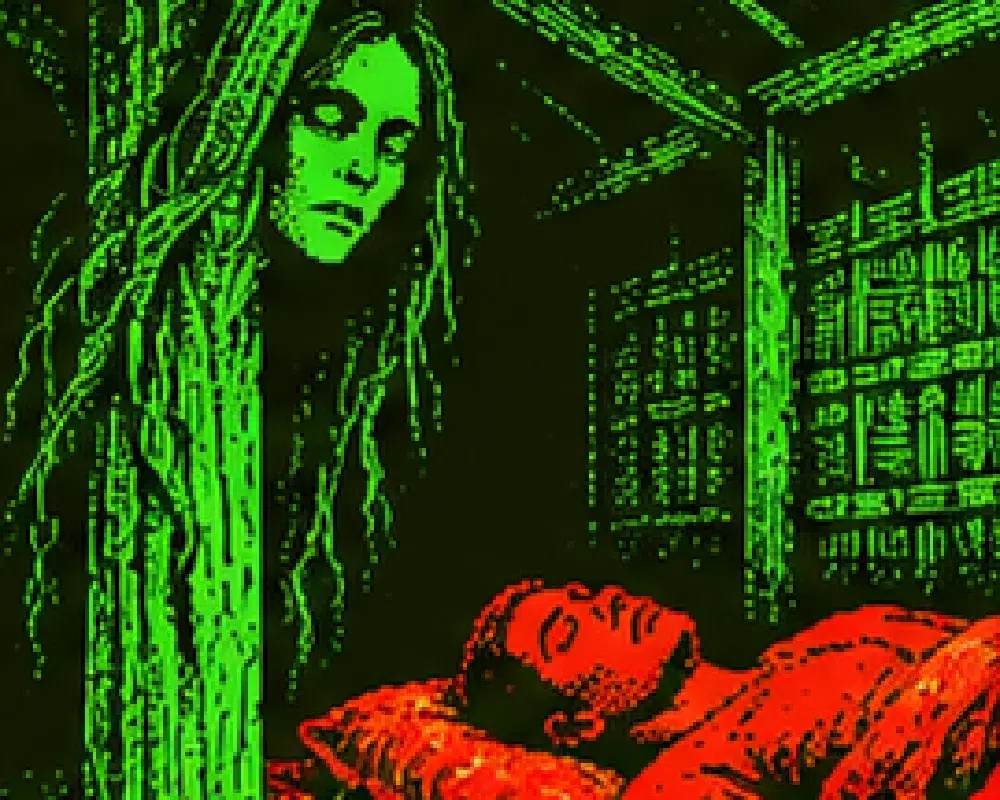
Then there’s the modern one. On Wikipedia’s shadow person page, author Heidi Hollis describes shadow people as silhouettes at the edge of your vision and says people report them trying to “jump on their chest and choke them.” The most famous of them wears a brimmed hat. We did a whole Entity of the Week on the Hat Man, and the strangest thing about him is how many strangers describe the same hat.
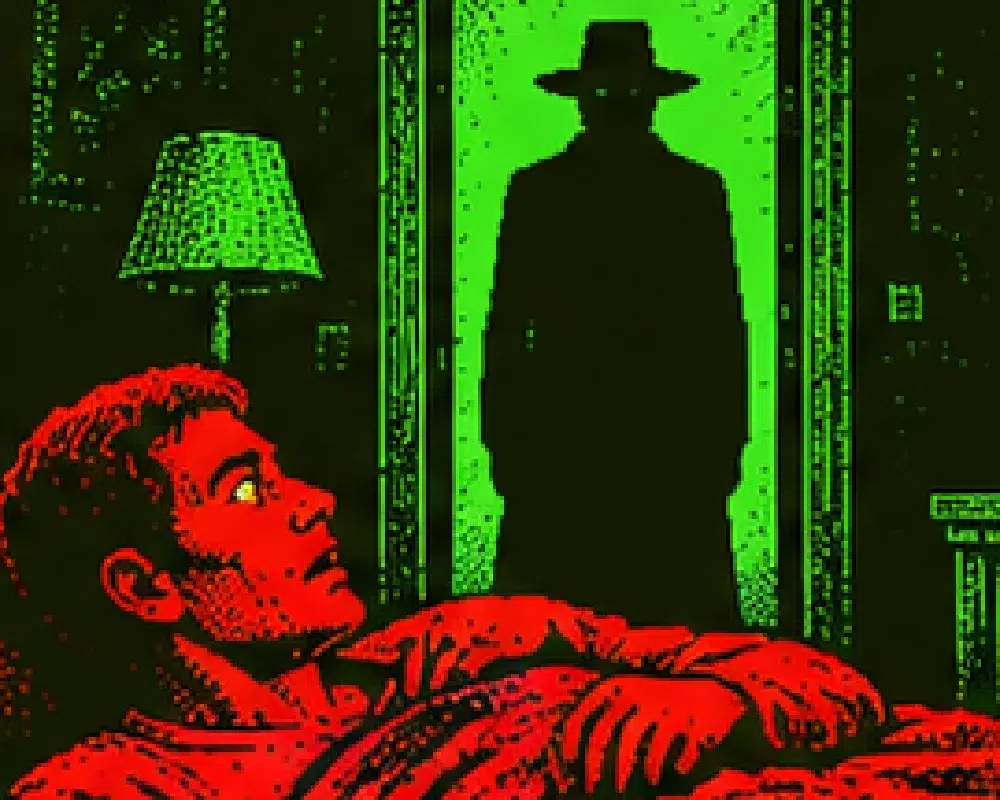
A Norse king, a Newfoundland fisherman, a Hmong family, a Japanese teenager, and you. Same weight on the chest. Same figure in the room. What are the odds?
Your Dreams Want Something From You
Some visitors come in peace, though. Sometimes, in the old lore, the one knocking is your own soul.
The Haudenosaunee (Iroquois) and Wendat (Huron) took dreams about as seriously as anyone ever has. In Volume 39 of the Jesuit Relations, the missionary Francesco Bressani wrote, “The Hurons, then, persuaded themselves that the soul revealed the first desires by means of dreams, which are its own voice.” If those desires were fulfilled, the soul was content. If not, it could make the body sick.
Wikipedia’s Haudenosaunee article says dreams provided “information about a person’s desires and prompting individuals to fulfill dreams.” And the Wendat healers diagnosed illness through dreams. During or after the dream, “a spirit known as an oki would visit him in the form of a fire, ghost, or bird (such as a crow or eagle) and explain the cause of the illness and its cure.” The dreams of the dying were treated as especially trustworthy, and their requests were considered “incontestable.”

I find that so much less scary and so much more interesting than the mara. A spirit shows up as a bird or a fire, and it brings a diagnosis.
A Dream Is a Letter Somebody Sent You
The Abrahamic traditions agree that some dreams come from outside you. They just argue about who’s mailing them.
The Talmud, in tractate Berakhot 57b, lists five things that are one-sixtieth of something bigger, and “sleep is one-sixtieth of death; and a dream is one-sixtieth of prophecy.” Rabbi Yoḥanan says if you wake up and a verse “immediately falls into his mouth, it is a minor prophecy.” And over in Berakhot 55a, Rav Ḥisda says, “A dream not interpreted is like a letter not read.” Which is a lovely line until you start wondering who wrote the letter.
Islamic tradition goes further. In Sahih Muslim 2263a, dreams come in three types: “one good dream which is a sort of good tidings from Allah; the evil dream which causes pain is from the satan; and the third one is a suggestion of one’s own mind.” So a bad dream can literally have an outside sender. And Sahih al-Bukhari 6987 counts a good dream as one of “the forty-six parts” of prophecy.
When Dreaming Is a Place You Go
Some traditions treat dreaming less like mail and more like a location.
In Aboriginal Australian belief, the Dreaming is what anthropologist W. E. H. Stanner called the “everywhen,” when ancestral beings shaped the land. It’s a translated English word, and it isn’t the same thing as night dreams, so I’m not going to stretch it into something it isn’t. But it’s a reminder that a lot of the world treats “dreaming” as a realm with its own law.
Tibetan Buddhism takes that literally. In dream yoga, practiced in the Six Dharmas of Naropa and in Dzogchen and Bön, the yogi learns to stay aware inside the dream and practice there. The body you have in the bardo, the in-between state after death, “is the same as the body of dreams, the mind body.” So every night is a rehearsal for dying. Sleep well!

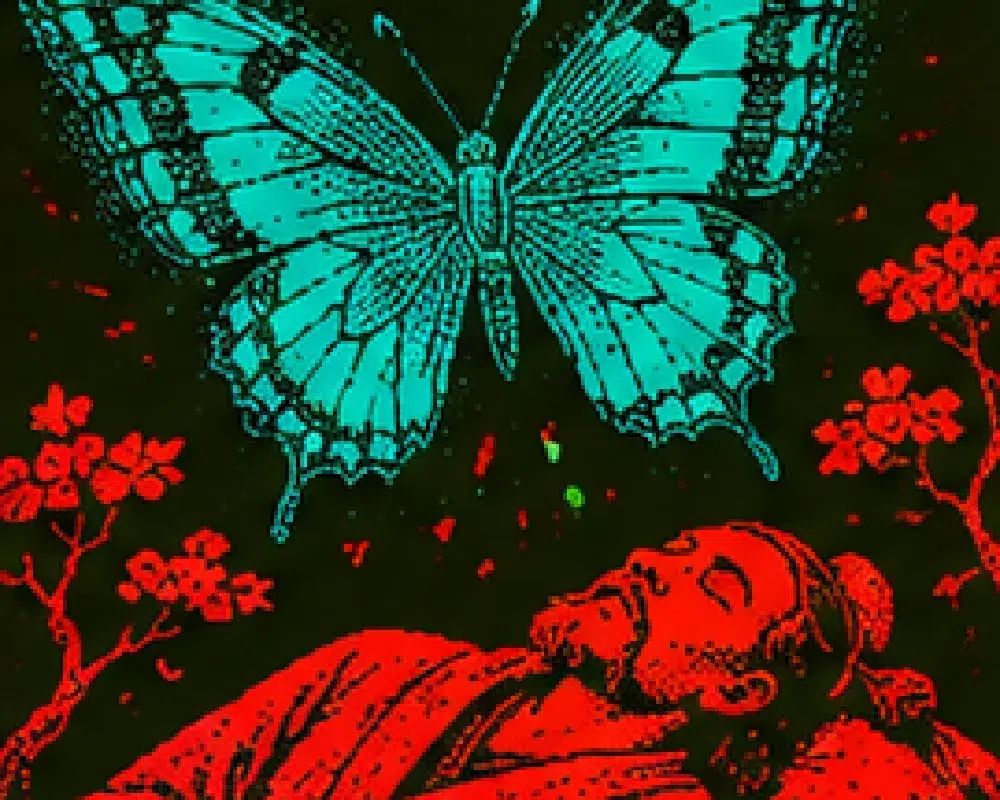
And then there’s the most famous dream in Chinese philosophy. Zhuangzi, in the 4th century BCE, dreamed he was a butterfly, fluttering around happy. Then he woke up and couldn’t tell if he was a man who’d dreamed he was a butterfly or a butterfly now dreaming he was a man, according to the Butterfly dream entry. Honestly, some mornings I know the feeling.
The Occultists and the “Scouts”
The 19th-century Theosophists coined and popularized the term “astral projection,” according to Wikipedia’s astral projection entry, and in occult teaching the astral plane can be reached through lucid dreaming, among other ways. C. W. Leadbeater wrote a whole book on the astral body’s travels during sleep, Dreams: What They Are and How They Are Caused. He also claimed his teacher helped make his “astral consciousness and memory” continuous “whether the physical body was awake or asleep,” as his Wikipedia biography puts it. (If you want the darker side of that realm, we covered what people meet out of body.)
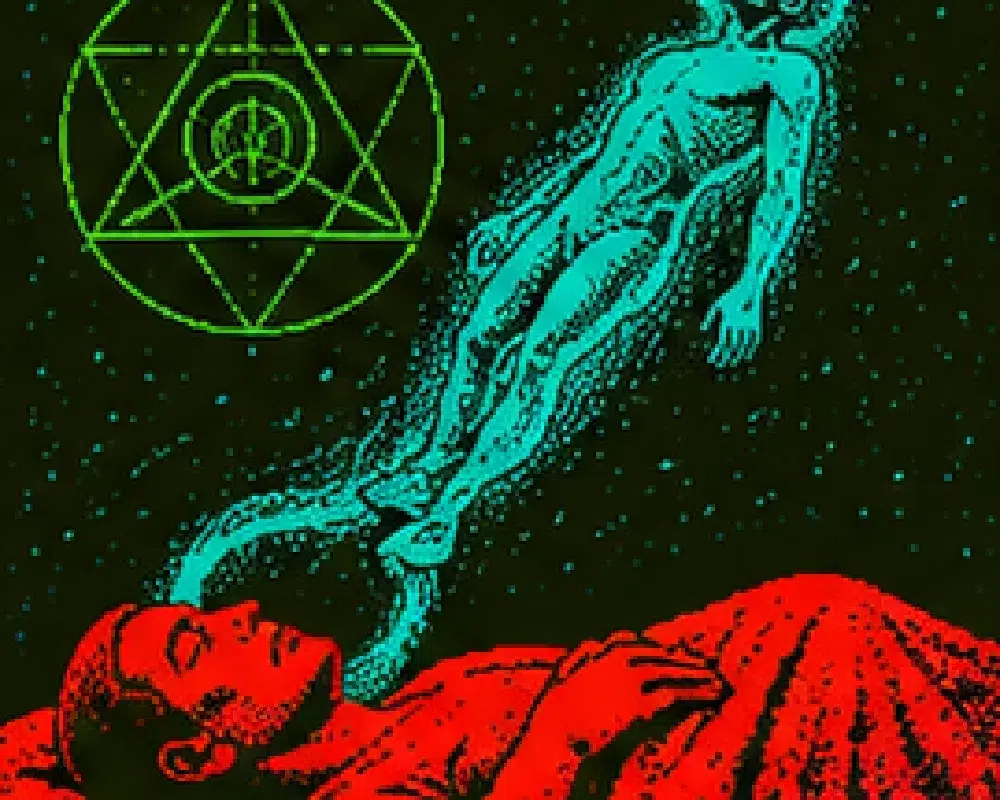
But the scariest modern thesis comes from Carlos Castaneda. In The Art of Dreaming (HarperCollins, 1993), he says his teacher, don Juan Matus, taught a Toltec lineage of dreaming with seven “gates” (summary here). And don Juan lays it out flat.
“Dreams are, if not a door, a hatch into other worlds,” he says. “As such, dreams are a two-way street. Our awareness goes through that hatch into other realms, and those other realms send scouts into our dreams.”
What are the scouts? “Energy charges that get mixed with the items of our normal dreams. They are bursts of foreign energy that come into our dreams.” Behind them are what he calls the inorganic beings, and they’re not shy. They “exert a tremendous pull over dreamers and can easily transport them into worlds beyond description.” And what do they want in return for teaching you? “Our lives, our energy, our devotion to them. In other words, our freedom.”
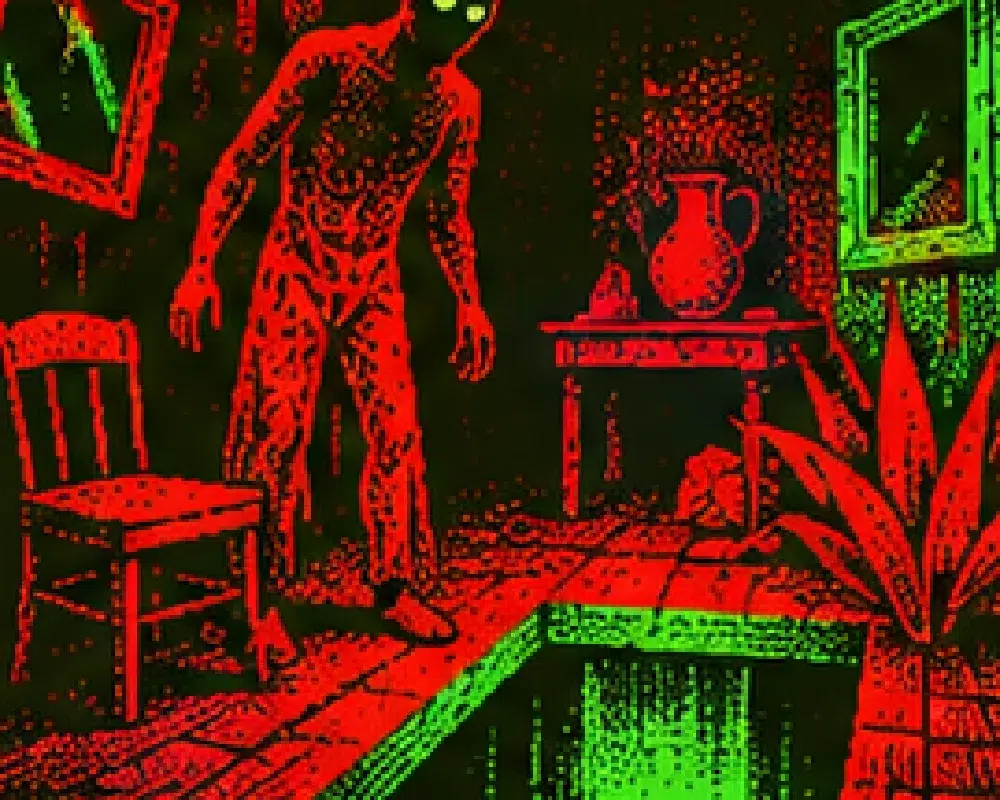
If that rings a bell, it should. It’s the same predatory bargain behind the Flyers we covered in Castaneda’s shadow people. Different book, same appetite.
Science Already Got Inside Your Dreams
Okay. This is where the believer case gets surprisingly strong, and where the “(quote on quote) ‘experts'” who say dreams are just random noise have some catching up to do.
At around 8 a.m. on April 12, 1975, lucid dreamer Alan Worsley signaled a pre-agreed pattern of eye movements to researcher Keith Hearne from inside a lucid dream, according to Wikipedia’s lucid dream entry. A message got out of a dream. Stephen LaBerge at Stanford made that kind of eye-signal research famous in the early 1980s.
Then, in 2021, it went both ways. A paper in Current Biology by Karen Konkoly and colleagues showed that people “in the midst of a lucid dream (aware of the fact that they are currently dreaming) can perceive questions from an experimenter and provide answers using electrophysiological signals.” They answered yes-or-no questions and solved math problems from inside their dreams. And it wasn’t one lab. The abstract on PubMed says the results were “documented by four independent laboratory groups,” in the US, France, Germany, and the Netherlands (Northwestern’s write-up has the details).
Sit with that for a second. Voices from outside the dream got in. And the dreamers answered.
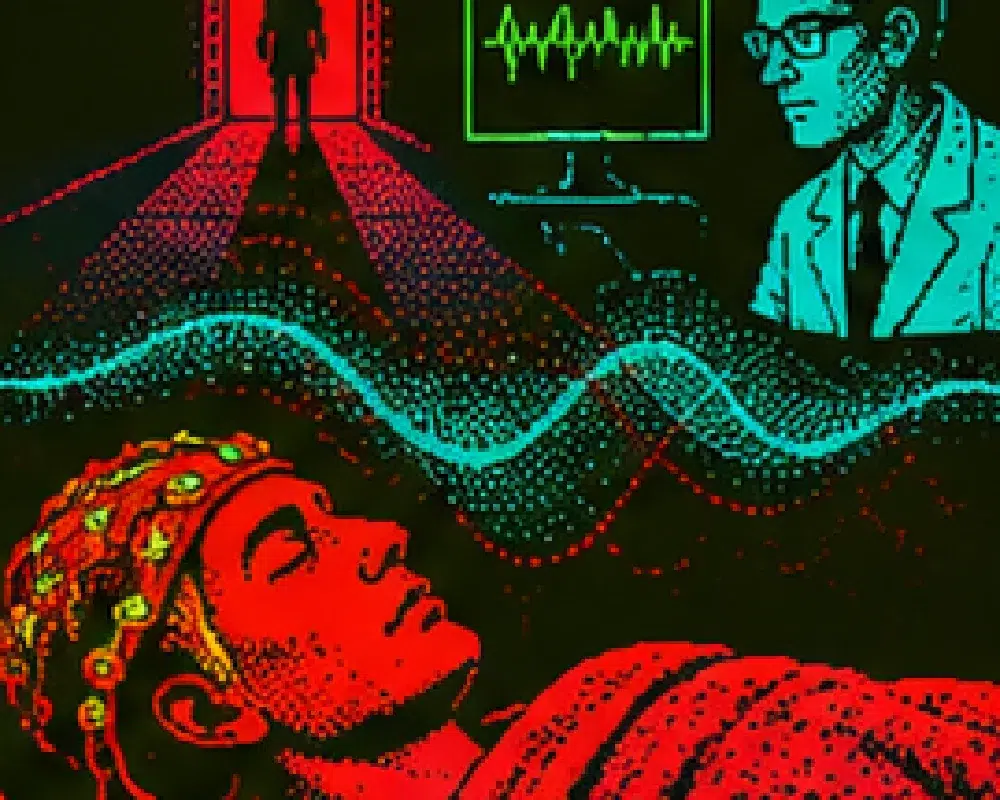
In 2024, the California startup REMspace went further. According to its press release, on September 24, a server sent a random word in a made-up language to one lucid dreamer through earbuds. “Eight minutes later, the next participant entered a lucid dream. She received the stored message from the first participant and confirmed it upon awakening, marking the first-ever ‘chat’ exchanged in dreams.” That’s a company announcement and it hasn’t been peer reviewed (Sleep Review covered it), but still. Dreamer to dreamer.
None of this came out of nowhere, either. At Maimonides Medical Center in Brooklyn, Montague Ullman and Stanley Krippner tested whether a “sender” in another room could beam a picture into a sleeper’s dream, and they “concluded the results from some of their experiments supported dream telepathy,” according to Wikipedia’s dream telepathy page. Back in 1867, Hervey de Saint-Denys wrote a book on steering your own dreams. Frederik van Eeden coined “lucid dream” in 1913. And Aristotle noticed that “often when one is asleep, there is something in consciousness which declares that what then presents itself is but a dream.”
So here’s my question. If a lab can get into your dream with a pair of earbuds, what else can?
If this kind of rabbit hole is your thing, the Chroniclers Vault gets my solo deep dives in their full extended cut, far ahead of the public release. It starts at five bucks, and you can find it at patreon.com/cw/crypticchronicles.
Dreams That Saw It Coming
Some visitors don’t bring a message. They bring the future.
According to his friend Ward Hill Lamon, a few days before Ford’s Theatre, Abraham Lincoln described a dream. He followed the sound of sobbing through the White House to the East Room. “Before me was a catafalque, on which rested a corpse wrapped in funeral vestments.” People were weeping. “‘Who is dead in the White House?’ I demanded of one of the soldiers. ‘The President,’ was his answer; ‘he was killed by an assassin.'” That’s from Lamon’s account, as quoted in Wikipedia’s assassination of Abraham Lincoln article. Lincoln later brushed it off, telling Lamon that in the dream it was “some other fellow, that was killed.”
The next one is heavy, so I’ll go gently. On October 20, 1966, a 10-year-old girl in Aberfan, Wales, named Eryl Mai Jones told her mother about a dream she’d had the night before. “I dreamt I went to school and there was no school there,” she said. The next morning a colliery spoil tip slid down the mountain onto Pantglas Junior School. According to the Guardian’s review of Sam Knight’s book The Premonitions Bureau, Eryl Mai was among the 144 people who died. The disaster took 116 children and 28 adults.
A psychiatrist named John Barker visited Aberfan afterward. He asked a London newspaper to appeal for anyone who’d had premonitions of the disaster, and 76 people wrote in, the Guardian says. That appeal led to the British Premonitions Bureau, which collected people’s forebodings in case one could warn of the next disaster. I’ll leave that story there, with respect for the families.
Decades earlier, the aeronautical engineer J. W. Dunne logged his dreams and published An Experiment with Time in 1927. In it he claims about 10% of his dreams contained some piece of future experience, according to Wikipedia’s precognitive dream page. And of course the oldest version is Genesis, where God grants Joseph prophetic dreams and the gift of reading other people’s.
The Man in Everyone’s Dreams
Here’s one where I have to name the catch right up front. In January 2006, the story goes, a New York psychiatrist’s patient sketched a man who kept appearing in her dreams. Other patients supposedly recognized him. The website “Ever Dream This Man?” claimed more than 8,000 people, in cities from Los Angeles to Tehran to Tokyo, had seen him, and some said he told them to “go North.” Then in 2010 creator Andrea Natella revealed it was a hoax, a guerrilla marketing campaign, according to Wikipedia’s This Man entry.
So the man was fake. But thousands of people still said they’d seen that face. Why?
Carl Jung would’ve had an answer. He said the collective unconscious holds archetypes, “innate symbols understood from birth in all humans,” which is why the same figures turn up in myths and dreams all over the world. He also wrote about “big dreams” that feel like they belong to the whole tribe. Maybe the Old Hag, the mara, the batibat, and the Hat Man are one figure in local clothes. Or maybe something wearing those clothes is real, and it gets around.
And in the 1950s, Kilton Stewart wrote that the Senoi of Malaysia talked through their dreams every morning as a community and were among the healthiest, happiest people on earth. That idea became the root of a lot of Western “dream control” advice.
A Fair Word for the Skeptics
To be fair, here’s what the mainstream says, once. Sleep science ties the chest-pressing visitors and shadow figures to sleep paralysis, where the mind wakes before the body does. C. E. M. Hansel criticized the design of the Maimonides telepathy experiments. Anthropologist G. William Domhoff argued the Senoi dream-control story was overstated (though others say his criticism is exaggerated). Historians Don and Virginia Fehrenbacher questioned Lamon’s Lincoln story. And the Premonitions Bureau page notes that, since we dream so much, a dream can line up with an event by pure probability.
Fine. Sleep paralysis explains how you get pinned to the bed. It doesn’t explain why a Norse king, a Newfoundland fisherman, and a Japanese teenager all describe the same visitor. And it doesn’t touch the part where four labs on two continents got a dreamer to answer a math problem from inside a dream.
So, Are We Alone in There?
Plutarch thought the spirits came down from the moon. Homer thought Zeus could slip into your tent wearing a friend’s face. The Wendat thought a crow or a fire might show up with your diagnosis. Castaneda thought something out there was sending scouts. And a lab in Illinois put a question into a sleeping person’s head and got the right answer back.
I don’t know what’s on the other side of the hatch. But I’m pretty sure the hatch is real. So tonight, when you’re drifting off and the room feels a little too crowded, ask yourself who else might be coming through.
What do you think? Have you ever had a visitor in a dream you couldn’t explain? Let me know in the comments.
Dream Lore FAQs
What is dream lore?
Dream lore is the worldwide body of myth, religion, and folk belief about dreams. A lot of it says we aren’t alone when we sleep, and that gods, spirits, demons, the dead, or other people can visit or send dreams.
Who said dreams come from the moon?
The closest match is Plutarch. In On the Face Which Appears in the Orb of the Moon, souls live on the moon after death, spirits come down from it to run oracles, and souls there live with memories for dreams.
Can spirits enter your dreams?
Many traditions say yes. Greek myth has Zeus sending a Dream to Agamemnon, Islamic hadith says a bad dream can come from the satan, and Wendat healers said an oki spirit visited in dreams as a fire, ghost, or bird.
What is the thing that sits on your chest at night?
Folklore calls it the mara, the Old Hag, the dab tsog, the batibat, or kanashibari, depending on the culture. Sleep science links these experiences to sleep paralysis, but the same visitor shows up in story after story.
Can people communicate inside dreams?
Yes. In 2021, four independent labs reported in Current Biology that lucid dreamers heard questions and answered using electrophysiological signals. In 2024, the startup REMspace announced a dreamer-to-dreamer message, which hasn’t been peer reviewed.
Further Reading
- The Terror That Comes in the Night by David J. Hufford. The classic, witness-first study of the Old Hag and night attacks.
- The Art of Dreaming by Carlos Castaneda. The source of the “scouts” and the inorganic beings.
- The Premonitions Bureau by Sam Knight. The true story of the psychiatrist who started collecting premonitions after Aberfan.
As an Amazon Associate, Cryptic Chronicles earns from qualifying purchases.
Sources
The moon and the Greeks
- Plutarch, On the Face Which Appears in the Orb of the Moon, Loeb trans. (LacusCurtius): penelope.uchicago.edu
- Plutarch (Wikipedia): en.wikipedia.org
- Diogenes Laertius, Lives 8.32, Pythagoras (LacusCurtius): penelope.uchicago.edu
- Endymion (Wikipedia): en.wikipedia.org
- Oneiroi (Wikipedia): en.wikipedia.org
- Morpheus (Wikipedia): en.wikipedia.org
- Phobetor (Wikipedia): en.wikipedia.org
- Gates of horn and ivory (Wikipedia): en.wikipedia.org
- Epinomis 985c, quoted at Footnotes2Plato: footnotes2plato.com
- Lucian, True History Book 2 (Elfinspell): elfinspell.com
Incubation and dream oracles
- Asclepieion (Wikipedia): en.wikipedia.org
- Epidaurus cure inscriptions (ToposText): topostext.org
- Thutmose IV and the Dream Stele (Wikipedia): en.wikipedia.org
- Dreams in the Serapeum, trans. Ray and Muir (Attalus): www.attalus.org
- BBC History, Voices from Ancient Egypt: www.bbc.co.uk
- Synesius, On Dreams, Fitzgerald trans. (Livius): www.livius.org
- Macrobius (Wikipedia): en.wikipedia.org
- Macrobius’s five dream types (HHU Düsseldorf): user.phil.hhu.de
- Dream of Scipio (Wikipedia): en.wikipedia.org
Night visitors
- Incubus (Wikipedia): en.wikipedia.org
- Mare (folklore), including King Vanlandi (Wikipedia): en.wikipedia.org
- David J. Hufford, The Terror That Comes in the Night (Penn Press): www.pennpress.org
- Sleep paralysis (Wikipedia): en.wikipedia.org
- Dab tsog (Wikipedia): en.wikipedia.org
- Batibat (Wikipedia): en.wikipedia.org
- Shadow person (Wikipedia): en.wikipedia.org
The soul’s voice, scripture, and dreaming as a place
- Jesuit Relations, Vol. 39 (Creighton University): moses.creighton.edu
- Haudenosaunee (Wikipedia): en.wikipedia.org
- Wendat (Wikipedia): en.wikipedia.org
- Talmud, Berakhot 55a (Sefaria): www.sefaria.org
- Talmud, Berakhot 57b (Sefaria): www.sefaria.org
- Sahih Muslim 2263a (Sunnah.com): sunnah.com
- Sahih al-Bukhari 6987 (Sunnah.com): sunnah.com
- The Dreaming (Wikipedia): en.wikipedia.org
- Dream yoga (Wikipedia): en.wikipedia.org
- Butterfly dream (Wikipedia): en.wikipedia.org
Occultists
- Astral projection (Wikipedia): en.wikipedia.org
- Astral plane (Wikipedia): en.wikipedia.org
- C. W. Leadbeater (Wikipedia): en.wikipedia.org
- C. W. Leadbeater, Dreams: What They Are and How They Are Caused (Archive.org): archive.org
- Carlos Castaneda, The Art of Dreaming (HarperCollins, 1993); summary (Wikipedia): en.wikipedia.org
Science, prophecy, and the skeptics
- Lucid dream (Wikipedia): en.wikipedia.org
- Stephen LaBerge (Wikipedia): en.wikipedia.org
- Konkoly et al., “Real-time dialogue between experimenters and dreamers during REM sleep,” Current Biology (2021), PubMed: pubmed.ncbi.nlm.nih.gov
- Northwestern University news on the 2021 study: news.weinberg.northwestern.edu
- REMspace press release (BusinessWire, 2024): www.businesswire.com
- Sleep Review on REMspace: sleepreviewmag.com
- Dream telepathy (Wikipedia): en.wikipedia.org
- Hervey de Saint-Denys (Wikipedia): en.wikipedia.org
- Assassination of Abraham Lincoln (Wikipedia): en.wikipedia.org
- Ward Hill Lamon (Wikipedia): en.wikipedia.org
- The Guardian, review of Sam Knight’s The Premonitions Bureau (2022): www.theguardian.com
- Aberfan disaster (Wikipedia): en.wikipedia.org
- British Premonitions Bureau (Wikipedia): en.wikipedia.org
- Precognitive dream (Wikipedia): en.wikipedia.org
- This Man (Wikipedia): en.wikipedia.org
- Collective unconscious (Wikipedia): en.wikipedia.org
- Big dream (Wikipedia): en.wikipedia.org
- Senoi (Wikipedia): en.wikipedia.org
Want the Extended Deep Dives First?
If this kind of deep dive is your thing, the Chroniclers Vault gets my solo deep dives in their full extended cut, far ahead of the public release. It starts at five bucks, and it keeps the show going. Come over and have a look: patreon.com/cw/crypticchronicles.


0 Comments