The Castaneda flyers are the cosmic predators don Juan describes in Carlos Castaneda’s last book, The Active Side of Infinity (1998): a companion for life that keeps human beings docile and feeds on a glowing coat of awareness.
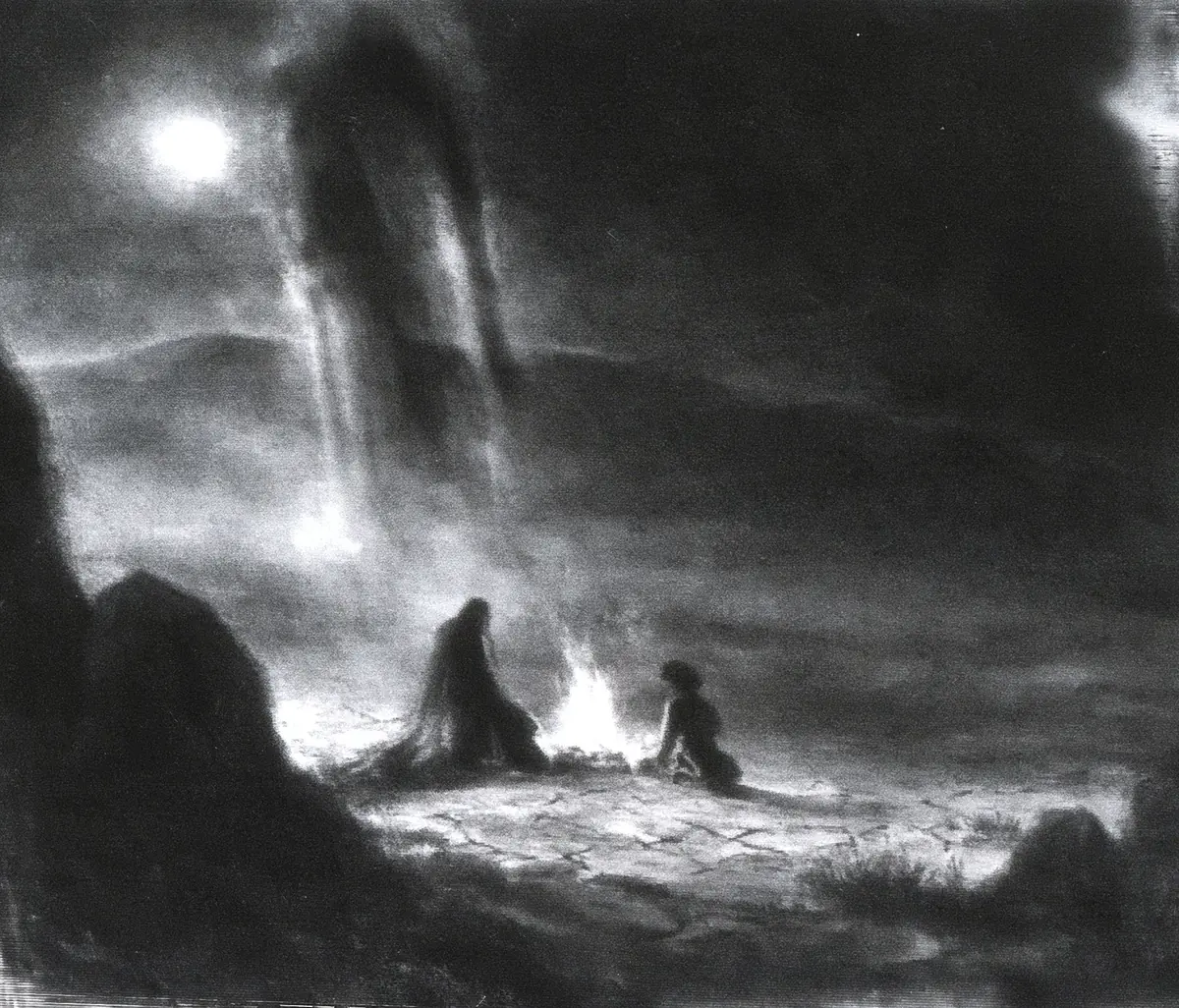
It is almost too dark to see the trees. Carlos Castaneda sits with his teacher, don Juan Matus, as the leaves go heavy and black. Don Juan tells him not to stare. Look from the corner of the eye. Pay attention to the darkness itself, without focusing.
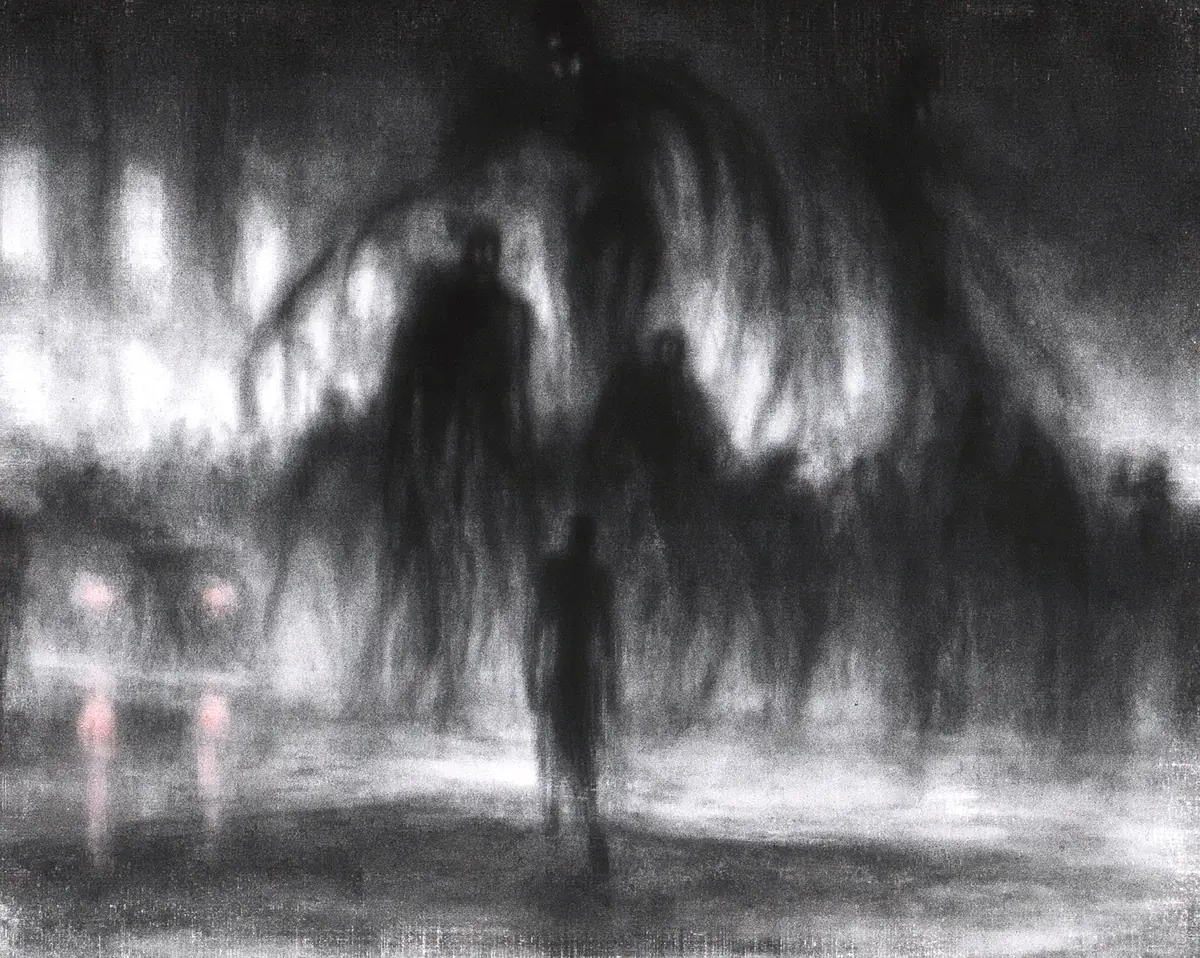
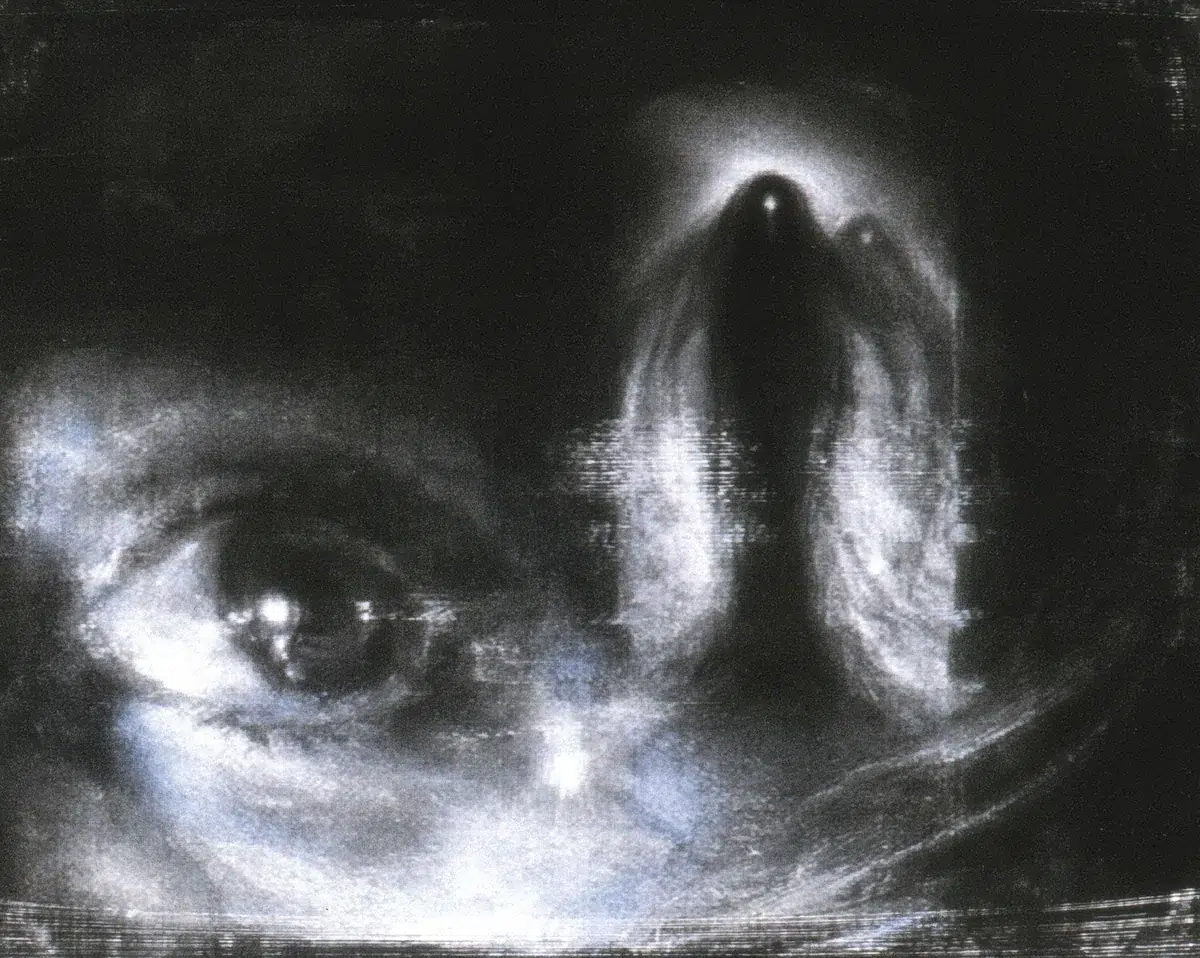
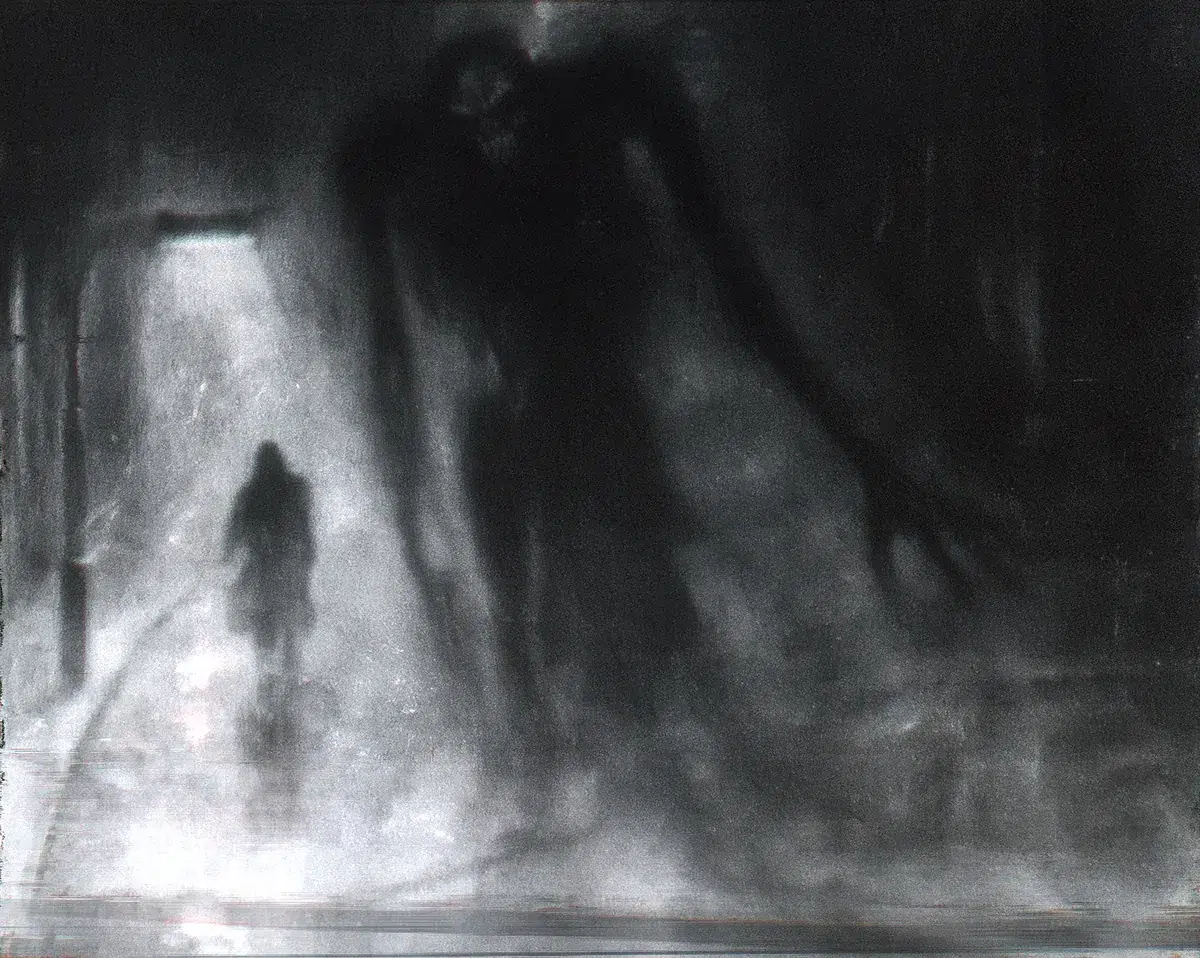
And then the darkness moves. Fleeting black shadows slide through the foliage, like fat black fish, then like gigantic swordfish flying through the night.
“What is it, don Juan?” he asks. “I see fleeting black shadows all over the place.”
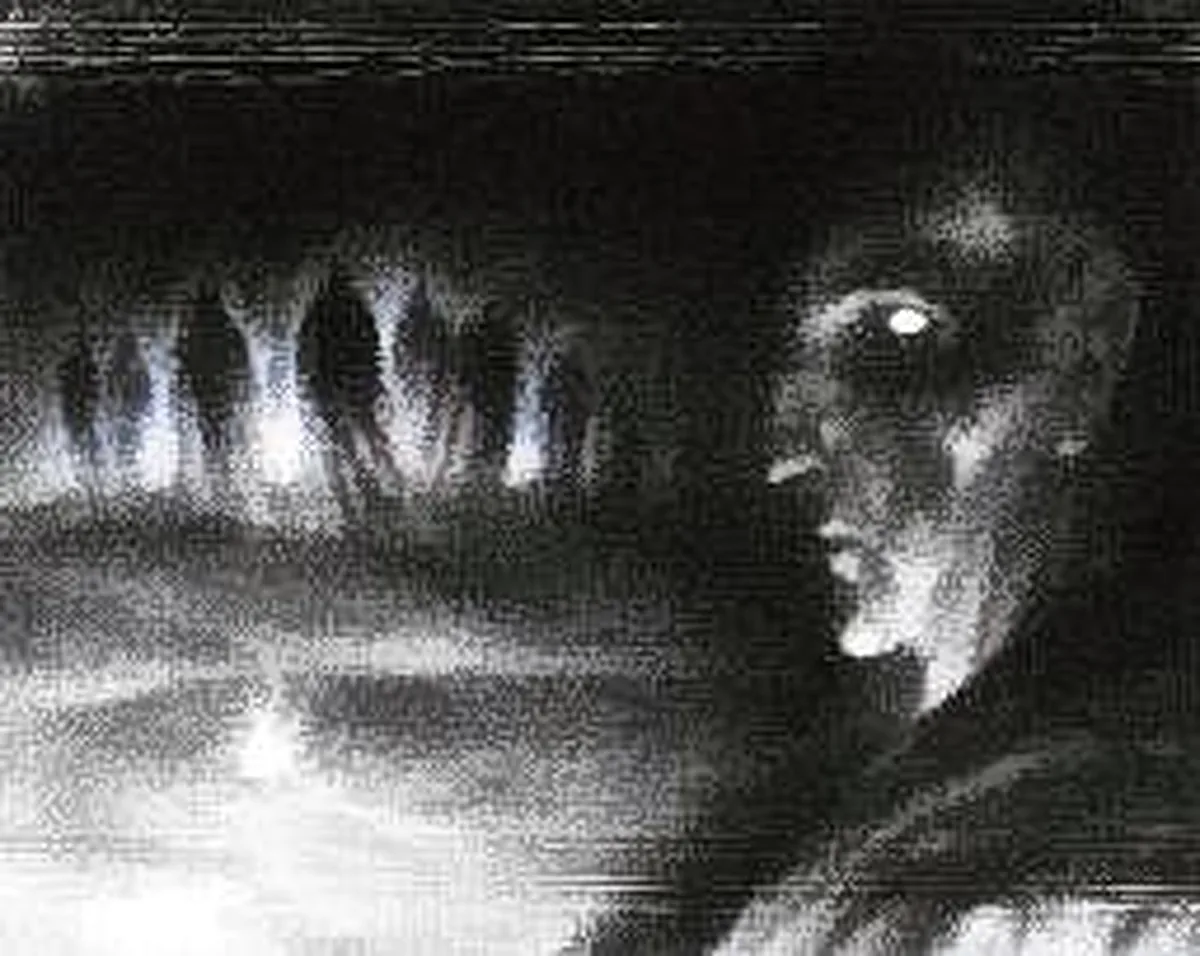
The Castaneda flyers are the cosmic predators don Juan describes in Carlos Castaneda’s last book, The Active Side of Infinity (1998). He calls them a “companion for life,” “a predator that came from the depths of the cosmos” that keeps us docile and feeds on a “glowing coat of awareness.” In the chapter “Mud Shadows,” Castaneda sees them as fleeting black shadows and as a heavy “mud shadow,” and don Juan says they installed a mind in us that is not ours, a “foreign installation.”
Later writers have compared the flyers to Gnostic archons, to the Native idea of wetiko, to Robert Monroe’s loosh, and to modern shadow-people and Hat Man reports. Those are parallels. They are not claims Castaneda made.
I want to stay close to what the book actually says, because the internet has a bad habit of tightening his sentences until they sound punchier than the page. Then we can look at the older lore that keeps rhyming with it. And honestly, there is a lot of rhyme.
1. What Castaneda Flyers Actually Are
Castaneda was a UCLA-trained anthropologist who, starting in 1968, published a series of books he presented as the record of an apprenticeship with a Yaqui “man of knowledge” named don Juan Matus. The early books made him famous. The later ones get stranger and more technical. The shadow-predator material is late.
The foreign-installation idea actually shows up early in The Active Side of Infinity, long before the mud shadows arrive. On about page 7 of the 1998 HarperCollins hardcover, don Juan is already talking about a war inside the head:
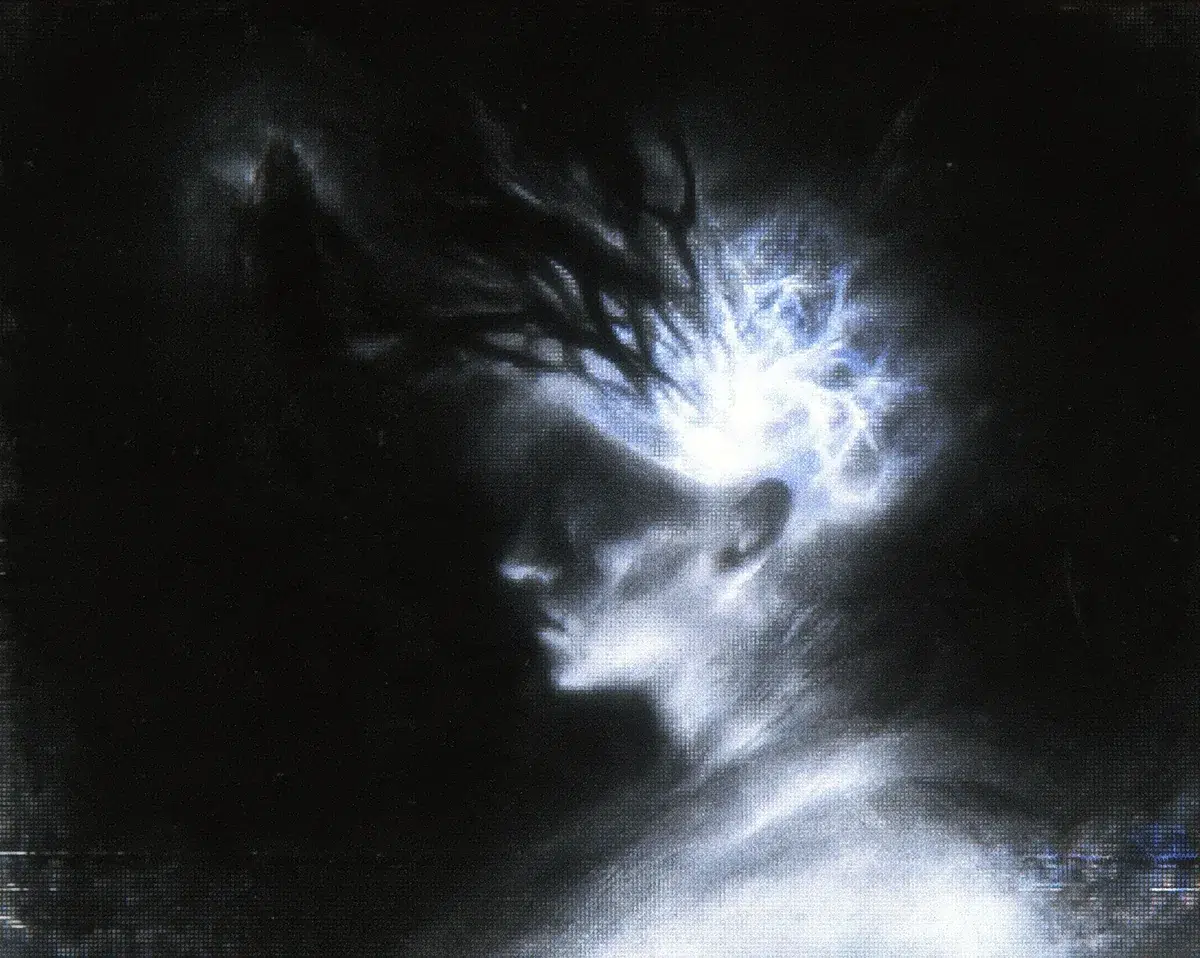
“Every one of us human beings has two minds. One is totally ours, and it is like a faint voice that always brings us order, directness, purpose. The other mind is a foreign installation. It brings us conflict, self-assertion, doubts, hopelessness.”
— Carlos Castaneda, The Active Side of Infinity (HarperCollins, 1998)
Some blogs swap in “self-importance” there. The book says self-assertion, doubts, hopelessness. Little difference, maybe, but I’d rather give you the line as it sits on the page.
He comes back to it later, calling that second mind “a cheap model: economy strength, one size fits all,” and saying a force is starting to disintegrate “what the sorcerers call the foreign installation, which exists in you and in every other human being.”
Then comes “Mud Shadows,” which starts at page 215 in that edition. Don Juan calls it “the topic of topics.” After Castaneda sees those swordfish-shadows in the trees, don Juan stops talking around it:
“They discovered that we have a companion for life,” he said, as clearly as he could. “We have a predator that came from the depths of the cosmos and took over the rule of our lives. Human beings are its prisoners. The predator is our lord and master. It has rendered us docile, helpless. If we want to protest, it suppresses our protest. If we want to act independently, it demands that we don’t do so.”
Why? Because we are food. “Just as we rear chickens in chicken coops, gallineros, the predators rear us in human coops, humaneros.” He says the predators have given us our systems of beliefs, our ideas of good and evil, our social mores, our hopes, our greed, our cowardice.
“They gave us their mind! Do you hear me? The predators give us their mind, which becomes our mind. The predators’ mind is baroque, contradictory, morose, filled with the fear of being discovered any minute now.”
And then the feeding itself, which is the part that still gets under my skin. Don Juan describes human beings as luminous balls of energy, covered with a glowing coat, “something like a plastic cover that is adjusted tightly over their cocoon of energy.” That coat of awareness is what the predators consume. By adulthood, all that’s left is a narrow fringe from the ground to the tops of the toes. Just enough to keep us alive. Barely.
He says that leftover fringe is “the epicenter of self-reflection.” By playing on it, the predators “create flares of awareness that they proceed to consume in a ruthless, predatory fashion. They give us inane problems that force those flares of awareness to rise, and in this manner they keep us alive in order for them to be fed with the energetic flare of our pseudoconcerns.”
Inane problems. Flares of awareness. Pseudoconcerns. That is a very specific claim about why ordinary worry can feel like it has a life of its own.
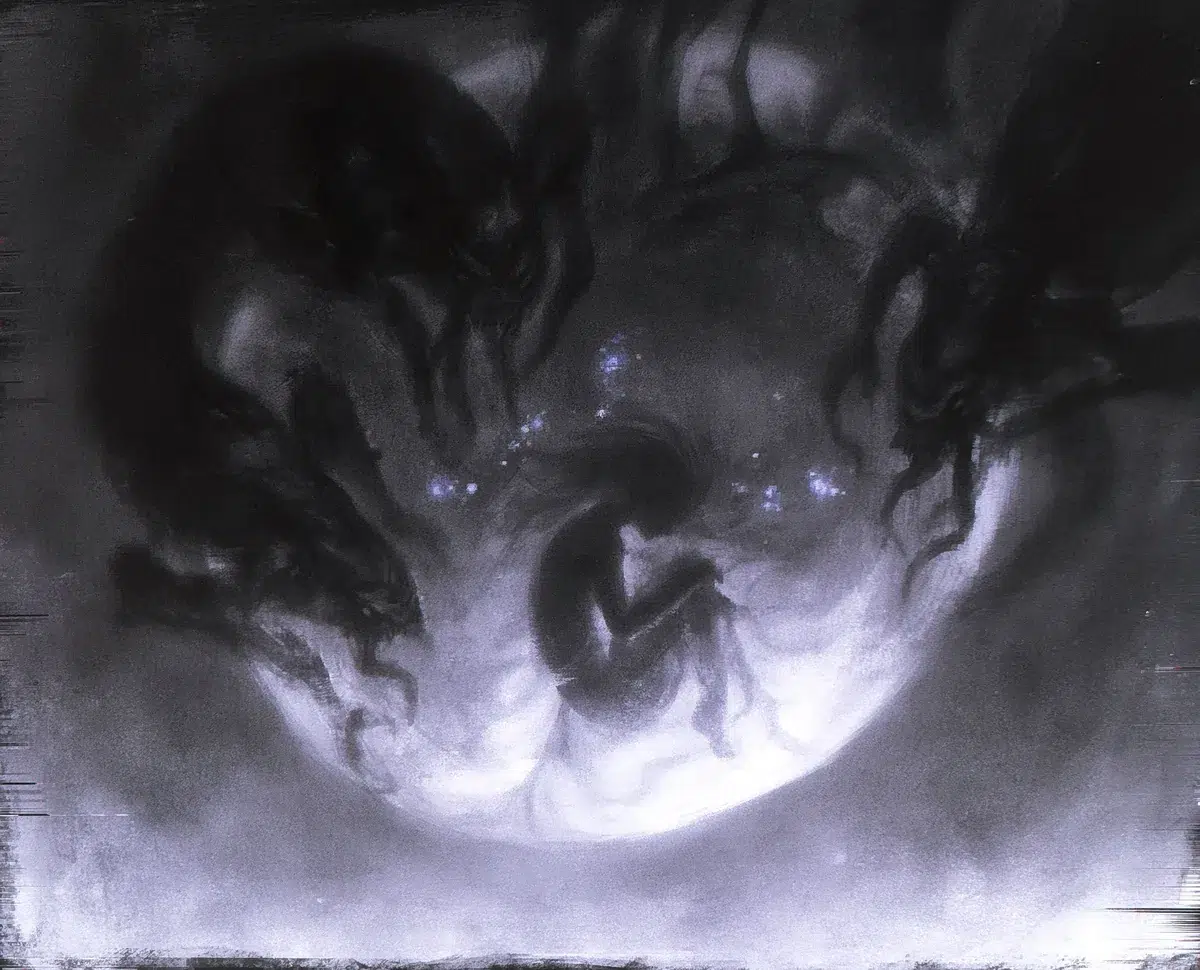
After Castaneda leaves the house, he can’t sleep in the dark. The moment the lights go off, everything around him begins to jump. He never sees complete figures or shapes. Only fleeting black shadows. Later, in a valley at night, he sees “something that looked like a mud shadow wiggle on the ground, and then take another gigantic leap, perhaps fifty feet long,” and land with an “ominous silent thud.” There’s a buzzing, a mix of flapping wings and a radio that hasn’t quite found its station. Then a gigantic black mud shadow lands by their feet. He’s sure that if he doesn’t keep his inner silence alive, “the mud shadow would cover me up like a blanket and suffocate me.”
That’s the seeing. Not a man in a hat at the foot of the bed. A heavy shape that jumps, caught first at the edge of vision.
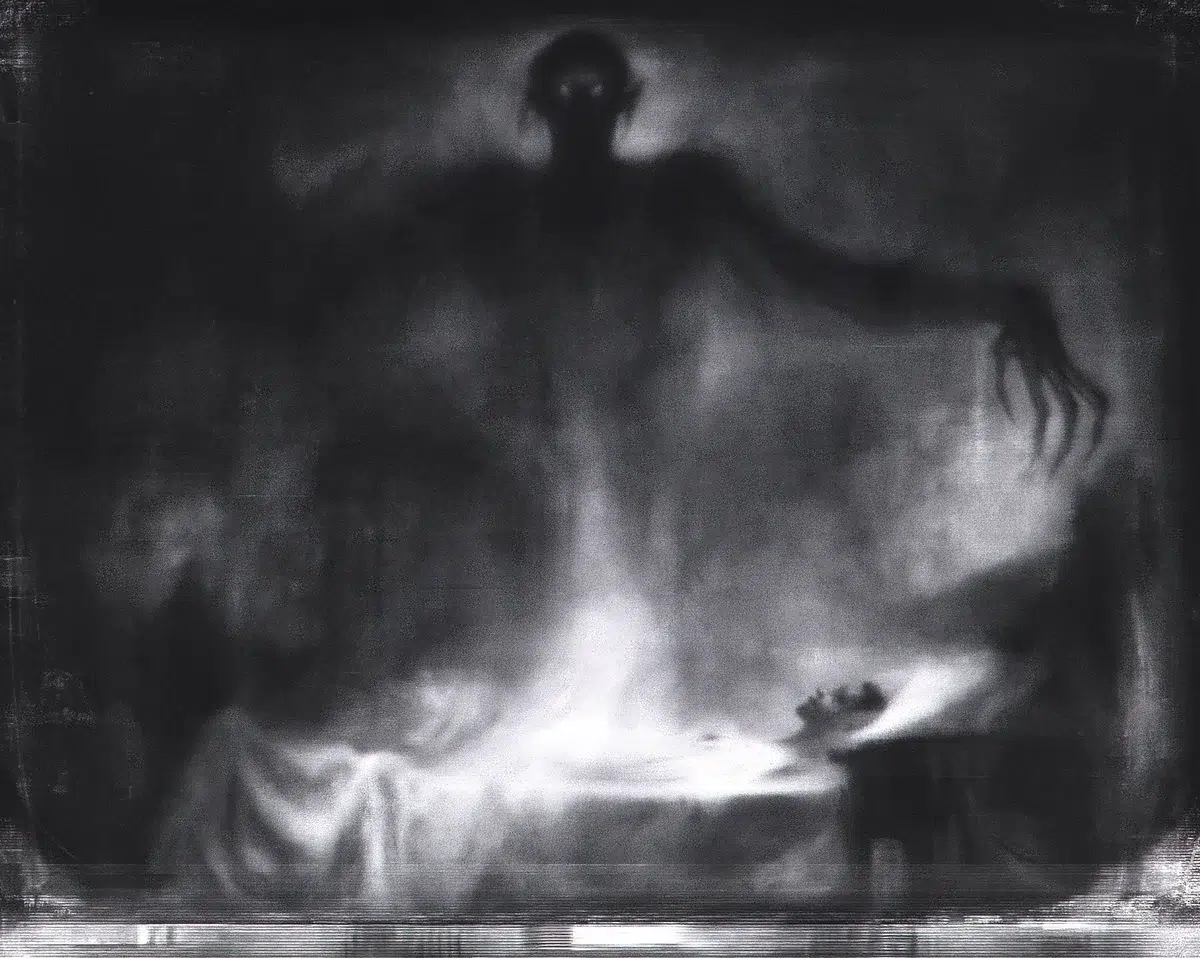
One last turn, because it’s easy to skip and I think it’s the most interesting one. Don Juan doesn’t stop at horror. He says the flyers “are an essential part of the universe” and “must be taken as what they really are—awesome, monstrous. They are the means by which the universe tests us.” We are, in his wording, “energetic probes created by the universe,” and “the flyers are the implacable challengers.” If we can take them as that, “the universe allows us to continue.”
So in the last book, the shadows are not just pests. They’re a test.
2. How Don Juan Said to Push Them Back
This is the practical part, and it’s unusually clear for Castaneda.
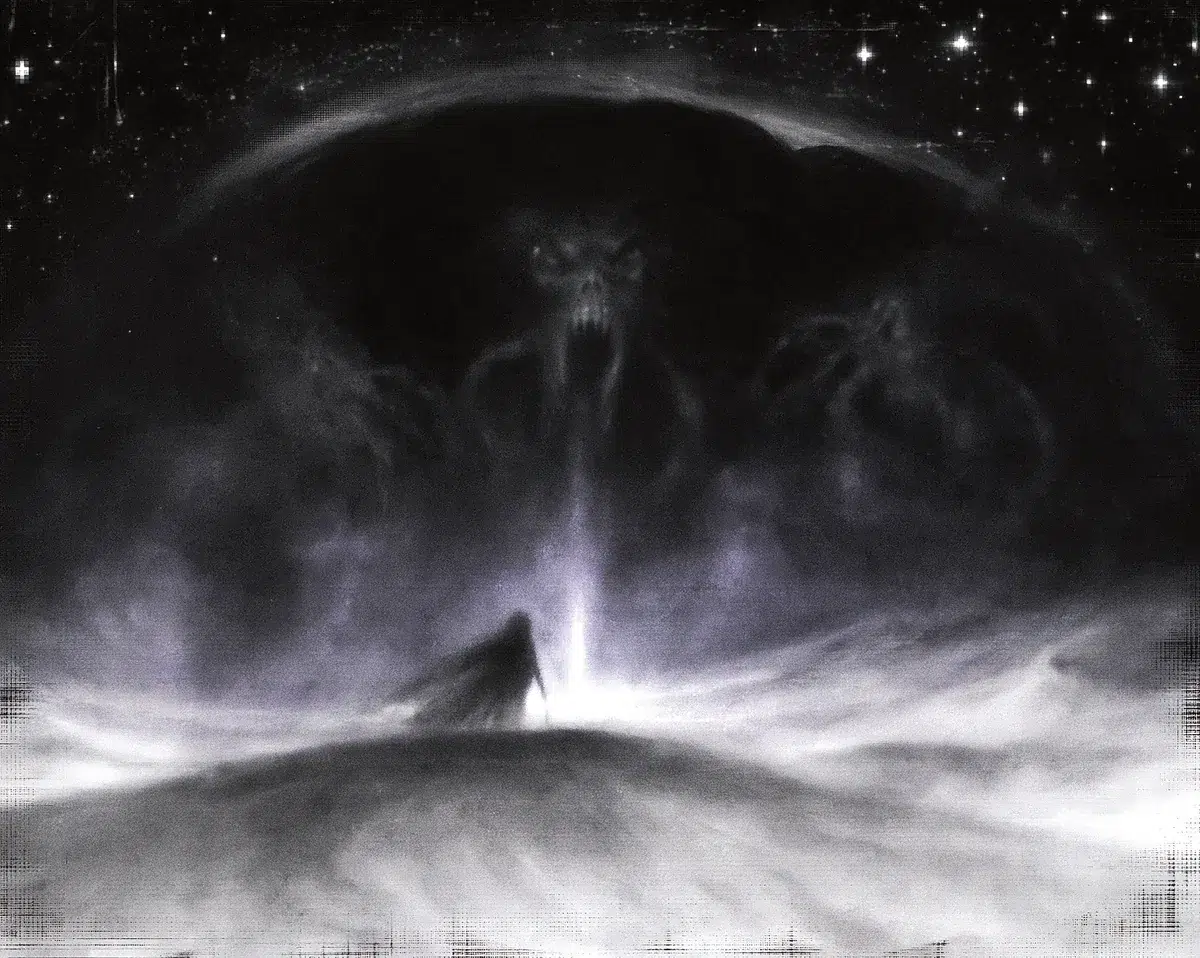
Discipline, he says, makes the glowing coat of awareness “unpalatable to the flyer.” The predators become bewildered. An inedible coat “is not part of their cognition.” If they don’t eat it for a while, it starts growing again, past the toes, back toward its natural size. The old sorcerers used to say the coat is like a tree. If it isn’t pruned, it grows, and “tremendous maneuvers of perception become a matter of course.”
The other move is inner silence:
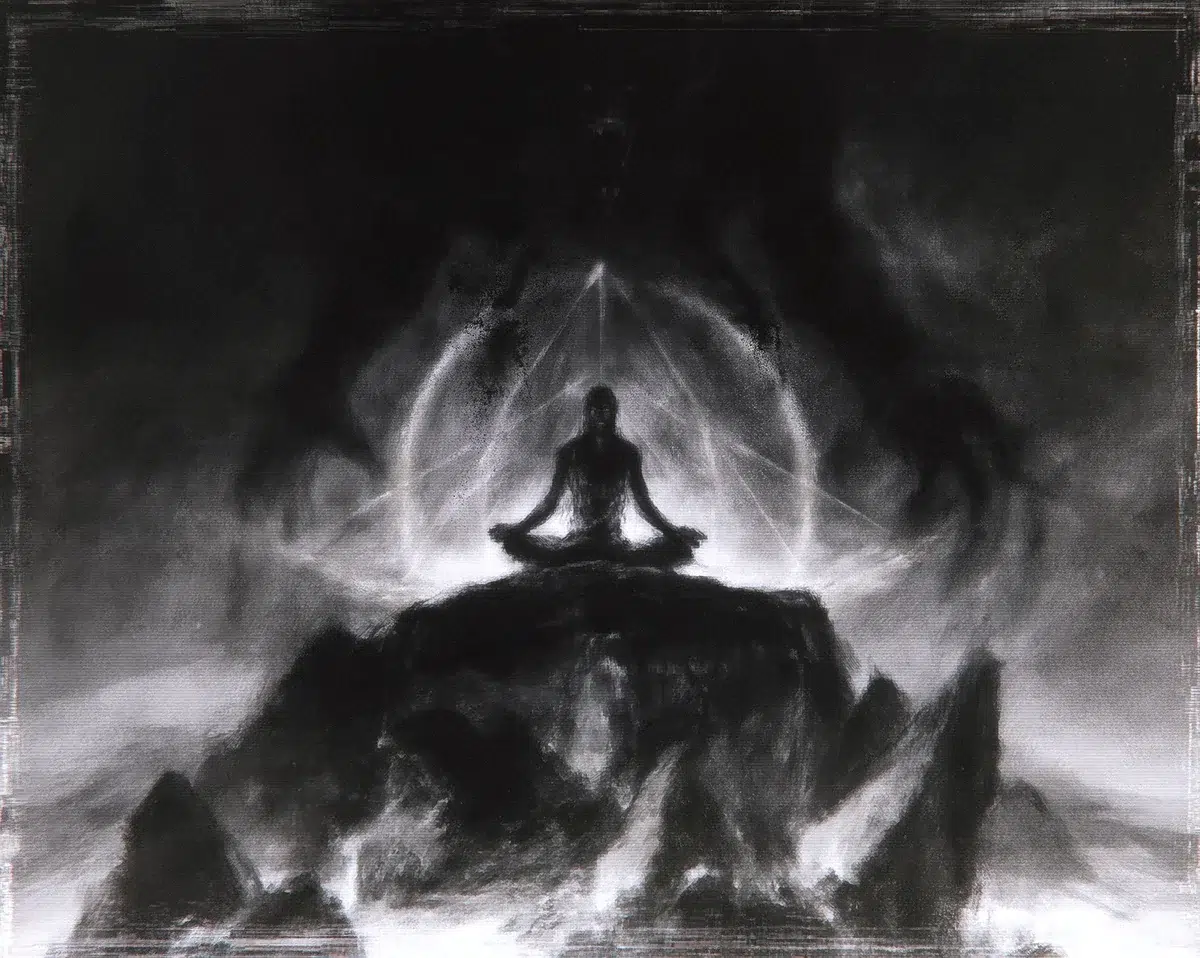
“The grand trick of those sorcerers of ancient times was to burden the flyers’ mind with discipline. They found out that if they taxed the flyers’ mind with inner silence, the foreign installation would flee, giving to any one of the practitioners involved in this maneuver the total certainty of the mind’s foreign origin. The foreign installation comes back, I assure you, but not as strong, and a process begins in which the fleeing of the flyers’ mind becomes routine, until one day it flees permanently. A sad day indeed! That’s the day when you have to rely on your own devices, which are nearly zero.”
Freedom, in that telling, is not a warm ending. When the chatter leaves, you’re on your own, and your own resources feel like nearly zero.
He also warns that the flyers’ mind has no competitors. It proposes something, agrees with itself, and makes you believe you’ve done something of worth. It will tell you that whatever Juan Matus is saying is pure nonsense, “and then the same mind will agree with its own proposition.” Which is a pretty good description of how a lot of us talk ourselves out of noticing anything inconvenient, with or without a cosmic predator in the story.
Earlier books already had a whole ecology of inorganic beings and allies. In The Art of Dreaming (1993), chapter 5, “The World of Inorganic Beings,” don Juan says sorcerers have seen two types of conscious beings roaming the earth. Inorganic beings are “long and candlelike but opaque.” Their lives are “infinitely longer.” Sorcerers can turn some of them into allies. In The Fire from Within (1984), allies appear around waterholes, most of them unusable, a few akin to us. They’re attracted to the energy released by emotion. Love works, he says. Hatred too. Sadness too. Fear especially.
That mid-1980s landscape is dangerous and sometimes useful. The 1998 flyers feel like someone turned the lights down on the same territory and finally named the thing that has been grazing on us all along. The books never quite say, in so many words, that the flyers and the allies are the same class of being. I wouldn’t flatten them on the air, or on the page, just to make a neater map.
3. The Gnostic Archons (A Parallel, Not a Quote from Don Juan)
This is the comparison you’ll see everywhere once you start searching “Castaneda flyers.” And look, the rhyme is real. The mistake is saying don Juan made it himself.
I checked the 1998 hardcover. The words “Gnostic” and “archon” do not appear in The Active Side of Infinity. Later writers laid that map on top of the book. Fine as a map. Not as a citation.
The Nag Hammadi texts, buried in Upper Egypt and recovered in 1945, include two works that keep coming up here: The Hypostasis of the Archons (“The Reality of the Rulers”) and The Apocryphon of John (“The Secret Book of John”). In Bentley Layton’s translation of the Hypostasis, the text opens by pointing back to the “authorities of the darkness,” and it says our contest “is not against flesh and blood; rather, the authorities of the universe and the spirits of wickedness.” Their chief is blind. In his arrogance he says, “It is I who am God; there is none apart from me.” A voice answers: “You are mistaken, Samael,” which the text glosses as “god of the blind.”
The rulers then try to make a man from soil, “after their body and after the image of God that had appeared to them in the waters.” They can’t make him rise. They’re from below. The living spark is from above. They are, in the text’s own wording, powerless to hold what they want.
The Apocryphon of John, in Frederik Wisse’s translation, names the chief archon Yaltabaoth (also Saklas, also Samael). “He is impious in his arrogance,” the text says. “For he said, ‘I am God and there is no other God beside me,’ for he is ignorant of his strength, the place from which he had come.” Later he announces, “I am a jealous God, and there is no other God beside me,” which the text immediately undercuts: if there were no other, of whom would he be jealous?
The archons, according to that book, create a man “according to the image of God and according to our likeness, that his image may become a light for us.” They clothe him in a body, “the tomb of the newly-formed body with which the robbers had clothed the man, the bond of forgetfulness; and he became a mortal man.” There’s also a “counterfeit spirit.” When a soul comes out of the body, “they bind it with chains and cast it into prison” until it is liberated from forgetfulness and acquires knowledge.
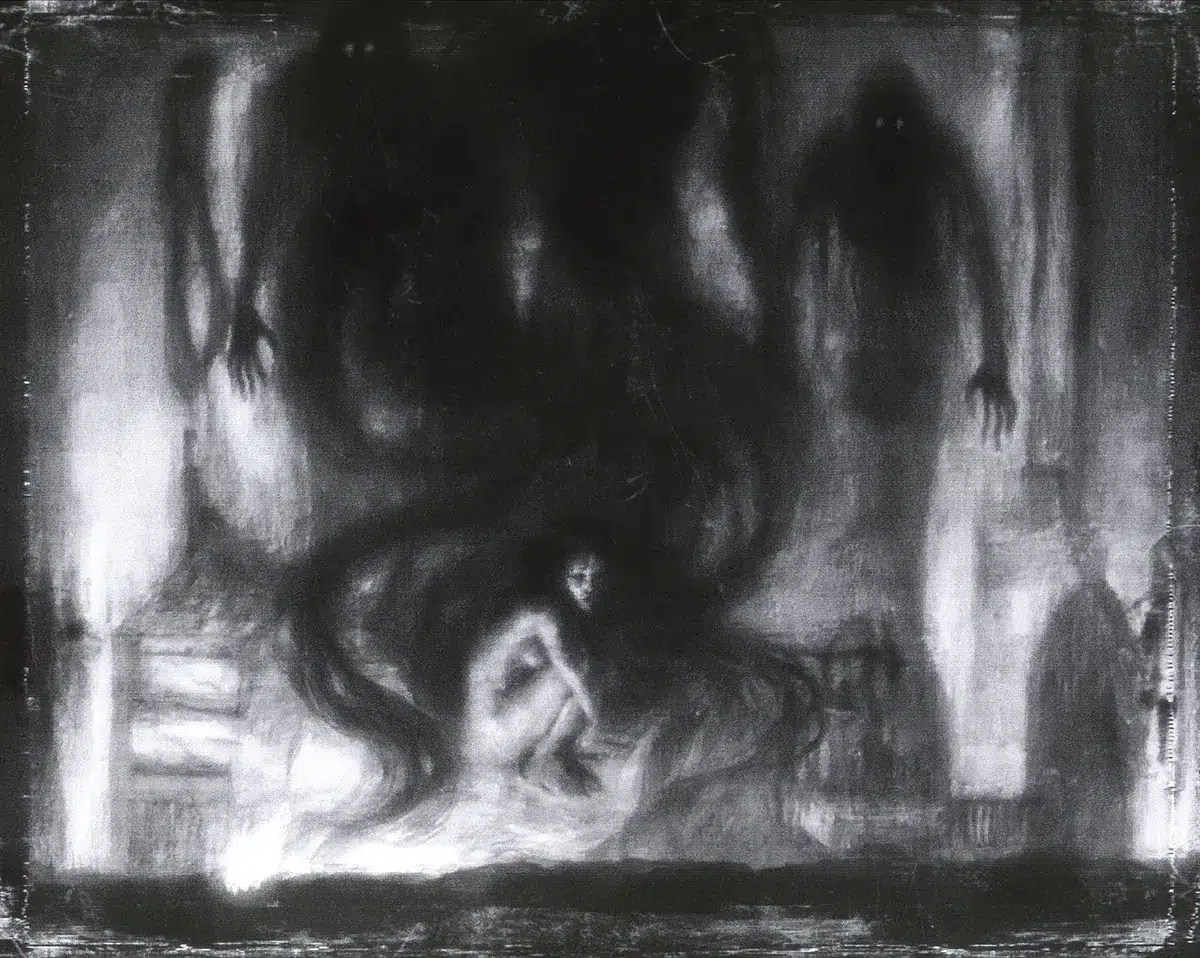
You can hear why people put this next to Castaneda. A lesser intelligence installs itself as the voice of authority. A counterfeit layer wraps the human being. Forgetfulness does a lot of the work. The real trouble is as much mental as it is physical. That really does sound like the foreign installation. Just don’t let a blog tell you don Juan quoted the Nag Hammadi library, because he didn’t.
If you want the archon side of this on our site, we already have a page on it: E.T. Race: Archons.
4. Wetiko: A Sickness That Eats People
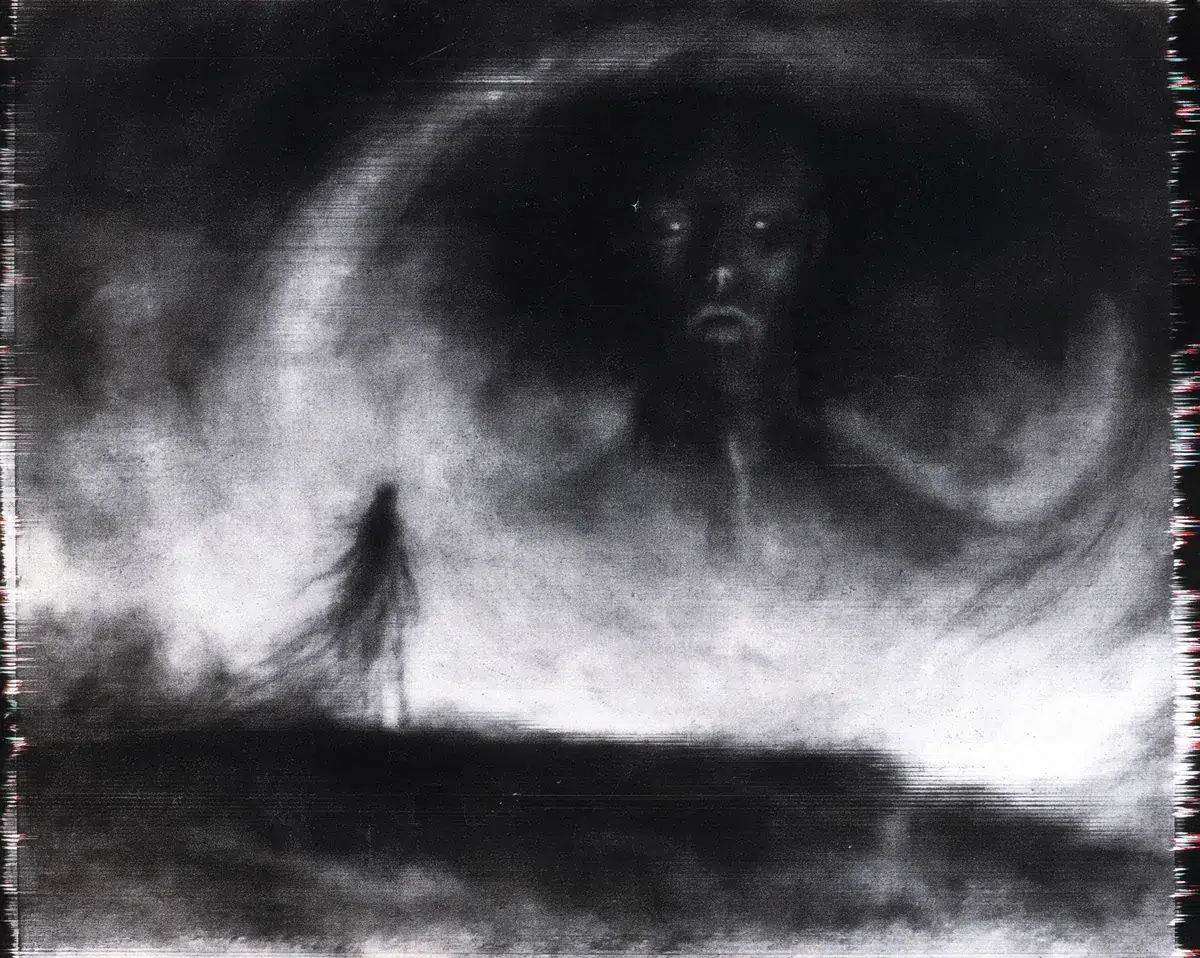
Jack D. Forbes, a Powhatan-Renape / Delaware-Lenape scholar, spent a book arguing that the modern world is sick with something older than a metaphor. In Columbus and Other Cannibals, he explains the Cree term wétiko (windigo in Ojibway, wintiko in Powhatan). In a long excerpt published by his press, Seven Stories, he writes that it “refers to a cannibal or, more specifically, to an evil person or spirit who terrorizes other creatures by means of terrible evil acts, including cannibalism.”
Then he tightens the definition:
“Cannibalism, as I define it, is the consuming of another’s life for one’s own private purpose or profit.”
— Jack D. Forbes, Columbus and Other Cannibals, excerpted by Seven Stories Press
Forbes is talking about empire, slavery, and exploitation, not bedroom shadows. I want to be straight about that. He’s saying the wealthy and the imperial “literally consume the lives of those they exploit.” No ceremony. No respect. “Only self-serving consumption.”
The overlap with Castaneda is not that Forbes was secretly writing about flyers. It’s the structure: something that lives by eating other people’s life-force, and a culture that can catch the sickness until it feels normal. Writer and teacher Paul Levy picked up Forbes’s term and ran it into psychology and spirituality, treating wetiko as a kind of mind-parasite or psychic virus that colonizes thought and turns people into agents of their own consumption. That’s Levy’s framing, in books such as Dispelling Wetiko, not Forbes’s exact wording, and not don Juan’s.
Still. A predator that eats awareness. A sickness that eats lives. A mind that may not be entirely your own. You don’t have to force those into one creature to notice they’re circling the same drain.
5. Robert Monroe and the Loosh Garden
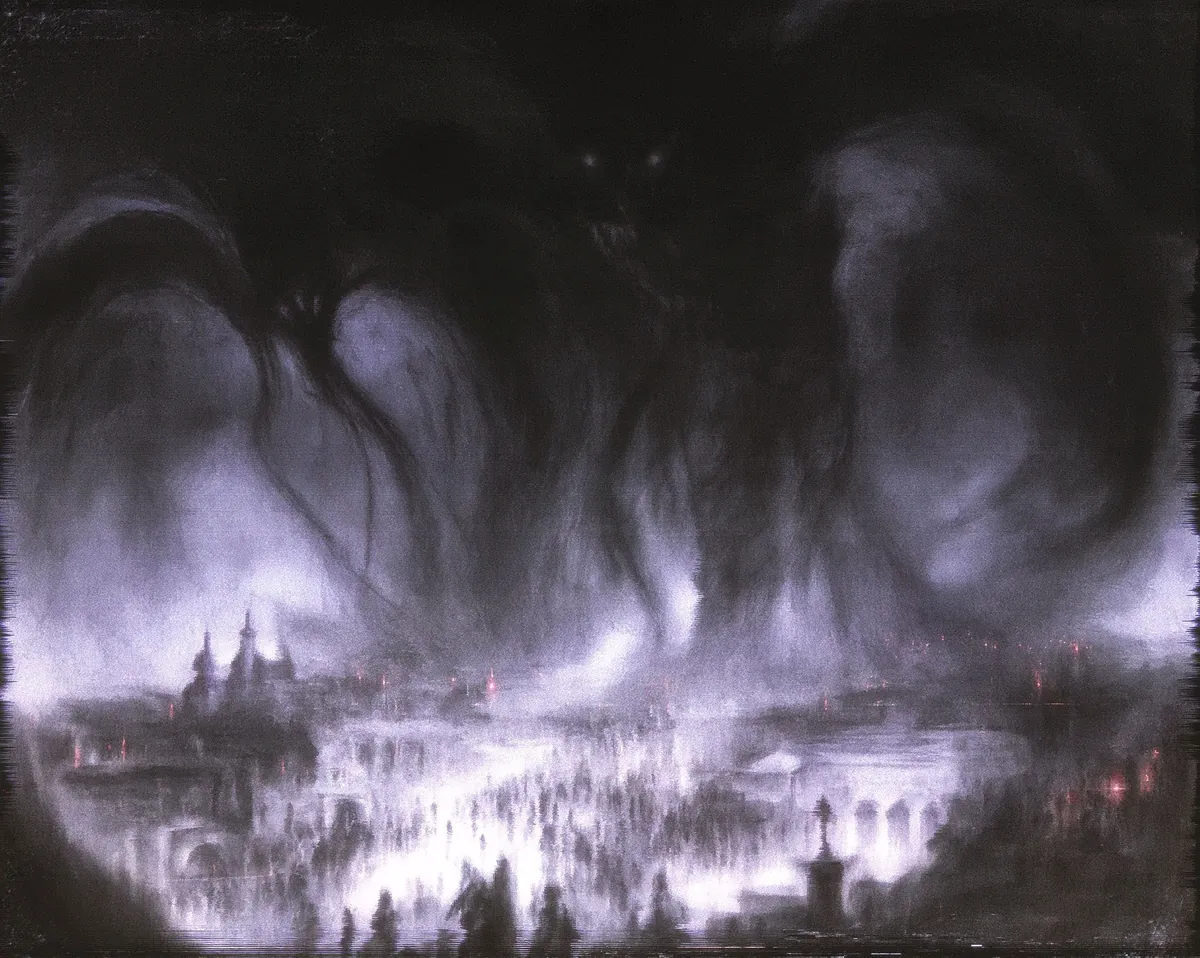
Robert Monroe was an American radio executive who became known for writing about out-of-body experience and for founding the Monroe Institute. In his 1985 book Far Journeys, he recounts, in the form of a long parable, that “Someone” in a place he calls “Somewhere” needed a rare substance identified as Loosh. Faced with supply and demand, “He decided to build a Garden and grow Loosh.”
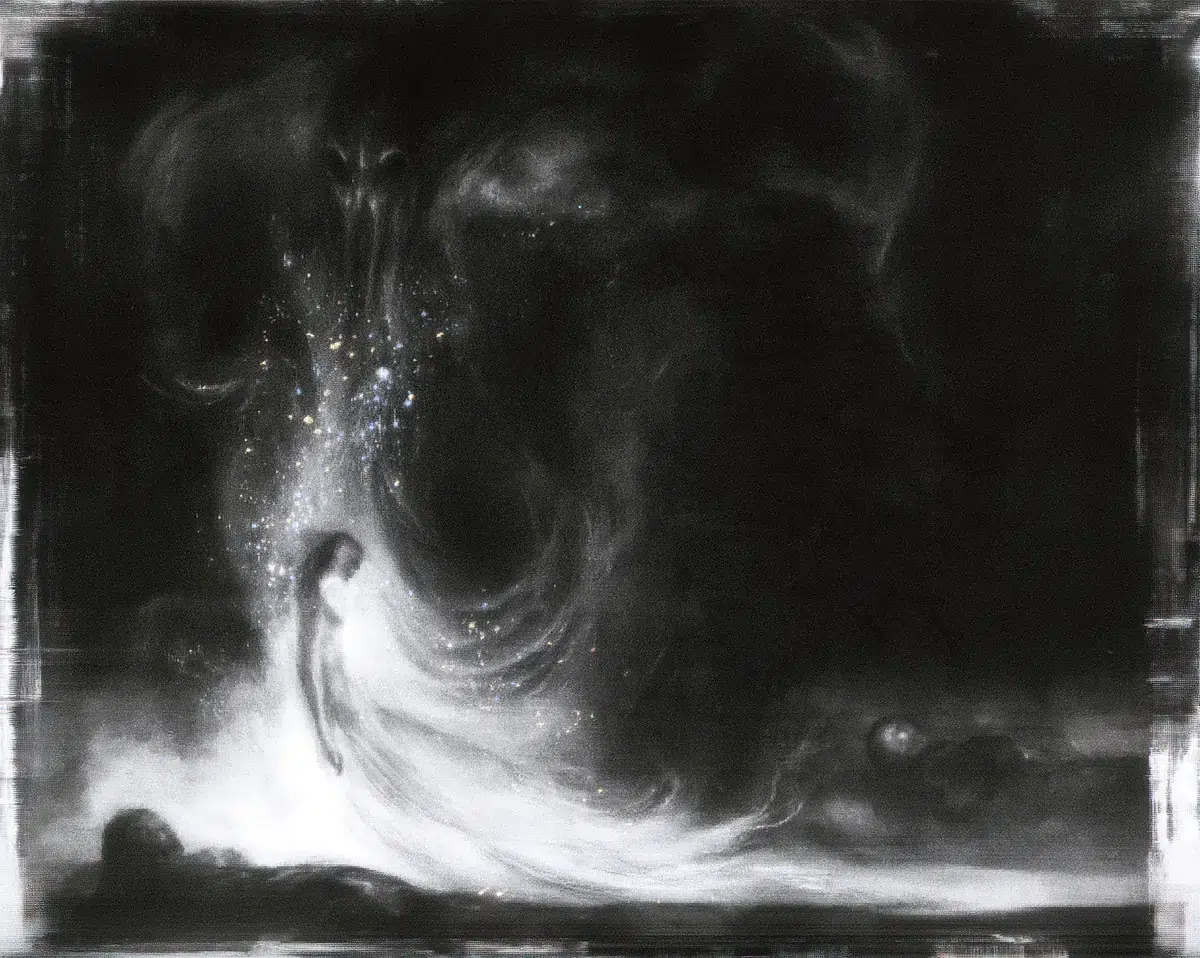
The parable walks through successive “crops.” Early versions of the garden produce only low-grade loosh, and only at the end of a life span. Then comes a rule Monroe calls the Prime Catalyst:
“Conflict among carbon-oxygen cycle units brings forth consistent emanations of Loosh. It was as simple as that.”
— Robert A. Monroe, Far Journeys (1985)
The Garden, in the way the story is usually read, is Earth. Later in the same stretch of the book, Monroe is told by nonhuman contacts that they are not “the keepers of the Garden of Earth, nor the gardeners,” and that they do not “collect and transfer human-developed loosh/energy.” He also starts talking about “loosh/love,” which complicates the cartoon version you see online. The popular write-up often stops at “we are livestock.” The book itself is colder than that in the parable, and more ambiguous afterward.
Even so, the overlap with Castaneda is sitting right there. Monroe: a garden, conflict, a harvest of a subtle substance from living beings. Don Juan: human coops, a glowing coat of awareness eaten in life, flares of worry raised on purpose so they can be eaten. And in The Fire from Within, years earlier, Castaneda already had the Eagle waiting at death to consume the rest of that awareness, “like a luminous cotton puff right into the Eagle’s beak.”
Three pictures. One rhyme. I wouldn’t merge the two men into one cosmology. I’d lay the pages next to each other and let people hear it.
6. The Hat Man, the Old Hag, and Sleep Paralysis
We’ve covered shadow people on the show before, and later went deeper in Episode 72. We also have a page on the Hat Man. The reports have been around a lot longer than late-night radio, but radio is where a lot of people first heard a name for the thing at the end of the bed.
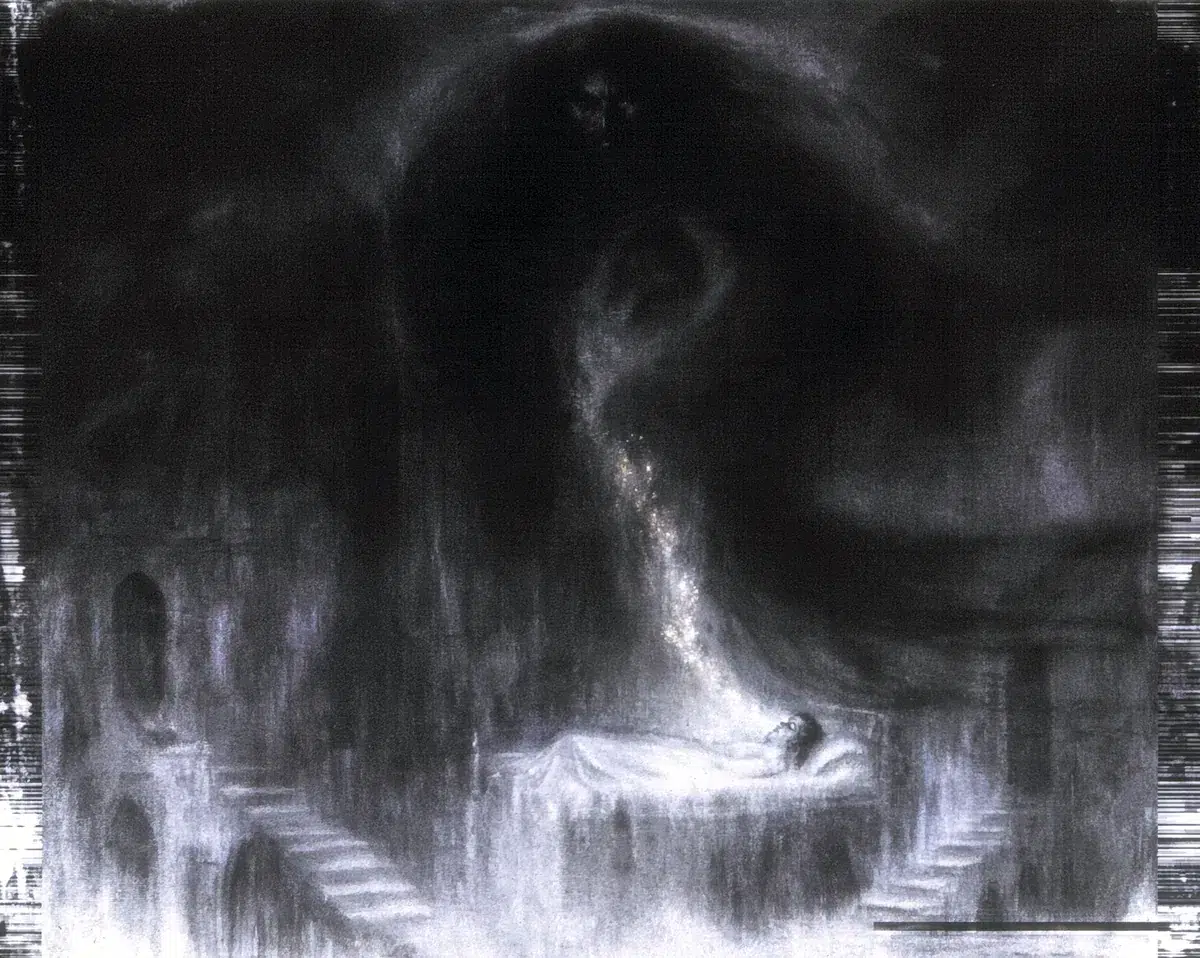
On July 23, 2008, paranormal researcher Heidi Hollis was a guest on Coast to Coast AM with George Noory, on a show billed as “Shadow People & the ‘Hat Man.'” According to the official show notes, Hollis said shadow people can take many forms: “big, hairy, shadowy spiders,” cats, streaks, clouds, or “a head is directly connected to a set of broad shoulders and, at times, you can see red glowing eyes.” She said the most common physical contact reported to her is that they “jump on their chest and choke them.”
She had first thought the Hat Man was just another form of shadow person, then was “overwhelmed with letters from people insisting that it was solid.” She described “a Zorro-type hat,” a three-piece suit, and “a cape or a long trench coat,” sometimes a watch dangling from the hip, and glowing red or solid black eyes. From witness letters, she speculated the being is the Devil. One soldier, she said, saw the Hat Man in a mirror at a haunted base in Germany. When he asked who it was, it answered, “I am Scratch.”
Hollis is widely credited in paranormal circles with helping popularize both “shadow people” and “the Hat Man” on late-night radio, including in the Art Bell / Coast to Coast world. I haven’t pinned her first on-air date in this draft, so I’m not going to invent one.
How it lines up with Castaneda, and how it doesn’t: the jumping, the pressure, the dark mass, the sense of a presence that isn’t a normal ghost story. That’s in the same neighborhood as the mud shadow that lands at your feet and wants to cover you “like a blanket.” Castaneda’s flyers, at least in the 1998 scenes I could check, are not wearing hats or three-piece suits, and he says he never saw complete figures. If you’re going to use Hollis, say that out loud. The overlap is the shadow and the predatory feel, not a fedora.
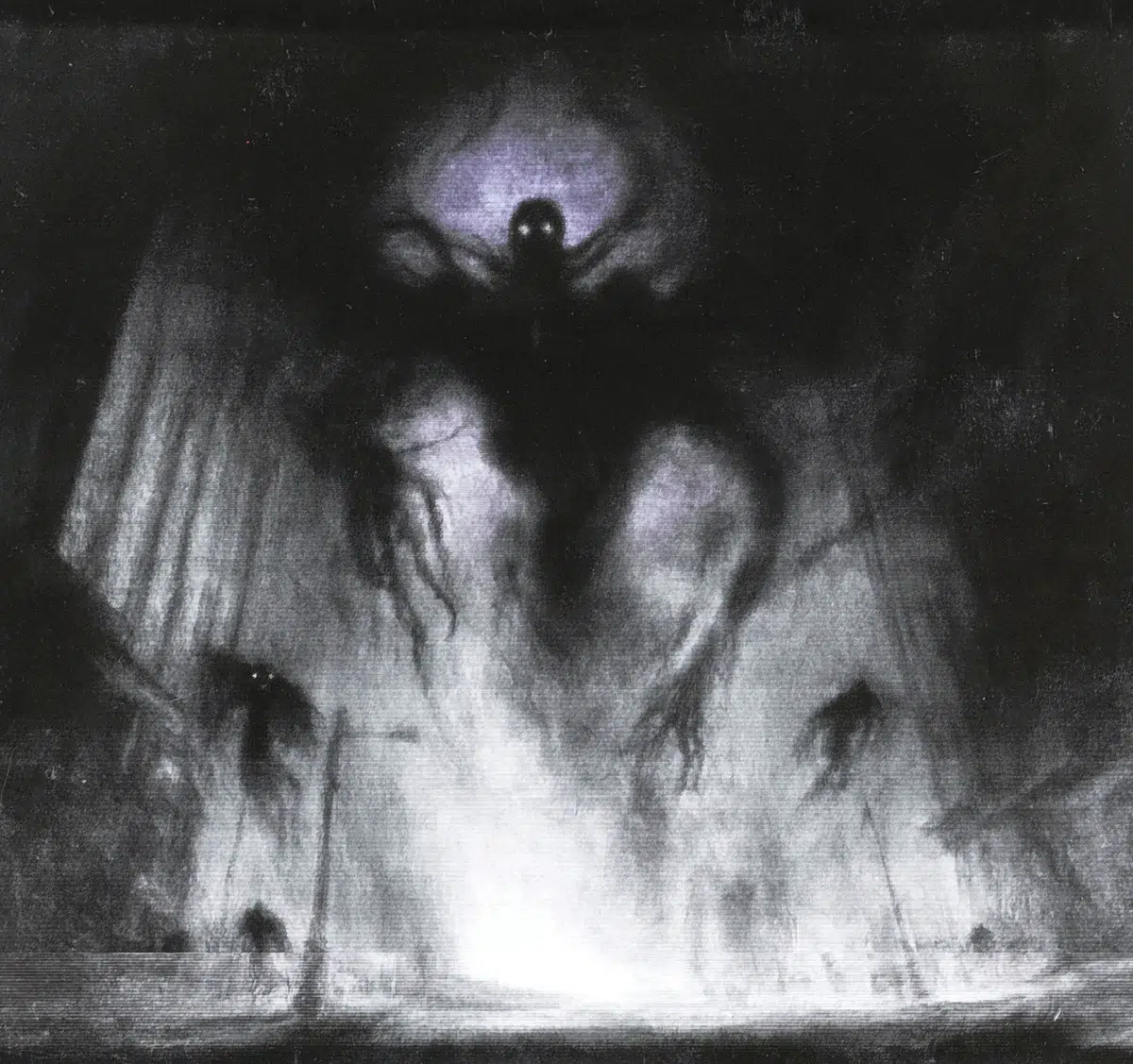
The older name, in parts of the English-speaking world, is the Old Hag. Folklorist David J. Hufford spent years on the tradition, especially in Newfoundland, and published The Terror That Comes in the Night in 1982 (often catalogued 1983). His point, and it still bothers the tidy version of the story, is that people who had never heard the hag folklore still reported the same pattern: awake, unable to move, a presence in the room, pressure on the chest. The mainstream account, said once, is sleep paralysis. The body is still in REM atonia, the mind is already throwing images, and the “intruder” is a hallucination riding a frozen body.
That probably does cover some of the cases. It does not, by itself, explain why so many people who have never read each other describe a dark humanoid, sometimes with a hat, or why Castaneda’s 1998 description of fleeting black shadows caught in peripheral vision sounds so much like the reports that flooded late-night radio a few years later. You can let that sit. I’m not going to pretend I have a courtroom verdict for you.
7. Djinn, and Shadow Beings from Other Worlds
If you step outside the Castaneda bookshelf, the “unseen companion that can press on a sleeper” is not a new idea.
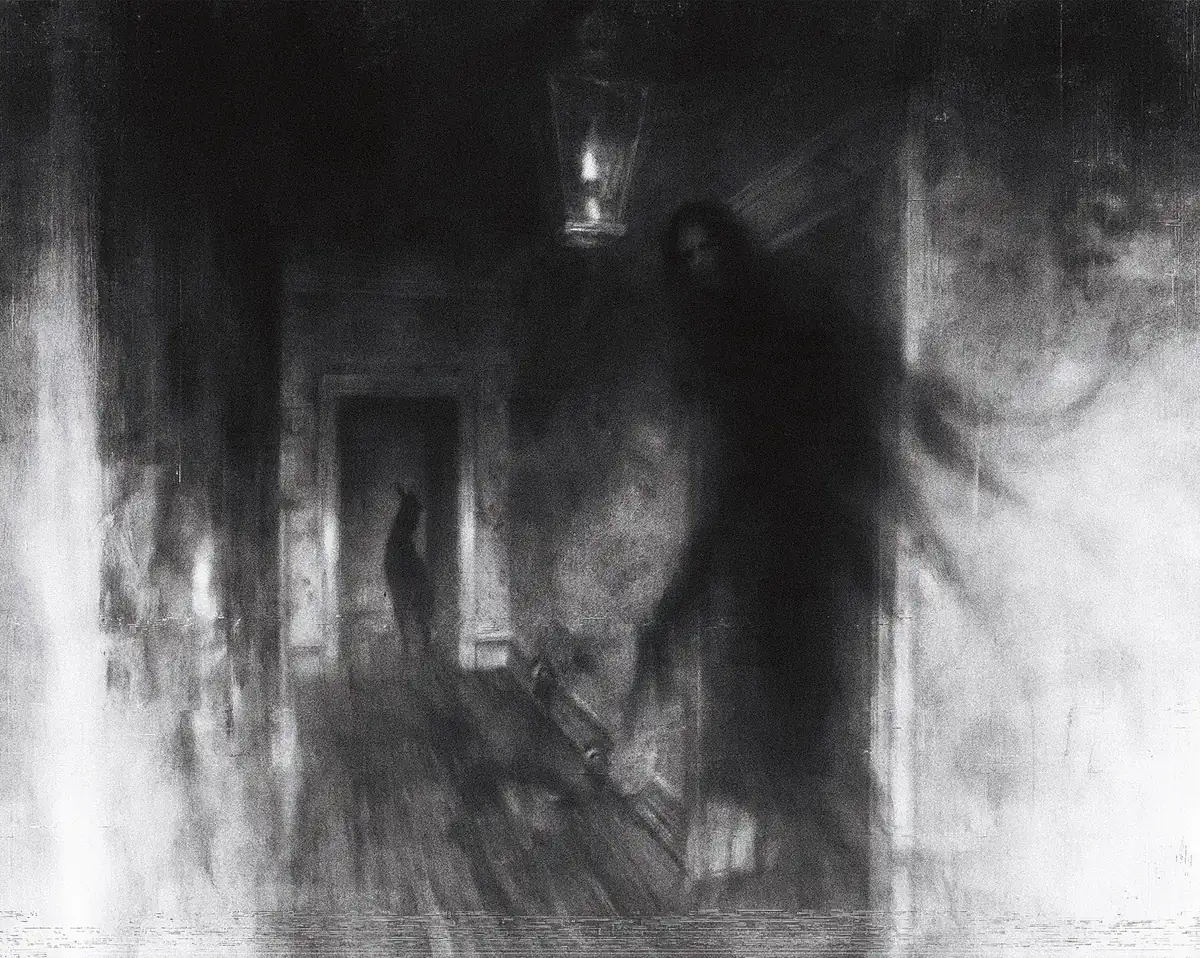
In Islamic tradition, the jinn are a created race, parallel to humans, made from a different substance. A widely used English rendering of Qur’an 55:15 is, “And He created the jinn from a smokeless flame of fire.” They can be hidden from ordinary sight. Some are described as helpful, some as hostile, and folk tradition in more than one Muslim culture has long associated certain night terrors and sleep-paralysis attacks with jinn. I’m not going to pretend that’s a formal doctrinal claim in every school. It’s a living folklore with a scriptural root, and it belongs in this comparison because the pattern is so familiar: an unseen being, a pressure in the dark, a mind that may not be playing fair.
There are other “other-world” shadow people too. In Inuit lore, the Tariaksuq are a race of shadow beings said to live in a kind of mirror world, eating and sleeping much as we do, and appearing as half-bodies or shadows when they cross into ours. We already wrote about them here: Entity of the Week: Tariaksuq.
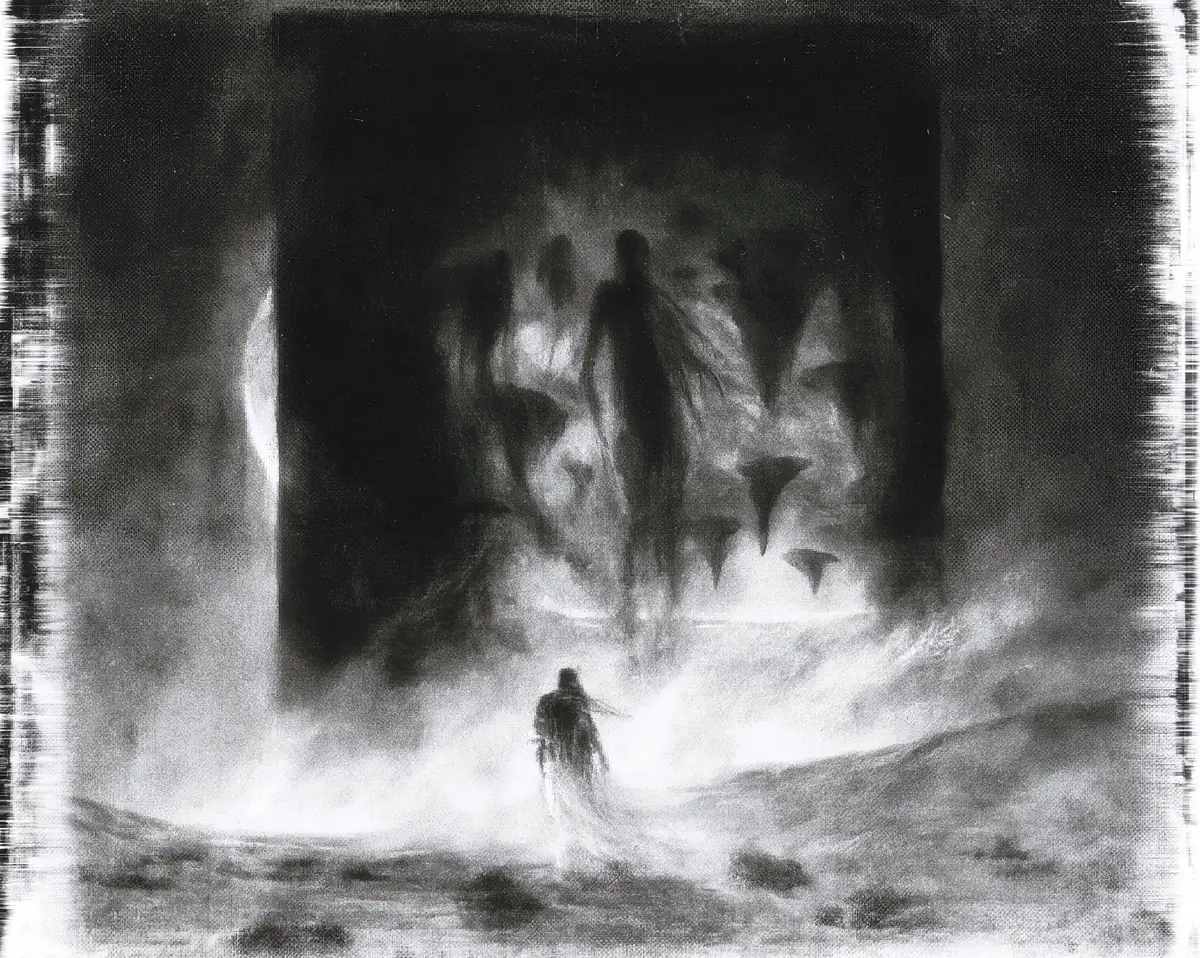
I wouldn’t smash djinn, Tariaksuq, the Hat Man, and the flyers into one species. That’s how you get a slurpee of lore that doesn’t honor any of the sources. The honest move is simpler, and I think more unsettling. Over and over, in traditions that did not copy each other, people have reported hidden beings that show up at the edge of vision, sit on the chest, or feed on something in us that isn’t quite flesh.
A Quick Comparison
| Tradition | What it is | What it wants | How it gets in | How it’s pushed back |
|---|---|---|---|---|
| Castaneda’s flyers / mud shadows (1998) | Cosmic predators; fleeting black shadows, then a heavy leaping “mud shadow” | The glowing coat of awareness, plus flares of worry | A “foreign installation,” a second mind that feels like yours | Discipline and inner silence; make the coat unpalatable |
| Gnostic archons (Nag Hammadi) | Rulers / “authorities of the darkness,” led by a blind, arrogant chief | The light in the human being; a counterfeit world that holds it | A “counterfeit spirit,” a body as a “bond of forgetfulness” | Knowledge that breaks forgetfulness (gnosis) |
| Wetiko (Forbes; later Levy) | A cannibal person or spirit; for Forbes, also a cultural sickness of exploitation | Other people’s lives, “for one’s own private purpose or profit” | It spreads through a society until consumption feels normal | Forbes: refuse to adjust to a wetiko society. Levy: see the parasite in the mind. |
| Monroe’s loosh (Far Journeys, 1985) | A rare substance harvested from a “Garden” | Loosh, especially as produced by conflict | The parable is about a designed environment, not a voice in the head | The book is more ambiguous later; contacts deny being the gardeners |
| Hat Man / Old Hag / shadow people | A dark bedside figure, sometimes hatted and “solid”; older hag tradition of a pressing presence | In many reports, fear, attention, the chest, the night itself | Often at the edge of sleep, or seen in peripheral vision | Witness practices vary; Hollis framed it in spiritual-warfare terms |
One Honest Catch
I should say this once, because the file is messy, and pretending otherwise doesn’t help anybody.
Castaneda presented the don Juan books as reportage. A lot of readers, myself included, have taken the later work seriously as a description of something that sure feels real in the head at 3 a.m. Scholars have mostly gone the other way. In 1972, Joyce Carol Oates wrote to the New York Times questioning why a reviewer had accepted the books as nonfiction. In 1973, Time reported that Castaneda had lied about his own past. In 1976, Richard de Mille published Castaneda’s Journey, arguing in detail that the fieldwork couldn’t be trusted and that don Juan as written was likely a literary creation. By Castaneda’s death in 1998, the books had sold in the millions. In his last decade he taught a movement practice called Tensegrity through a company, Cleargreen.
The mainstream herd can call the whole thing a trick of literature and a trick of sleep. Maybe. It’s still a lot of reports, from a lot of centuries, to wave away with one shrug. The question the 1998 book actually leaves you with is not “was don Juan on a census form.” It’s this: if the chatter in your head is not entirely yours, how would you know?
So What Do You Think?
I keep coming back to that first instruction. Don’t stare. Look from the corner of the eye. That’s how Castaneda first caught the shadows, and it’s how a lot of modern witnesses say they first catch theirs.
Maybe the flyers are literal predators from the depths of the cosmos. Maybe they’re a hard way of talking about a mind that will eat your life if you let it run on inane problems all day. Maybe the archons, the wetiko sickness, the loosh garden, and the thing in the hat are four other attempts to name the same pressure. I don’t know. I’m not going to pretend I do.
What I do know is this. Far too many people, in traditions that never sat in a room together, have described hidden beings that feed on us, or sit on us, or talk in a voice we mistake for our own. That’s enough to take the reports seriously. What do you think is looking back, when you catch a shadow at the edge of your vision?
FAQs
-
What are the flyers in Castaneda?
In The Active Side of Infinity (1998), don Juan describes the flyers as predators, also seen as fleeting black shadows and a heavy “mud shadow.” He says they keep humans docile, eat a “glowing coat of awareness,” and installed a “foreign installation,” a second mind that feels like yours. -
Are mud shadows the same as shadow people?
Castaneda never uses the phrase “shadow people.” In the 1998 book, mud shadows are the flyers as he sees them: fleeting black shadows, then a heavy shape that leaps and lands. The overlap with today’s shadow-people reports is the dark, jumping, predatory feel, not a man in a hat. -
Are the flyers the same as Gnostic archons?
Castaneda does not say so. The word “archon” does not appear in the 1998 book. The comparison is a later one, based on a similar structure: a lesser intelligence wrapping the human mind. -
How did don Juan say to defend against the flyers?
Through discipline and inner silence. He says discipline makes the coat of awareness “unpalatable” to the flyer, and that taxing the flyers’ mind with silence makes the foreign installation flee, at least for a while. -
Is the Hat Man in Castaneda’s books?
No. The Hat Man comes out of modern shadow-people lore, popularized on shows like Coast to Coast AM. The overlap with Castaneda is the dark, jumping, predatory feel, not a man in a hat.
Sources
- Carlos Castaneda, The Active Side of Infinity. New York: HarperCollins, 1998. Chapter “Mud Shadows,” beginning p. 215 in that hardcover. Record: archive.org/details/activesideofinfi0000cast
- Carlos Castaneda, The Art of Dreaming. New York: HarperCollins, 1993. Chapter 5, “The World of Inorganic Beings,” begins p. 82. Record: archive.org/details/artofdreaming00cast
- Carlos Castaneda, The Fire from Within. New York: Simon and Schuster, 1984. Chapter 6, “Inorganic Beings.” Record: archive.org/details/firefromwithin00cast
- “The Hypostasis of the Archons,” trans. Bentley Layton, in The Nag Hammadi Library, at the Gnostic Society Library: gnosis.org/naghamm/hypostas.html
- “The Apocryphon of John,” trans. Frederik Wisse, in The Nag Hammadi Library: gnosis.org/naghamm/apocjn.html
- Jack D. Forbes, Columbus and Other Cannibals: The Wetiko Disease of Exploitation, Imperialism, and Terrorism. Excerpt: Seven Stories Press
- Paul Levy, Dispelling Wetiko: Breaking the Curse of Evil (North Atlantic Books, 2013), and related essays. Treat Levy’s “psychic virus” framing as his, not as a Forbes or Castaneda quotation.
- Robert A. Monroe, Far Journeys. 1985. Record: archive.org/details/far_journeys
- Coast to Coast AM, “Shadow People & the ‘Hat Man,'” July 23, 2008, George Noory with Heidi Hollis: coasttocoastam.com/show/2008-07-23-show/
- David J. Hufford, The Terror That Comes in the Night: An Experience-Centered Study of Supernatural Assault Traditions. University of Pennsylvania Press, 1982/1983. Record: archive.org/details/terrorthatcomesi0000huff
- Qur’an 55:15, on the creation of the jinn. English rendering via quran.com/55/15
- Wikipedia, “Carlos Castaneda” (biography, de Mille, sales, Cleargreen): en.wikipedia.org/wiki/Carlos_Castaneda
- Robert Marshall, “The dark legacy of Carlos Castaneda,” Salon, April 12, 2007: salon.com/2007/04/12/castaneda/
- Richard de Mille, Castaneda’s Journey: The Power and the Allegory. Capra Press, 1976.
Want the Extended Deep Dives First?
If this kind of deep dive is your thing, the Chroniclers Vault gets my solo deep dives in their full extended cut, far ahead of the public release. It starts at five bucks, and it keeps the show going. Come over and have a look: patreon.com/cw/crypticchronicles.

0 Comments