An old woman had a heart attack in a big city hospital, and she died. Then she died again. Both times they brought her back, and the ICU nurse who saw it said it was a miracle, that she’d never seen anything like it. Somewhere in that same city, a dad who’d never told his son’s nanny he was a magician had spent seven days in a row with wine, frankincense, a candle, and the seal of one angel, asking it to give the nanny “a gift for all she had given to my son.” The woman in the ICU was the nanny’s mother.
He only heard about any of it because the nurse turned out to be his future neighbor, in a city of millions. He called it “a crazy synchronicity.” I call it a pretty good reason to write this article.
The Shem HaMephorash angels are 72 angels whose names come from a name of God hidden in three verses of Exodus, the moment at the Red Sea right before the water splits. Each of those verses has exactly 72 Hebrew letters. Read them in a zig-zag and you get 72 three-letter names, and Renaissance Kabbalists turned each one into an angel by adding -iah or -el. Since then they’ve been assigned choirs, slices of the zodiac, Psalm verses, birthdays, and, in one 17th-century grimoire, a demon each to keep in line.
Our Angelology Explained piece gave the 72 a quick nod. This one goes all the way down the rabbit hole, from Rashi to Dr. Rudd to the Gallery of Magick, with a trimmed table of all 72, the warnings, and the stories.
1. What Is the Shem HaMephorash?
Shem HaMephorash (שֵׁם הַמְּפֹרָשׁ) means “the explicit name,” or “the distinguished name.” In the oldest rabbinic sources it meant one thing, the four-letter name of God, YHVH, the one only the High Priest said out loud. Wikipedia says it “was originally a Tannaitic term for the Tetragrammaton.” The 1906 Jewish Encyclopedia adds that a “Seventy-two Lettered Name” also turns up in the old midrash collections Leviticus Rabbah and Genesis Rabbah.
And the four-letter name was no joke. The Mishnah lists people who lose their share in the world to come, then adds, “Abba Shaul says: ‘Also one who pronounces the divine name as it is spelled'” (Mishnah Sanhedrin 10:1). The Talmud even tells how Rabbi Hanina ben Teradion was burned wrapped in a Torah scroll, and one reason it gives is that he pronounced the Name in public (Avodah Zarah 18a, my rendering of the Hebrew). So right from the start, this name carried weight, and fear.
Over the centuries the phrase got bigger. The Talmud talks about 12-letter and 42-letter names too, and by the Middle Ages Kabbalists used Shem HaMephorash for a 72-fold name. That’s the one people mean today. It’s “highly important” to Sefer Raziel HaMalakh, the Book of the Angel Raziel, and Kabbalist legend says, per Burton and Grandy as summarized on Wikipedia, “that the 72-fold name was used by Moses to cross the Red Sea, and that it could grant later holy men the power to cast out demons, heal the sick, prevent natural disasters, and even kill enemies.” Not a bad résumé for a name.
2. The Name Hidden in Three Red Sea Verses
Picture it. Pharaoh’s chariots behind, water in front. In Exodus 14:19, “The angel of Elohim moved [from its position] when it traveled in front of the camp of Israel, and went behind them. The pillar of cloud moved from in front of them and it stood behind them” (Metsudah translation). In verse 20 the cloud is darkness on one side and light on the other. In verse 21 Moses stretches his hand over the sea, and an east wind blows all night until the sea is dry land.
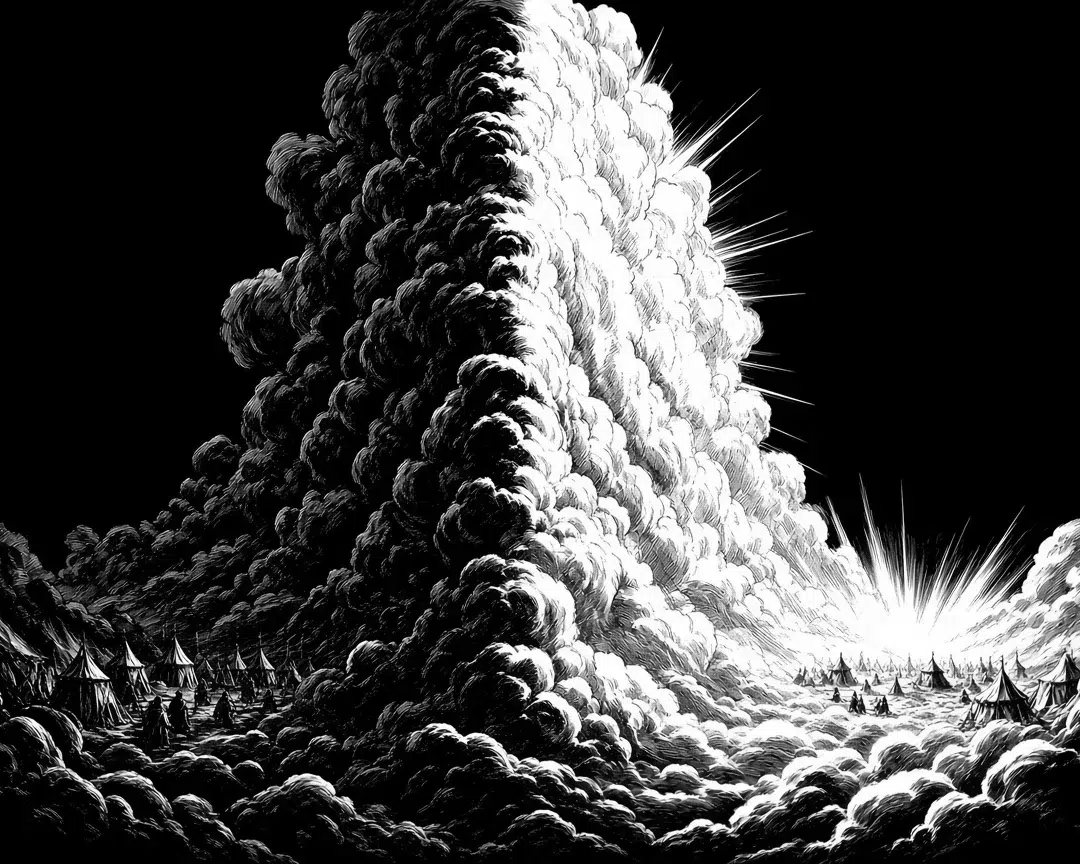
Here’s the high strangeness. In Hebrew, each of those three verses has exactly 72 letters. I didn’t take that on faith. I pulled the Hebrew text from Sefaria and had a computer count it, and it came back 72, 72, 72.
The method for pulling names out is old, and it’s right there in Rashi, the 11th-century French commentator whose notes sit in the margin of pretty much every Talmud on Earth. Explaining a strange chant from the Temple’s Sukkot service, “Ani vehu,” he says it comes “from the 72 names [of God] that are embedded in three adjacent verses in Parashat Beshalach… Each of them has 72 letters… The first letter of the first verse, the last one of the middle [verse], and the first one of the last [verse]… The first name is Vehu… And the 37th name is Ani.”
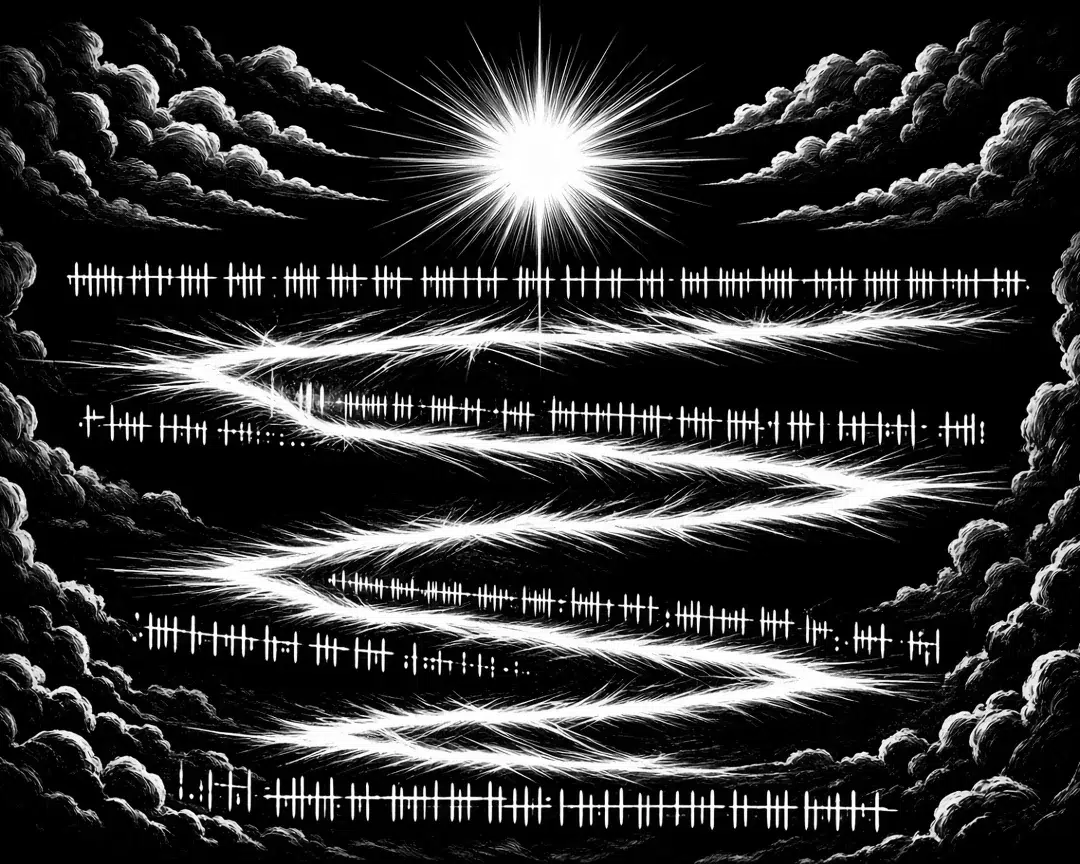
So you take letter one of verse 19, the last letter of verse 20, and letter one of verse 21. That’s name one, והו, Vehu. Step in one letter and repeat. The middle line runs backward, like an ox plowing a field, which is why scholars call it boustrophedon. I ran the whole thing off Sefaria’s Hebrew, and all 72 triplets came out in the same order as the standard list. Name 37 really is אני, Ani, just like Rashi says.
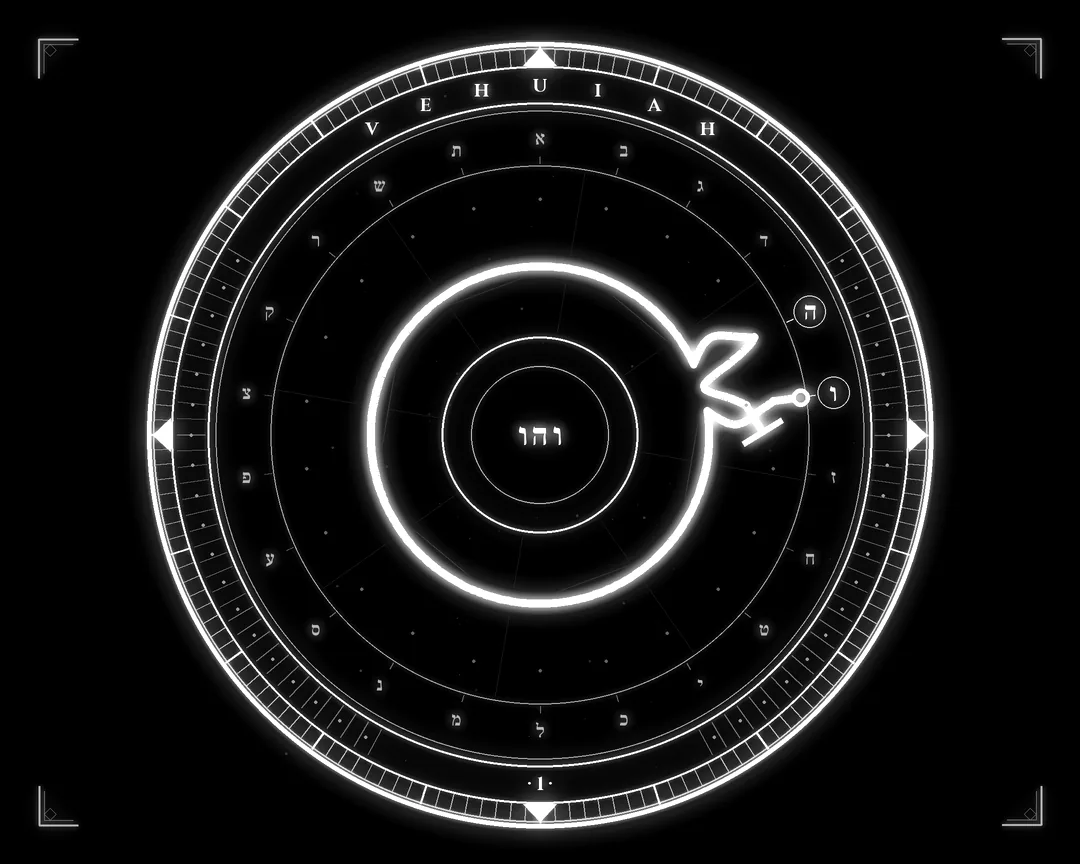
That’s 216 letters in total, 72 times 3, which is why some books call it the 216-letter name. If that number rings a bell, it’s because Darren Aronofsky’s 1998 film Pi made “the 216-letter Shem HaMephorash” a plot point.
And look at what’s inside those verses. An angel of God moving. A cloud that’s darkness and light at once. A raised hand and a split sea. Then a few chapters later, God says of another angel sent ahead of Israel, “Be careful in his presence and heed [obey] his voice. Do not rebel against him; for he cannot bear [pardon] your transgression, as My Name is in him” (Exodus 23:21). My Name is in him. Hang on to that line, because Agrippa’s about to build an entire angel system on it.
3. How 72 Names of God Became 72 Angels
For a long time these were names of God. The angels came later, through a chain of letter mystics. G. Lloyd Jones, in his introduction to the 1993 English edition of Reuchlin, says the early Jewish mystics “taught that the universe was divided into ten angelic spheres, each one governed by an intermediary or emanation of the divine. There were seventy-two inferior angels through whom the intermediaries could be approached.” He traces the technique “through the works of Joseph Gikatilla to the famous thirteenth-century Kabbalist Abraham Abulafia” (quoted on Wikipedia).
Johann Reuchlin, 1517. The German humanist Johann Reuchlin is the hinge. In De Arte Cabalistica he takes the 72 triplets, adds -iah (Yah) or -el (El) to each, and now they can be said out loud, and now they’re angels. The historian Bernd Roling sums up Reuchlin’s view on Wikipedia: “The names of the angels are products of the will of God. They are substantially based on the tetragrammaton.” His list, Vehuiah, Jeliel, Sitael, Elemiah, Mahasiah, and so on down to Mumiah, is still the standard one.
Cornelius Agrippa, 1533. Then Agrippa put it in the biggest magic textbook of the Renaissance. Book III, chapter 25 of his Three Books of Occult Philosophy says that if “El or Jah be added, they produce seventy two trissyllable names of angels, whereof every one carries the great name of God, as it is written: My Angel shall go before thee; observe him, for my name is in him.” There’s Exodus 23:21 as the proof text. And he loads them up. They’re “set over the seventy two Celestial quinaries, and so many Nations, and tongues, and joynts of mans body, and cooperate with the seventy two seniors of the Synagogue, and so many disciples of Christ.” Heaven, the map of the world, the human body, and church history, all sorted into 72 drawers.
Kircher’s sunburst, 1653. The Jesuit polymath Athanasius Kircher printed the most famous picture of the 72 names in Oedipus Aegyptiacus. It’s in the public domain on Wikimedia Commons, and it’s wild up close. Seventy-two numbered rays of flame, each carrying a four-letter word for God in a different language (DEUS, DIOS, GOTT, DIEU), around a center holding Christ’s monogram and the Hebrew יהשוה, the name of Jesus written as YHVH with a shin dropped in the middle. In my rough reading of the Latin, it says everything the Hebrews secretly taught about the four-letter name pointed to the Messiah. Christian Kabbalah in one picture.
Blaise de Vigenère. And here’s a fun one for the code nerds. Blaise de Vigenère (1523–1596), the French diplomat whose name is on the famous Vigenère cipher, also wrote about the 72 angels. Wikipedia, citing Skinner and Rankine, says his material was “later copied and expanded by Thomas Rudd.” The Golden Dawn’s own lecture on the Shem credits its seals to “Blaise Vininaire.” So the guy famous for hiding messages in letters is a major source for the seals of 72 angels made by hiding names in letters. You can’t write that.
4. Dr. Rudd’s Grimoire: The Angel Who Holds the Demon’s Leash
If you know the Goetia, you know its 72 spirits, Bael to Andromalius. Here’s what a lot of people miss. Joseph Peterson, who edited the standard modern text, says the list was pushed up to 72 “apparently because of the numerological significance of that number, which has resulted in a sort of a negative version of the well-known list of 72 angels associated with the Schemhamphorash” (Peterson, Lemegeton). The Goetia’s 72 may literally be a shadow of the Shem’s 72.
A 17th-century Englishman made that mirror into working magic. Thomas Rudd was a real person, a military engineer and mathematician whom Charles I made chief engineer of the king’s castles and forts in 1627, and who served the Royalist side through the First English Civil War. Skinner and Rankine say he “was at the centre of a group of angel magicians.” He also published Euclid with John Dee’s Mathematical Preface, which ties him right into our John Dee episode. And this one gave me chills. He “died in 1656, aged 72.” The man tied to matching 72 angels with 72 demons died at 72.
The Goetia of Dr Rudd, edited by Stephen Skinner and David Rankine (Golden Hoard, 2007), is built on British Library Harley MS 6483. Rudd’s idea, as Wikipedia sums up Skinner and Rankine, is that the angels are a key, often missing, piece of Solomonic magic, “a balancing force against the evil spirits of the Ars Goetia.” The publisher says the book “explains how the 72 angels of the Shem ha-Mephorash are used to bind the spirits, and the correct procedure for safely invoking them using special seals incorporating the necessary controlling angel.”
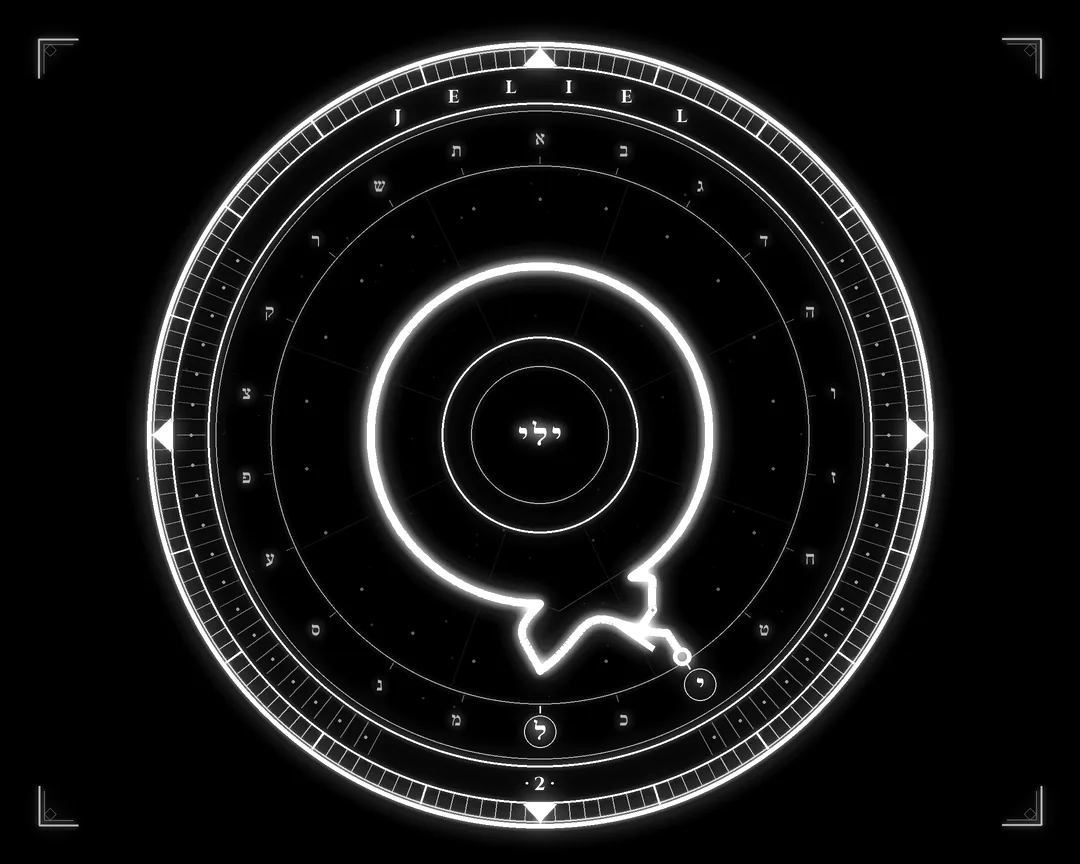
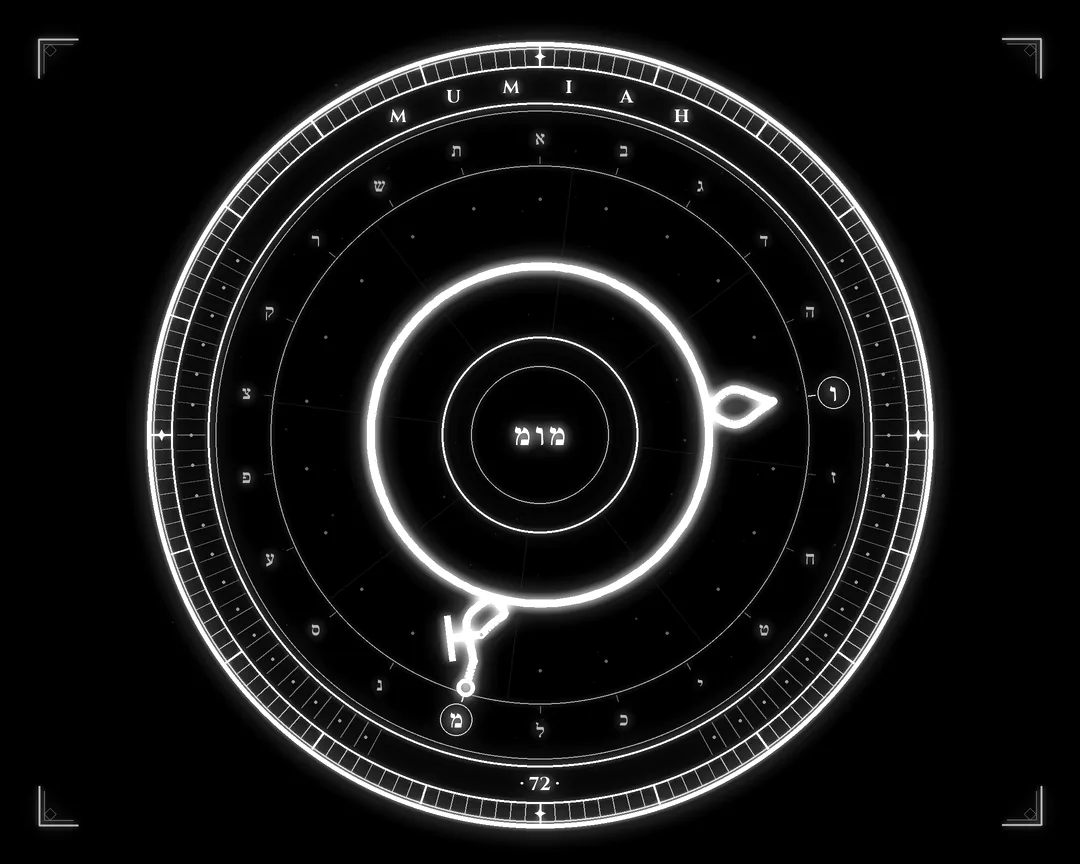
Those seals are the famous part. Reviewer Soror Chamos describes “the excellent double seals for the 72 Goetic demons, not found elsewhere. Here we find that the Shem ha-Mephorash angels are called upon to help control the demons when they are evoked,” and each one “also contains the corresponding angelic seal” (Esoteric Book Review, 2008). Demon on one side, the angel with authority over it on the other. Angel 1, Vehuiah, rules Bael. Angel 2, Jeliel, rules Agares. All the way down to Mumiah over Andromalius.
It’s an old idea in new clothes. A Reddit commenter, Macross137, put it well in 2026: “From the Testament through the Hygromanteia angels are paired with demons as controlling/licensing agents,” and “Christian-inflected Kabbalism came naturally to Rudd and his contemporaries.” The Testament of Solomon already had every demon naming the angel who could stop it. Rudd just poured Renaissance Kabbalah on top.
5. Lenain’s Birthday Angels and the French Tradition
The friendliest makeover came from a guy nobody would cast as a magus. Lazare Lenain (1793–1877) was a bookseller and velvet winder in Amiens, a Freemason, and the father of sixteen kids, according to French Wikipedia. He wrote exactly one book, La Science cabalistique (1823), and the goal, in the French article’s words, was to take the devil out of magic.
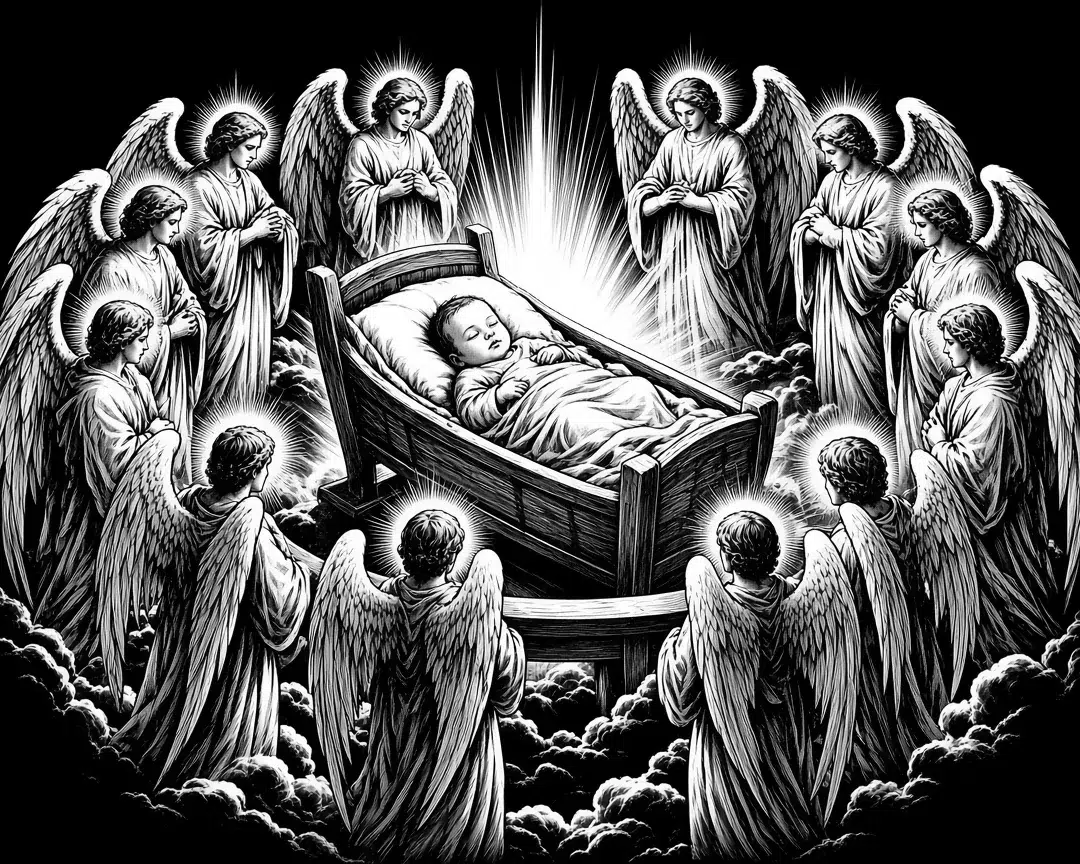
In Lenain the 72 are bons génies, good genii, in nine choirs of eight. Everyone’s tied at birth to three of them, one for the body, one for moral character, and one for the spirit, picked by your birthday and your hour of birth. His clock is beautifully mechanical. He takes the year as 360 even days counted from the spring equinox, cuts it into 72 blocks of five days, and cuts the day into 72 slots of 20 minutes. Each angel has its qualities, and each one has a génie contraire, a dark twin that shows up as that angel’s vices.
So that “find your guardian angel by your birthday” chart you’ve seen on Instagram? This is where it comes from. One reader who knows the French text gives Lenain’s Vehuiah like this: “wisdom, enthusiasm for sciences and arts, the accomplishment of difficult tasks; whereas the negative influences are disquietude and anger” (u/luxinseptentrionis, r/occult).
Lenain went on to shape Papus, Robert Ambelain, and the Spanish writer Kabaleb. One heads-up, though. Because Lenain starts at the spring equinox, the French charts put Vehuiah at the start of Aries. The Golden Dawn starts Vehuiah at the start of Leo. Same angels, same order, different starting gate. If someone tells you “your angel is X,” ask them which system.
6. The Golden Dawn’s Ladder of 72
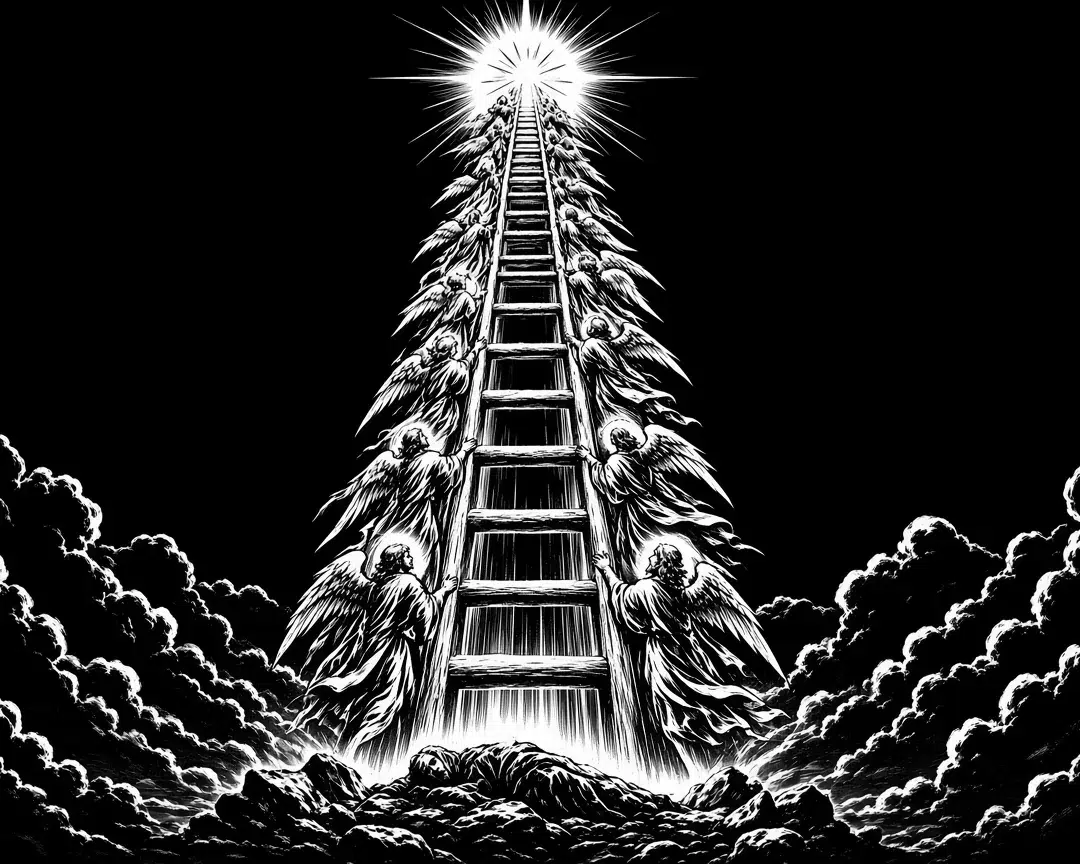
When MacGregor Mathers wrote the Golden Dawn lecture on the Shem, he went big. The 24 elders around God’s throne in Revelation each wear a crown of three rays, “each ray of which is a name,” and 24 times 3 is 72. He calls them “the 72 names of the ladder of Jacob on which the Angels of God ascended and descended,” written “on the leaves of the Tree of Life which were for the healing of the nations” (quoted on Wikipedia; full lecture at tarrdaniel.com).
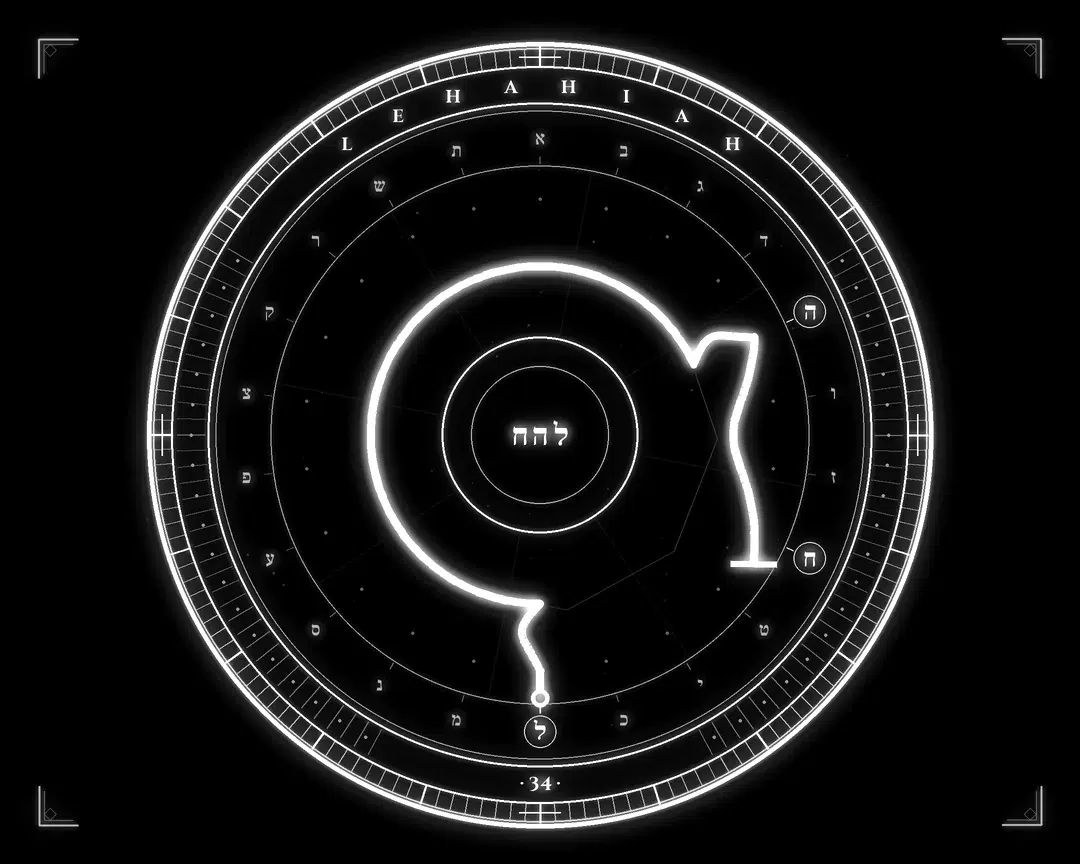
The lecture gives the working rules too. The -iah ending “signifies Mercy and Beneficence,” and -el means “Severity and Judgment.” The angels “rule over the 72 Quinances,” five-degree slices of the zodiac. They’re “classed into nine sets of 8, each answering to the nine choirs of Angels, and also divided into 4 great divisions of 18 each, each division under the Presidency of one of the four letters of the Name YHVH.” Then comes a table of all 72, each with a sign, five degrees, a ruling planet, a short meaning, and a Psalm. Angel 1, “Vahuaih,” sits at Leo 0–5° under Saturn, meaning “God the Exalter.”
Fun detail. I counted the endings in the standard Hebrew list and got 40 -el names to 32 -iah names. So by the Golden Dawn’s own rule, this family of angels that gets marketed as pure sweetness and light actually leans a little toward severity. The list does open and close on mercy, though, with Vehuiah first and Mumiah last.
And the order really did work them. Golden Dawn author Nick Farrell says “the Whare Ra adepts had few problems with their seals,” meaning the order’s New Zealand temple was working these angels well into the 20th century.
7. Where the 72 Sit in Angelology
So where do they fit on the big map of heaven? Top to bottom, it goes like this.
At the very top is the Name itself, YHVH. The 72 are “substantially based on the tetragrammaton,” as Roling put it, so in this frame they’re God’s name broken into 72 pieces small enough for a human to hold.
Below that come the ten Sephiroth of Kabbalah, each with a divine name and an archangel. You can see the whole ladder printed around the magic circle in the Mathers and Crowley edition of the Goetia, from “Ehyeh Kether Metatron Chaioth Ha-Qadesh” at the top down to “Shaddaï El Chai Iesod Gabriel Cherubim Levanah S. of the Moon,” which Peterson notes is “based on Agrippa’s scale of ten.” Remember Jones’s line, ten angelic spheres with “seventy-two inferior angels through whom the intermediaries could be approached.” The archangels are the department heads. The 72 are who you actually talk to at the front desk.
Then the nine choirs of angels, which we covered in Angelology Explained. The 72 split into them eight at a time, in order. Angels 1–8 are Seraphim, 9–16 Cherubim, 17–24 Thrones, 25–32 Dominions, 33–40 Powers, 41–48 Virtues, 49–56 Principalities, 57–64 Archangels, and 65–72 plain Angels. So Vehuiah is a Seraph and Mumiah is down at the level closest to Earth.
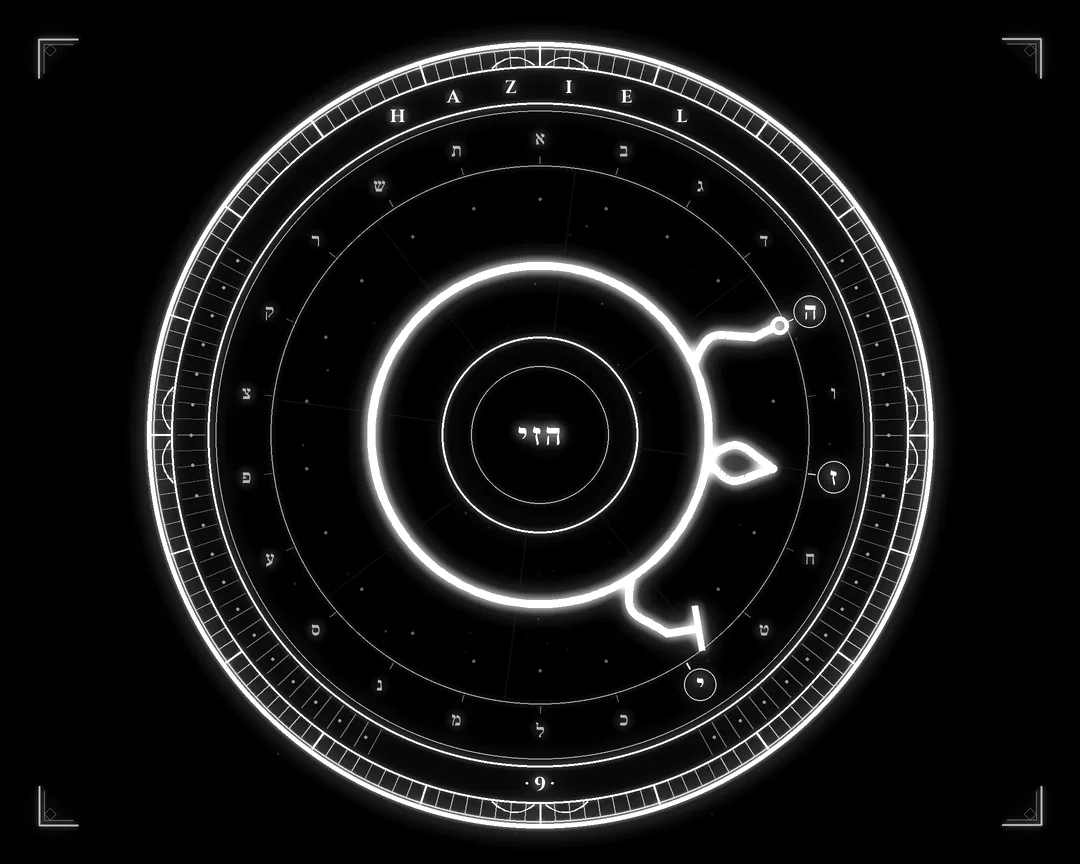
And the Metatron link is worth knowing. Exodus 23:21, “My Name is in him,” is the verse Agrippa uses for the 72, and it’s also the verse the Talmud is usually cited as using for Metatron, the angel whose name is like his Master’s. Same badge, same verse. That’s a big part of why these angels have the prestige they do.
Then, under everything in Rudd’s map, the 72 Goetic spirits, each held by its angel. It’s one long ladder from the Name down to the demons, and the Shem angels sit on the rungs in between.
8. Gallery of Magick vs. Dr. Rudd vs. the Rest
Same 72 angels, wildly different rooms. This is a comparison, not a how-to.
The Gallery of Magick. Damon Brand’s The 72 Angels of Magick combines his earlier Magickal Angels and The Greater Magickal Angels. Brand lays out the philosophy right up front: “You can call out sincerely, without any sigil, ritual or psalm, and sometimes you will get a response. Or you can go to the other extreme and employ complex and extensive rituals for full contact, where the angel is summoned into your presence. The approach I have advocated lies between those extremes. Each layer of ritual method assists contact, but complexity is kept to a minimum” (Gallery of Magick). The combined edition uses the Hebrew Psalm verse as a chant, a sigil with Hebrew letters, and “a single Shem Talisman which can be used for all seventy-two angels.” The work runs eleven days, and each angel gets “between two and five powers.” Vehuiah’s are “Carry Out A Difficult Task / Strengthen Your Will / Obtain Esteem” (How To Find An Angel).
In 2022 the Gallery added a Patreon version with “144 beautiful, coloured sigils” and one new angel connection per day, so “a minimum of seventy-two days” to connect them all (Empowered Angel Magick). The same post says something pretty striking about the boom: “There are now countless books about the practical magick of the 72 Angels (there were almost none ten years ago).”
Everyone else. The Kabbalah Centre drops the angels completely and uses the 72 three-letter names as meditation, saying “By simply looking at the letters, as well as closing your eyes and visualizing them, you can connect with these frequencies.” Damien Echols has “a section on the 72 angels of the Shem HaMephorash” in his 2020 book Angels and Archangels. Nick Farrell wrote The Shem Grimoire (2014). And at the dark end, Gilles de Laval’s Black Magic Evocation of the Shem Ha Mephorash (2016) treats them as left-hand-path forces.
| Format | What the 72 are | Main tools | Demons involved? |
|---|---|---|---|
| Dr. Rudd (17th c.) | Controlling angels, each paired with a Goetic spirit | Double seals, circle, conjurations | Yes, by design |
| Gallery of Magick (2016 on) | Helpful angels with listed powers | Psalm chant, Hebrew sigil, Shem talisman, 11 days | No |
| Lenain / French (1823 on) | Personal good genii tied to your birth | Talismans, birth day and hour | No, but each angel has a dark twin |
| Golden Dawn (1890s on) | Rays of YHVH on the zodiac and Jacob's ladder | Seals or Rose Cross sigils, Psalms | Not in the Shem lecture |
| Agrippa (1533) | Angels bearing God's name over the 72 quinaries | Letter tables from Exodus | No |
| Kabbalah Centre (2003 on) | Three-letter names of God, no angels | Looking at and visualizing the letters | No |
9. All 72 Shem HaMephorash Angels at a Glance
Here’s the trimmed list in traditional order. Angel names, choirs, and Rudd’s demon pairings come from the table on Wikipedia, which cites Skinner and Rankine’s edition of Rudd (2007, pp. 366–376). The zodiac slices are from Mathers’ Golden Dawn lecture, starting at Leo. The three-letter roots are the ones I pulled out of Exodus myself. Spellings jump around a lot between books, so don’t panic if yours looks different. On a phone, swipe the table sideways.
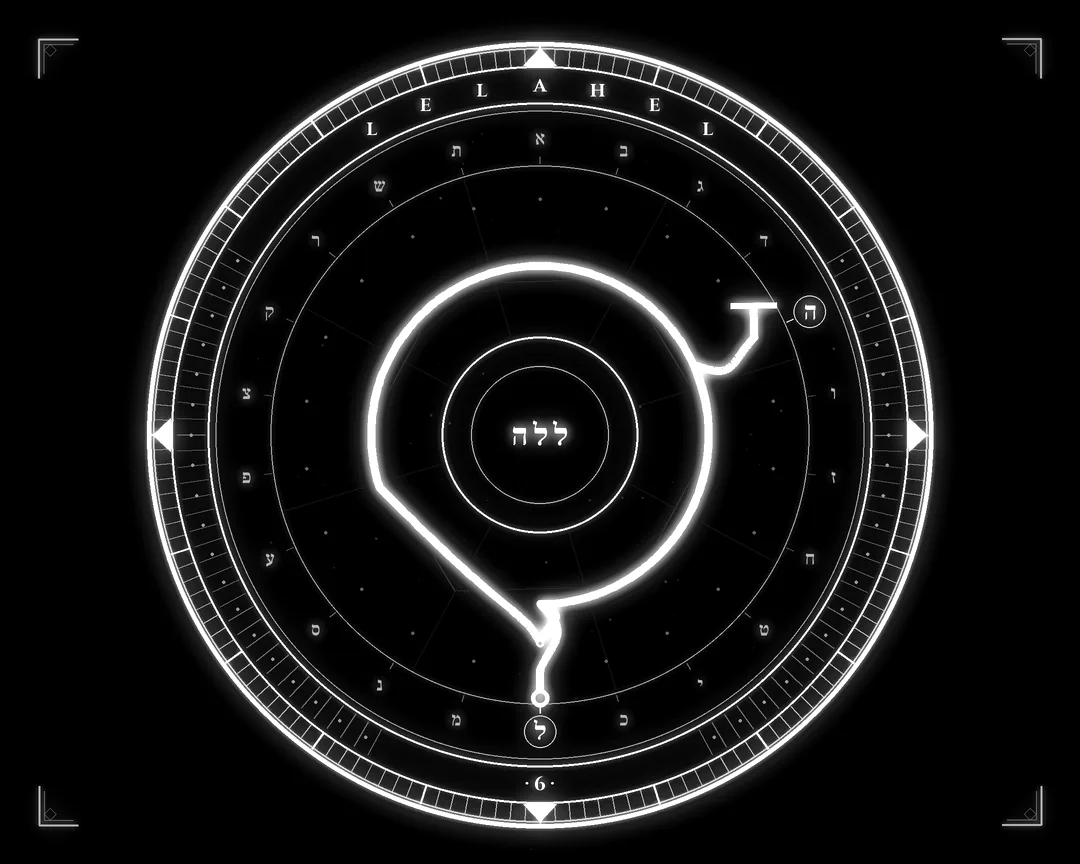
| # | Angel | Root | Choir | Zodiac (GD) | Rudd’s demon |
|---|---|---|---|---|---|
| 1 | Vehuiah | והו | Seraphim | Leo 0–5° | Bael |
| 2 | Jelial | ילי | Seraphim | Leo 5–10° | Agares |
| 3 | Sitael | סיט | Seraphim | Leo 10–15° | Vassago |
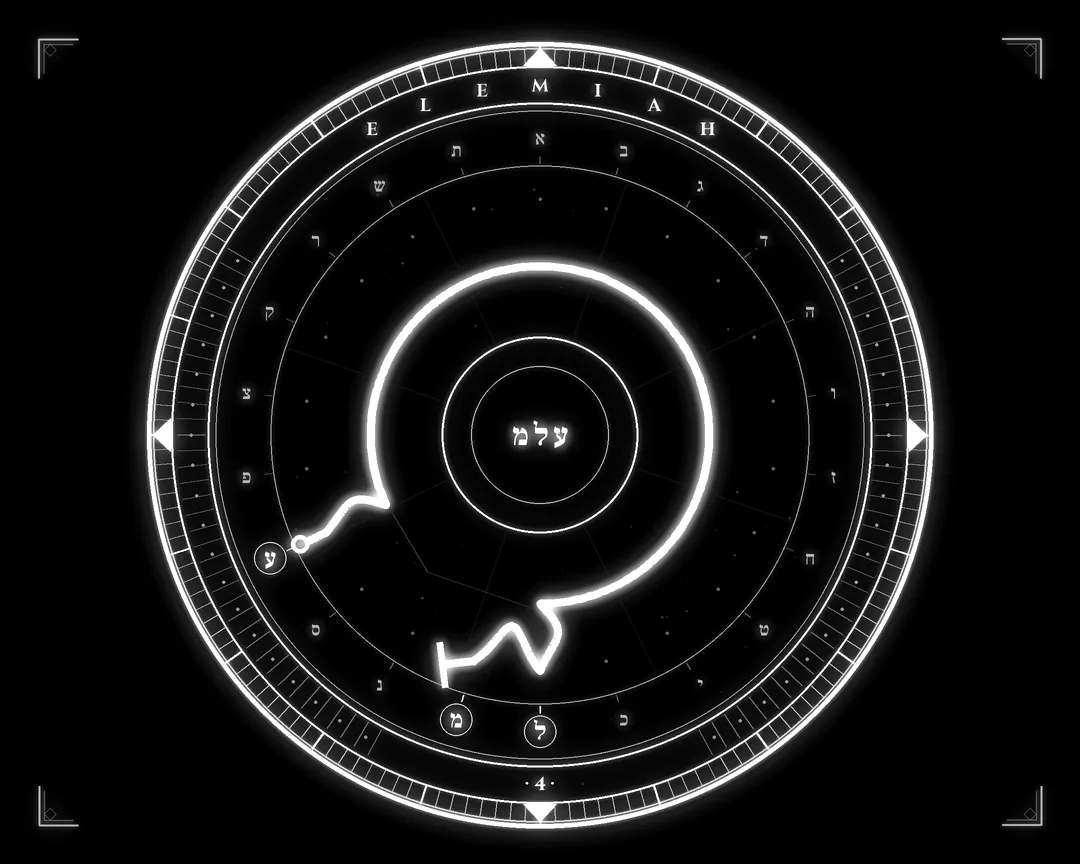
| 4 | Elemiah | עלמ | Seraphim | Leo 15–20° | Gamigin |
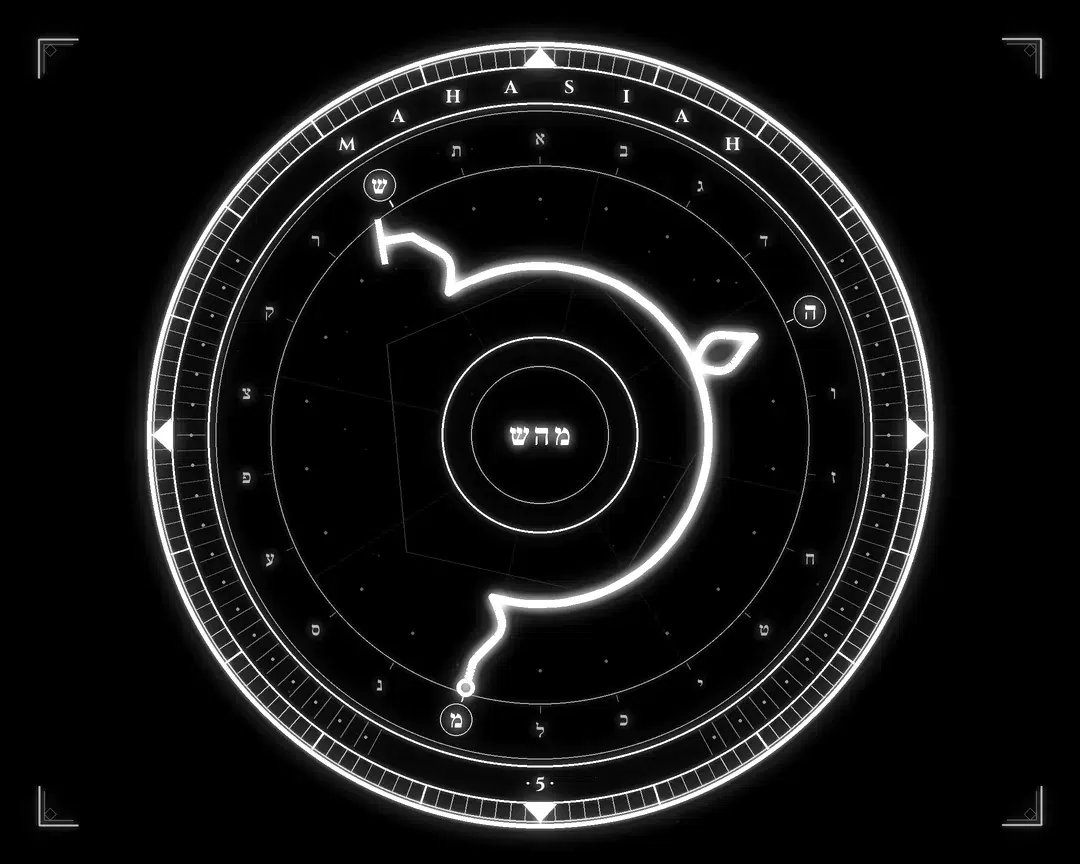
| 5 | Mahasiah | מהש | Seraphim | Leo 20–25° | Marbas |
| 6 | Iehahel | ללה | Seraphim | Leo 25–30° | Valefar |
| 7 | Achaiah | אכא | Seraphim | Virgo 0–5° | Aamon |
| 8 | Cahethel | כהת | Seraphim | Virgo 5–10° | Barbatos |
| 9 | Haziel | הזי | Cherubim | Virgo 10–15° | Paimon |
| 10 | Aladiah | אלד | Cherubim | Virgo 15–20° | Buer |
| 11 | Laviah | לאו | Cherubim | Virgo 20–25° | Gusion |
| 12 | Hahaiah | ההע | Cherubim | Virgo 25–30° | Sitri |
| 13 | Iezalel | יזל | Cherubim | Libra 0–5° | Beleth |
| 14 | Mebahel | מבה | Cherubim | Libra 5–10° | Leraje |
| 15 | Hariel | הרי | Cherubim | Libra 10–15° | Eligor |
| 16 | Hakamiah | הקמ | Cherubim | Libra 15–20° | Zepar |
| 17 | Loviah | לאו | Thrones | Libra 20–25° | Botis |
| 18 | Caliel | כלי | Thrones | Libra 25–30° | Bathin |
| 19 | Levuiah | לוו | Thrones | Scorpio 0–5° | Saleos |
| 20 | Pahaliah | פהל | Thrones | Scorpio 5–10° | Purson |
| 21 | Nelchael | נלכ | Thrones | Scorpio 10–15° | Morax |
| 22 | Ieiaiel | ייי | Thrones | Scorpio 15–20° | Ipos |
| 23 | Melahel | מלה | Thrones | Scorpio 20–25° | Aim |
| 24 | Haiviah | חהו | Thrones | Scorpio 25–30° | Naberus |
| 25 | Nithhaiah | נתה | Dominions | Sagittarius 0–5° | Glasya-Labolas |
| 26 | Haaiah | האא | Dominions | Sagittarius 5–10° | Bune |
| 27 | Ierathel | ירת | Dominions | Sagittarius 10–15° | Ronove |
| 28 | Saeehiah | שאה | Dominions | Sagittarius 15–20° | Berith |
| 29 | Reiaiel | ריי | Dominions | Sagittarius 20–25° | Astaroth |
| 30 | Omael | אומ | Dominions | Sagittarius 25–30° | Forneus |
| 31 | Lecabel | לכב | Dominions | Capricorn 0–5° | Foras |
| 32 | Vasariah | ושר | Dominions | Capricorn 5–10° | Asmodeus |
| 33 | Lehuiah | יחו | Powers | Capricorn 10–15° | Gaap |
| 34 | Lehahiah | להח | Powers | Capricorn 15–20° | Furfur |
| 35 | Chavakiah | כוק | Powers | Capricorn 20–25° | Marchosias |
| 36 | Manadel | מנד | Powers | Capricorn 25–30° | Stolas |
| 37 | Haniel | אני | Powers | Aquarius 0–5° | Phenex |
| 38 | Haamiah | חעמ | Powers | Aquarius 5–10° | Halphas |
| 39 | Rehael | רהע | Powers | Aquarius 10–15° | Malphas |
| 40 | Ieiazel | ייז | Powers | Aquarius 15–20° | Raum |
| 41 | Hahahel | ההה | Virtues | Aquarius 20–25° | Focalor |
| 42 | Mikael | מיכ | Virtues | Aquarius 25–30° | Vepar |
| 43 | Veualiah | וול | Virtues | Pisces 0–5° | Sabnock |
| 44 | Ielahiah | ילה | Virtues | Pisces 5–10° | Shax |
| 45 | Sealiah | סאל | Virtues | Pisces 10–15° | Vine |
| 46 | Ariel | ערי | Virtues | Pisces 15–20° | Bifrons |
| 47 | Asaliah | עשל | Virtues | Pisces 20–25° | Vual |
| 48 | Mihael | מיה | Virtues | Pisces 25–30° | Haagenti |
| 49 | Vehuel | והו | Principalities | Aries 0–5° | Crocell |
| 50 | Daniel | דני | Principalities | Aries 5–10° | Furcas |
| 51 | Hahasiah | החש | Principalities | Aries 10–15° | Balam |
| 52 | Imamiah | עממ | Principalities | Aries 15–20° | Allocer |
| 53 | Nanael | ננא | Principalities | Aries 20–25° | Caim |
| 54 | Nithael | נית | Principalities | Aries 25–30° | Murmur |
| 55 | Mebahaiah | מבה | Principalities | Taurus 0–5° | Orobas |
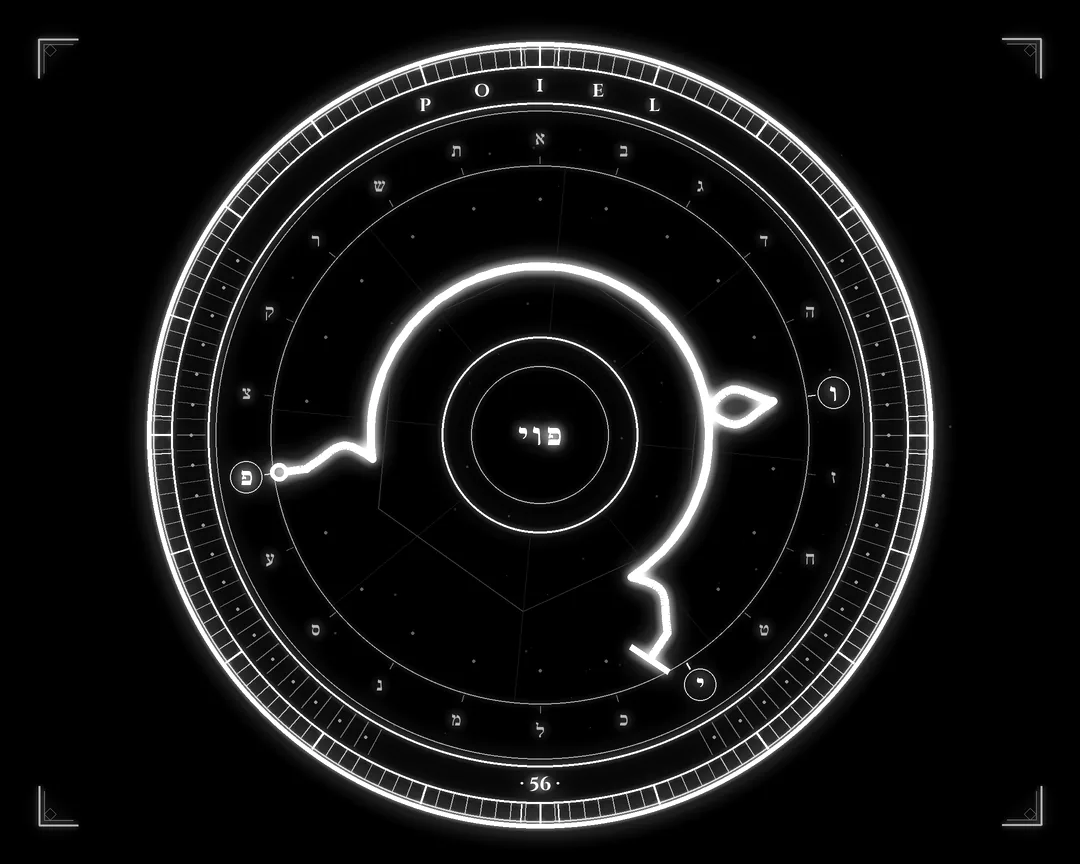
| 56 | Poiel | פוי | Principalities | Taurus 5–10° | Gremory |
| 57 | Nemamiah | נממ | Archangels | Taurus 10–15° | Ose |
| 58 | Ieialel | ייל | Archangels | Taurus 15–20° | Auns |
| 59 | Harahel | הרח | Archangels | Taurus 20–25° | Orias |
| 60 | Mizrael | מצר | Archangels | Taurus 25–30° | Vapula |
| 61 | Vmabel | ומב | Archangels | Gemini 0–5° | Zagan |
| 62 | Iahhael | יהה | Archangels | Gemini 5–10° | Valac |
| 63 | Anavel | ענו | Archangels | Gemini 10–15° | Andras |
| 64 | Mehiel | מחי | Archangels | Gemini 15–20° | Flauros |
| 65 | Damabiah | דמב | Angels | Gemini 20–25° | Andrealphus |
| 66 | Mavakel | מנק | Angels | Gemini 25–30° | Cimeries |
| 67 | Eiael | איע | Angels | Cancer 0–5° | Amduscias |
| 68 | Habuiah | חבו | Angels | Cancer 5–10° | Belial |
| 69 | Roehel | ראה | Angels | Cancer 10–15° | Decarabia |
| 70 | Yabamiah | יבמ | Angels | Cancer 15–20° | Seere |
| 71 | Haiaiel | היי | Angels | Cancer 20–25° | Dantalion |
| 72 | Mumiah | מומ | Angels | Cancer 25–30° | Andromalius |
If this kind of rabbit hole is your thing, the Chroniclers Vault gets my solo deep dives in their full extended cut, far ahead of the public release. It starts at five bucks, and you can find it at patreon.com/cw/crypticchronicles.
10. What Are the Shem Angels Used For?
Ask what they’re for and you get a different answer from every century. In the Kabbalist legends it’s power over the sea and over demons. In the letter mysticism it’s getting closer to God. In Rudd it’s safety and control during evocation. In Lenain it’s knowing yourself, your gifts and your weak spots. And with the Gallery of Magick it’s about as practical as it gets.
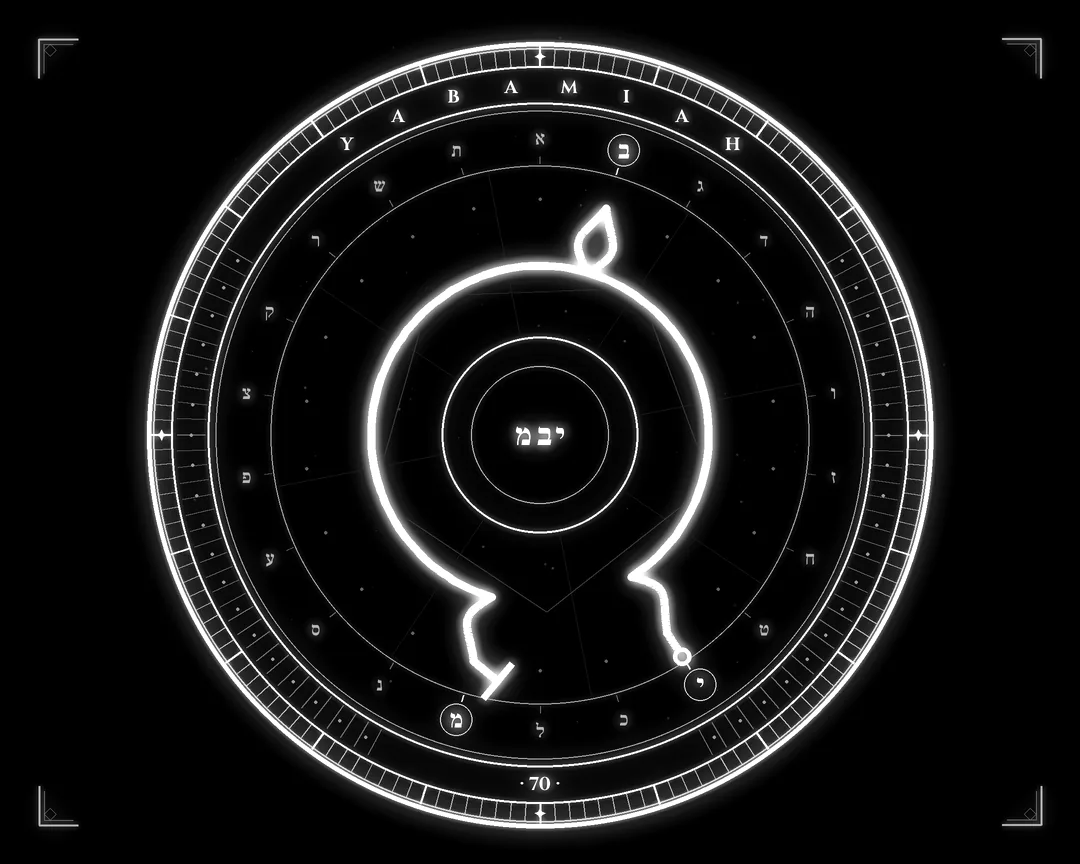
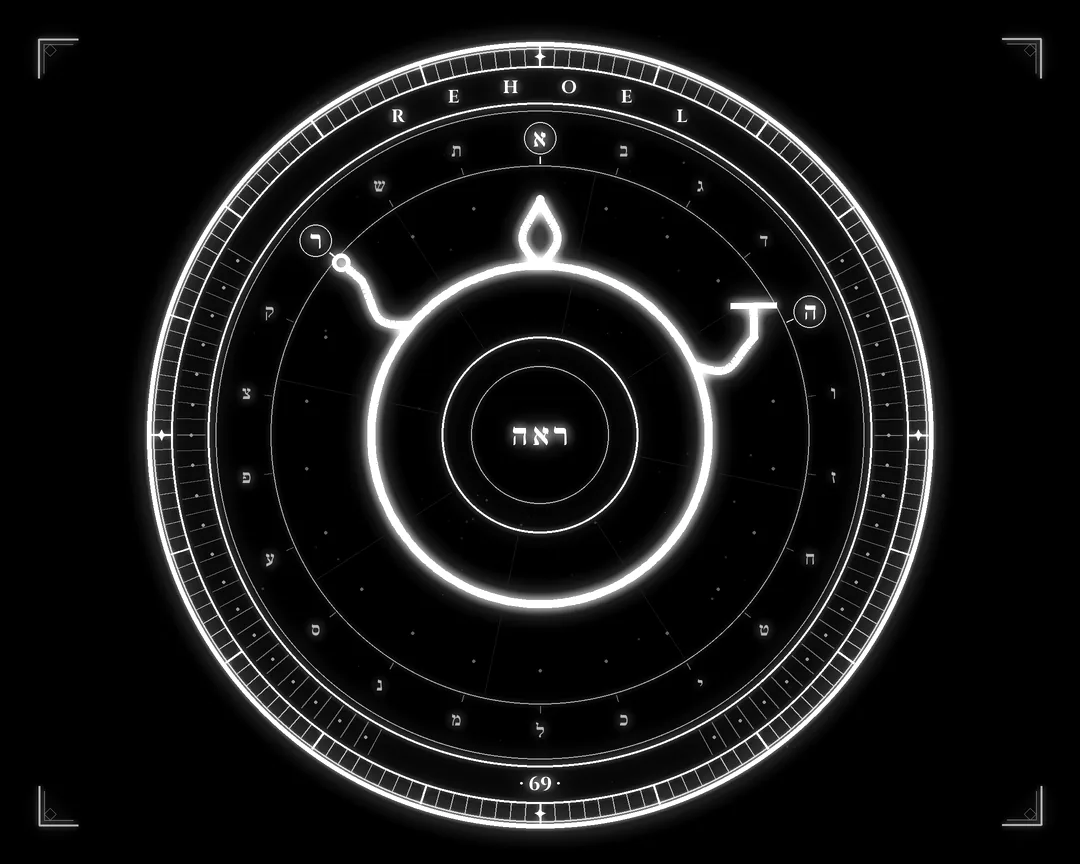
A few powers I could pin to a source. Vehuiah, for will and hard tasks, “ideal for tasks that are wearing you out,” per Brand. Rehoel, with “The Power to Regenerate Energy,” which the Gallery’s 2019 post says gives you “more spare time in which you can relax and rejuvenate” (The Missing Magick). On one magick forum in 2019, a member called Mahasiah for the power to “learn like a genius,” and another asked about Poiel, who can “bring Fame And fortune through talent” (Become A Living God forum).
The people who work with them keep saying the same thing about how the angels work. “These angels tend to make pretty big changes to an entire situation, in my experience, so I consider the magick to be more of a long-term investment than a quick solution to short-term problems,” wrote shinri. And Norski, on Poiel: “Take notice that the scope of results can span 5 years or so. They paint in VERY broad strokes and craft subtle masterpieces.” I love that line. Subtle masterpieces.
They’re honest about the misses too. MagicianAndMedium, the dad from the opening, said, “Petitioning the Shem for jobs for other people never seemed to work.”
11. Are the Shem HaMephorash Angels Dangerous?
The lore really does say both things, and that’s what makes it fun.
On the caution side, there’s the Name itself, which you weren’t supposed to say. There’s Exodus 23:21, where the angel who carries the Name “cannot bear [pardon] your transgression.” Rudd’s whole system assumes evocation is dangerous without angelic authority. And Lenain gives every angel a dark twin.
Then there’s the big one. The French occultist Robert Ambelain, in a 1989 note added to a reprint of his 1951 La Kabbale pratique, wrote that the popular seals were “incorrectly attributed to the 72 Divine Names. These Seals are in reality their opposites. Conclusive experiments occurring between 1955 and 1960 allowed us to establish their eminently malefic and excessively dangerous character: incidents of cancer, […] corporeal possession and infestation have been observed and are beyond possible argument” (Piers Vaughan’s translation, as quoted in an r/occult thread). When someone in that thread asked whether he gave details, the answer was, “He does not. Its only a sidenote, no explanation whatsoever.” Five years of experiments and one paragraph. That’s high strangeness, to say the least.
Nick Farrell weighed that against his own experience. “Given that the Whare Ra adepts had few problems with their seals I would be tempted to ignore Ambelain’s comments on this, but I did notice some similarities between some elements of these seals and those I had been working with in the Grand Grimoire… In the end, I decided to get rid of both systems.” The Grand Grimoire is the French book of Lucifuge Rofocale. A seasoned adept spotting its fingerprints on “angel” seals is the kind of detail that makes the hair on your arms stand up.
On the calm side, the Gallery of Magick is about as clear as a publisher gets: “In magickal terms, there is nothing dangerous about working with any of the books we have published,” and “The magick in these books has been constrained to remain safe, so you can be assured that nobody you care about will come to harm” (Magickal Safety FAQ). MagicianAndMedium, after years with them, said, “They never struck me as particularly dangerous compared to other spirits that I have worked with.” In every firsthand account I read, nobody described being hurt by a Shem angel. Pretty much everyone lands on one rule. Make sure it’s the angel you’re talking to.
12. Stories From People Who Called Them
The gift the angel chose. You already know the start. Here’s how MagicianAndMedium tells the rest: “I assumed that the angel would just help her get a good job, but that’s not what happened at all. My nanny’s mother had a heart attack… Her mother died in the hospital twice and they revived her. The nurse said it was a miracle… The mother walked out of the hospital after several months and she lived a decent life for a few more years” (r/occult, 2023). He asked for a gift and pictured a job. The angel picked a few more years with her mom.
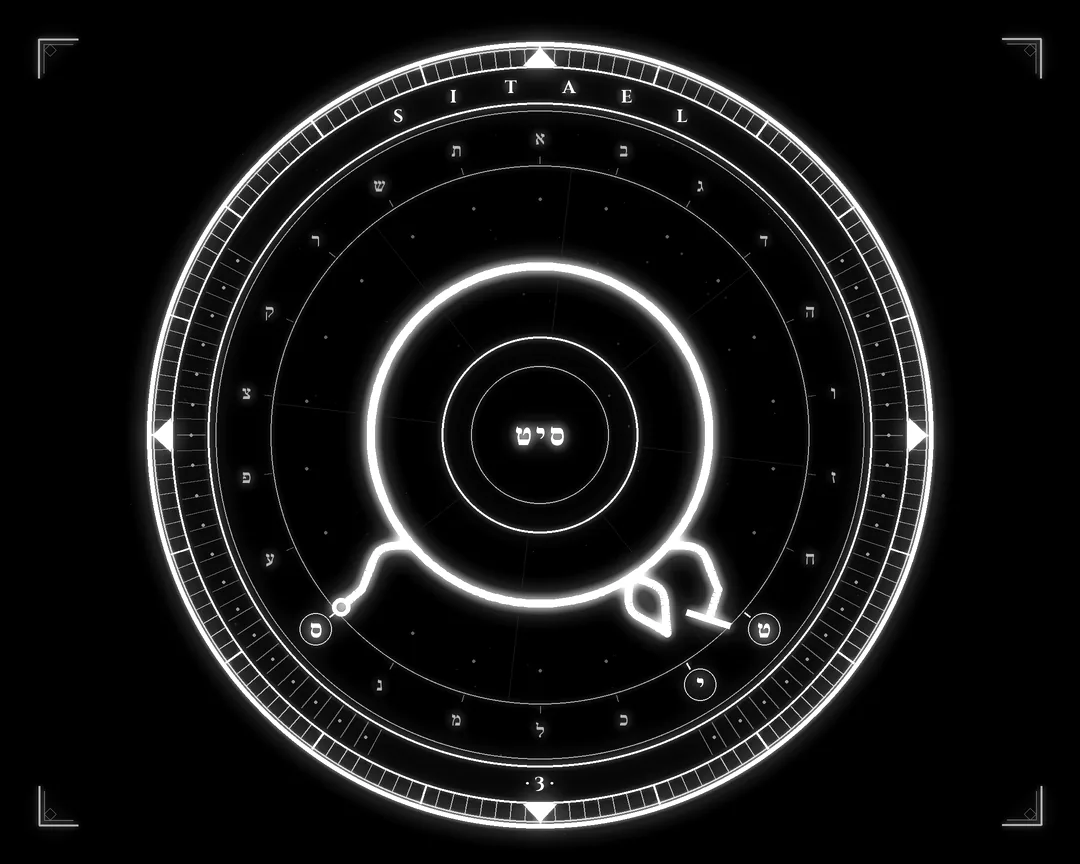
The job before the ritual ended. In an April 2025 post, Reddit user Fioredacqua described a Gallery of Magick working “with Sitael and Helahiah,” asking for “a job in my sector, for €1800” and a house. “During the night I woke up twice… I also had a dream about a woman in a geodesic dome.” They never even finished the eleven days. “After a month I received a call, a man offered me a job, with all the conditions I requested. And salary of €1800.” Five months later came an update. “My owner spontaneously offered me her house for rent, at a really cheap price. What can I say… Thanks Sitael and Helaliel!” (r/GalleryOfMagick). And here’s a weird echo. According to one well-read Redditor, an 18th-century manuscript now in the Wellcome collection (MS 1434) explains how to use the 72 angels “to provoke visionary dreams in which desired secrets will be revealed” (u/luxinseptentrionis, r/occult). Night messages are one of the oldest signatures of these angels.
“This is coming.” This one’s a warning story. In February 2026, Brave-Movie-1028 posted about an eleven-day working with Yeliel for love, promising to “step through fear and inertia for it.” After the ritual, scrolling Instagram, “a voice came over me and said ‘this is coming.'” Soon after, “I went somewhere out of the blue, from a pull. I showed up and she was the first person I met.” They clicked. And he froze. “I did not move, because I was complacent and afraid. And I lost her to another.” But he also says he came out of it changed, and that “there’s a killer instinct behind me now which I never had” (r/AngelolatryPractices). The angel opened the door. He just didn’t walk through it in time.
Angel first, then the demon. And Rudd’s method is still being run. “I’ve definitely tried the method of invoking the angel first then the demon. I think I got good results… I don’t know if the angel actually compels the demon, if they work together, if it doesn’t matter, but either way I’ve got results this way” (u/National_Ad9742, r/DemonolatryPractices, 2026). He admits he doesn’t know why, which honestly makes me trust him more.
A Fair Word for the Skeptics
The (quote on quote) “experts” in the mainstream herd would say the 72 names come from a letter game played on Exodus and don’t appear in the Bible as names. They’d say the angels, choirs, birthdays, and demon pairings are mostly Renaissance and later add-ons, that the systems can’t even agree where the circle starts, that the common seals have no trail before the 18th century, and that results stretched over “5 years or so” can’t be tested. One Redditor’s whole reply to the €1800 job story was “Coincidence.”
And yet the 72-letter verses are real, and I counted them. The method is in Rashi, written over 900 years ago. And these angels have been called on for five centuries by a Royalist engineer, a Jesuit polymath, a velvet winder with sixteen kids, a Golden Dawn temple in New Zealand, and a dad in a city of millions who just wanted to thank his son’s nanny.
So What Do You Think?
Seventy-two names hidden in the verses where the sea splits. Seventy-two angels with a Seraph at the top and a demon at the bottom of each one’s ladder. A man who matched them with the Goetia and died at 72. I don’t know exactly what answers when somebody lights a candle and says one of those names. But far too many people keep reporting that something does. Is it the angel, the Name, or something we don’t have a word for yet? What do you think?
FAQs
-
What are the Shem HaMephorash angels?
They’re 72 angels whose names come from the 72-fold name of God hidden in Exodus 14:19–21. Each verse has 72 Hebrew letters. Read in a zig-zag, they give 72 three-letter names, and Reuchlin (1517) and Agrippa (1533) added -iah or -el to make them angels. -
What does Shem HaMephorash mean?
It means “the explicit name” or “the distinguished name.” In early rabbinic sources it meant the four-letter name of God, YHVH. Later Kabbalists used it for a 72-fold name, which is the one the 72 angels come from. -
What is the Goetia of Dr. Rudd?
It’s a 17th-century English Solomonic system, edited by Stephen Skinner and David Rankine in 2007, that pairs each Shem angel with one of the 72 Goetic spirits. The angel is called first as the controlling authority, using double seals that show both. -
How do I find my Shem angel?
In Lazare Lenain’s 1823 system, you’re tied to three angels by your birthday and hour of birth, with each angel ruling five days counted from the spring equinox. The Golden Dawn starts its zodiac order at Leo instead, so check which system a chart uses. -
Are the Shem angels dangerous?
Most practitioners and the Gallery of Magick say no. Robert Ambelain warned in 1989 that the popular seals were “in reality their opposites,” though he gave no details, and Nick Farrell dropped them for his own sigils. The angels themselves aren’t described as harmful.
Further Reading
- The Goetia of Dr Rudd by Stephen Skinner and David Rankine. The Rudd manuscript with the double seals that pair each Shem angel with its Goetic spirit.
- The 72 Angels of Magick by Damon Brand. The Gallery of Magick’s practical take, with a Psalm, sigil, and talisman for every angel.
- Angels and Archangels: A Magician’s Guide by Damien Echols. A modern ceremonial guide with a section on the 72 Shem angels.
As an Amazon Associate, Cryptic Chronicles earns from qualifying purchases.
Sources
- Exodus 14:19–21 and 23:21, Hebrew and Metsudah English: Sefaria, Exodus 14 and Exodus 23:21
- Rashi on Sukkah 45a (Sefaria Community Translation): Sefaria
- Mishnah Sanhedrin 10:1 (trans. Joshua Kulp) and Avodah Zarah 18a: Sefaria, Sanhedrin 10:1; Sefaria, Avodah Zarah 18a
- Heinrich Cornelius Agrippa, Three Books of Occult Philosophy, Book III, ed. Joseph H. Peterson: esotericarchives.com
- Joseph H. Peterson, ed., The Lesser Key of Solomon: Goetia: esotericarchives.com
- S. L. MacGregor Mathers, Golden Dawn “Schemhamphorash” lecture: tarrdaniel.com
- Athanasius Kircher, Oedipus Aegyptiacus (1653), the 72 Names plate: Wikimedia Commons
- “Shem HaMephorash,” Wikipedia (citing Bacher, Trachtenberg, Jones 1993, Roling 2002, Burton and Grandy 2004, Skinner and Rankine, Rudd 2007, Mathers): en.wikipedia.org
- Wilhelm Bacher, “Shem Ha-Meforash,” Jewish Encyclopedia (1906): jewishencyclopedia.com
- “Thomas Rudd,” Wikipedia: en.wikipedia.org
- “Lazare Lenain,” French Wikipedia: fr.wikipedia.org
- Soror Chamos, review of The Goetia of Dr Rudd (Skinner and Rankine, Golden Hoard, 2007), Esoteric Book Review, May 1, 2008: esotericbookreview.wordpress.com
- Gallery of Magick: “The 72 Angels of Magick” (2016); “How To Find An Angel” (2015); “The Missing Magick” (2019); “Empowered Angel Magick” (2022); Magickal Safety FAQ
- Kabbalah Centre, “72 Names of God”: onehouse.kabbalah.com
- Damien Echols, Angels and Archangels announcement: damienechols.com
- r/occult, “Shem Ha Mephorash, warning from R. A. Gilbert” (November 2023), with comments by u/MagicianAndMedium, u/luxinseptentrionis, u/fortgang, and u/magocyan: reddit.com
- r/GalleryOfMagick, “Ritual worked without being carried out?” (April 2025): reddit.com
- r/AngelolatryPractices, “Shem ritual- result but screwed it up and need guidance” (February 2026): reddit.com
- r/DemonolatryPractices, “The Goetia of Dr Rudd, question about the angels and demons interaction in ritual” (April 2026): reddit.com
- Become A Living God forum, “72 Angels of Magick Damon Brand experiences” (June 2019): forum.becomealivinggod.com
Want the Extended Deep Dives First?
If this kind of deep dive is your thing, the Chroniclers Vault gets my solo deep dives in their full extended cut, far ahead of the public release. It starts at five bucks, and it keeps the show going. Come over and have a look: patreon.com/cw/crypticchronicles.
0 Comments