Jeliel is hiding in a sentence about a pillar of cloud.
You can read right past him. Three verses of Exodus, the Egyptian army closing in on a camp of runaways, a column of cloud sliding from the front of the line to the back. Nobody in that scene has a name like Jeliel. But if you line the three verses up the way the old Kabbalists did and read straight down, the second column of letters spells him out: yod, lamed, yod. Three letters, picked out of the night the sea split.
What does Jeliel mean? In Lenain’s French catalog, the root of the modern birthday-angel guides, the name is glossed “Helpful God,” which in plain English is a God who helps. The Golden Dawn, spelling it Yelauiel, glossed it “Strength.” That’s the Jeliel meaning in a breath, and the rest of this guide shows where each reading comes from.
The Jeliel angel is Shem HaMephorash angel 2, the second of the 72 Shem HaMephorash angels. He’s a Seraph, and tradition puts him in charge of quelling riots, beating unjust attackers, keeping a husband and wife from drifting apart, and, in some modern French guides, fertility. Llewellyn’s encyclopedia lists him under the alternate spelling Jelial, as an angel who stirs love and passion in relationships that have gone flat. Vehuiah, #1, already has a post on this site. This one is for the angel who comes right after him, and who, in the Goetic system, stands over the duke we just covered in the Agares guide.
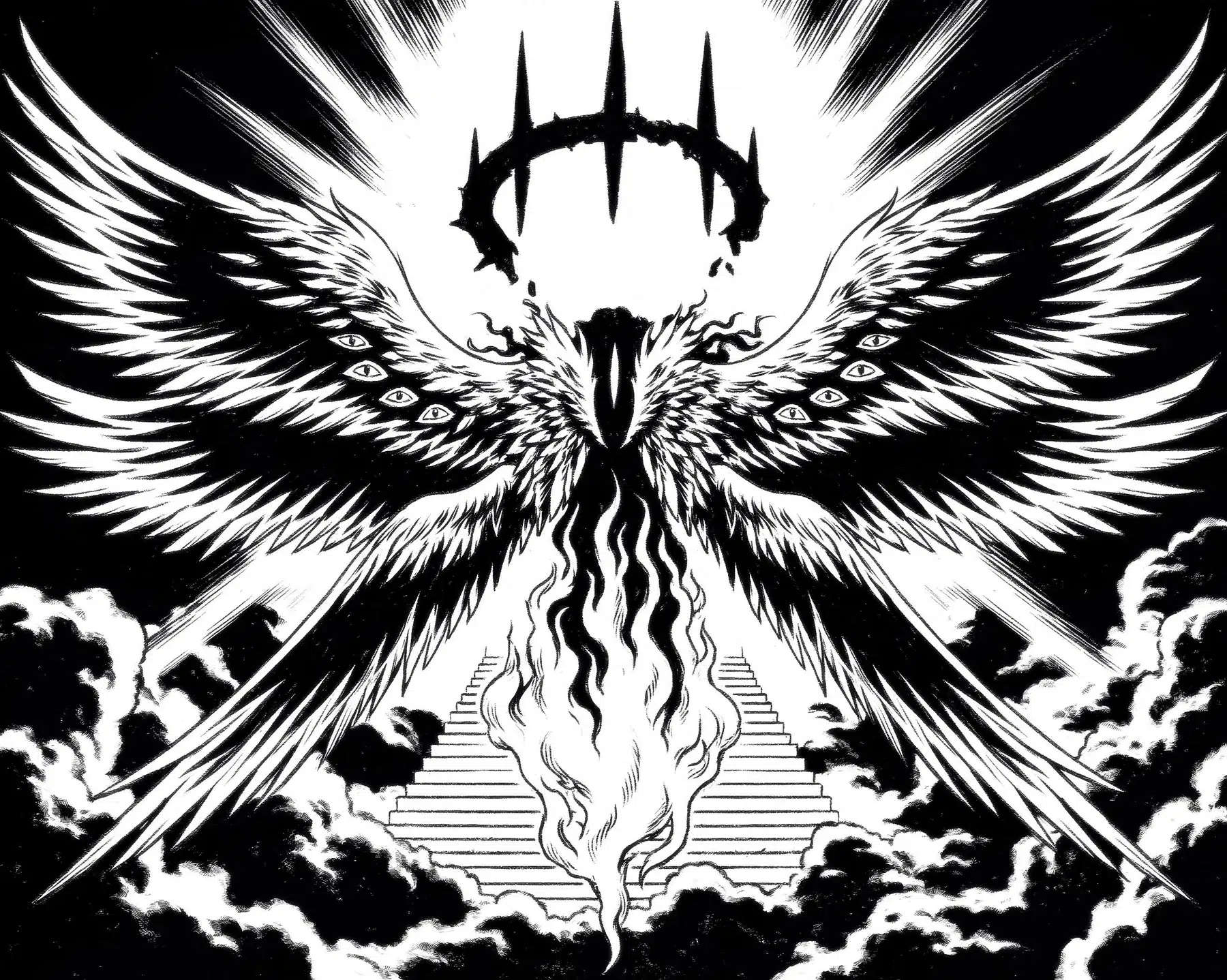
Jeliel at a Glance
- Number: 2 of 72
- Choir: Seraphim (angels 1 to 8 in the nine-choir scheme)
- Name: Jeliel, from the Hebrew root ילי (yod, lamed, yod) plus the ending -el, written יליאל. Also spelled Yeliel and Iéliel; Golden Dawn spelling Yelauiel
- Meaning given: “Helpful God” (Lenain’s French catalog, in English translation); “Strength” (Golden Dawn / Mathers)
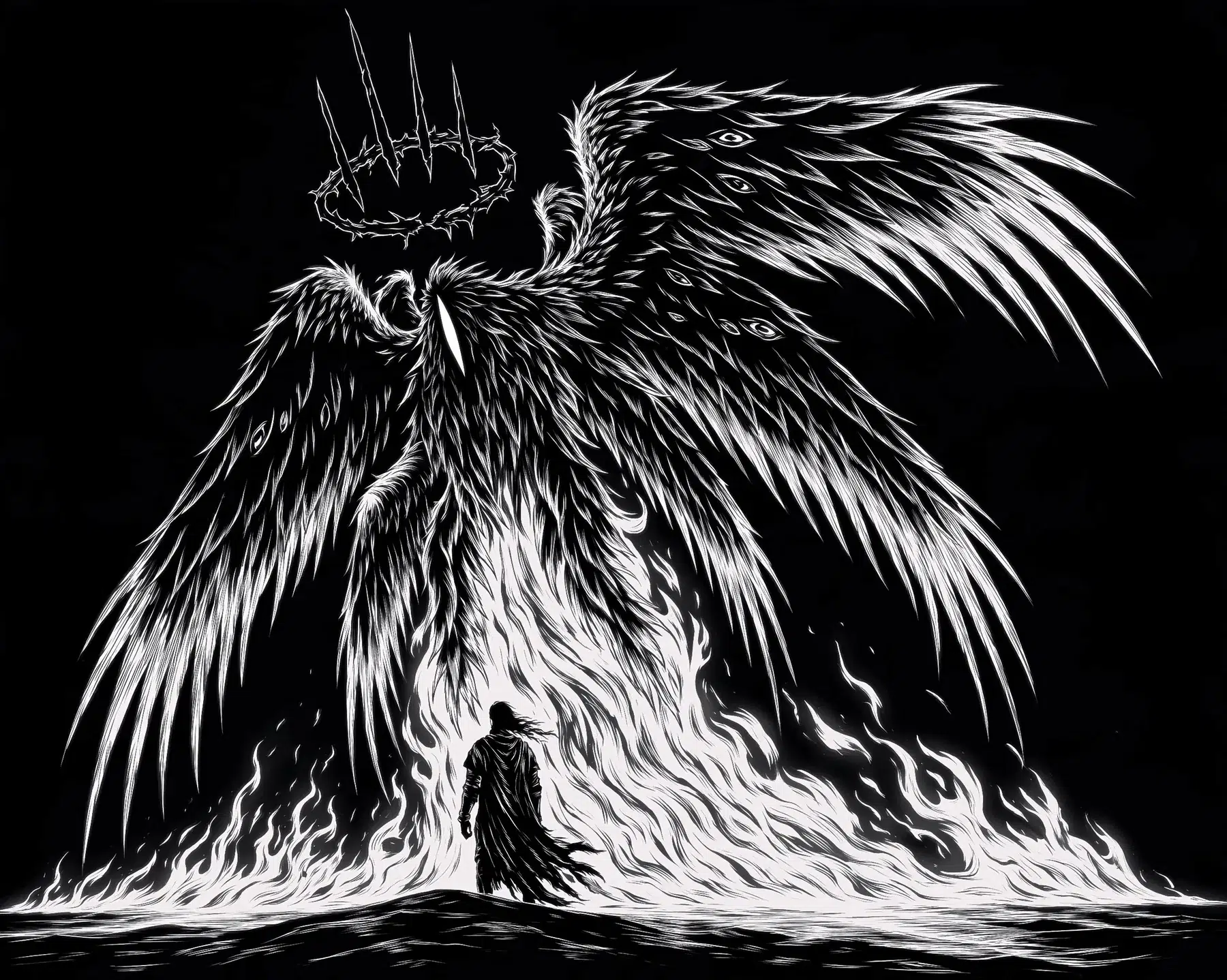
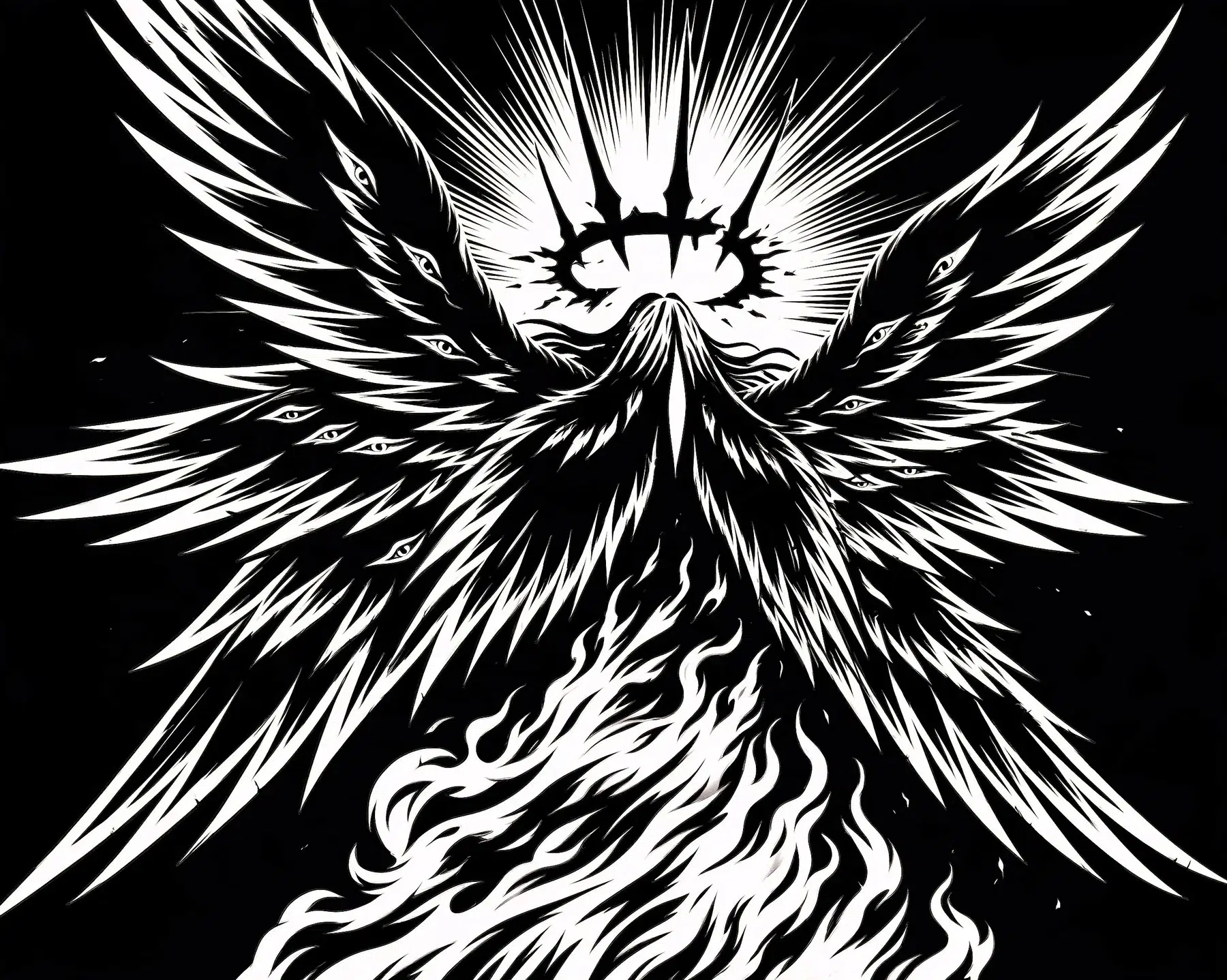
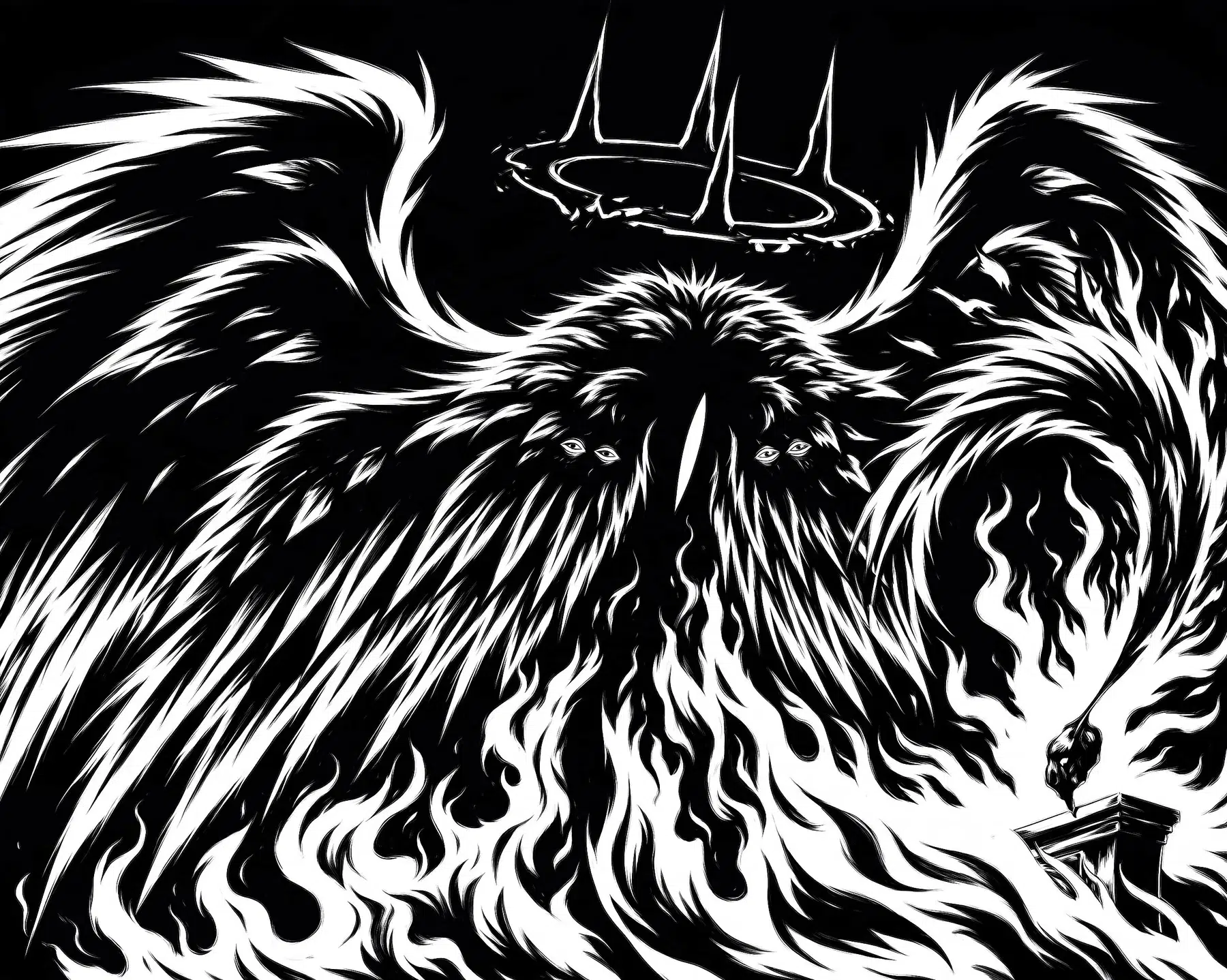
- Appearance: The classical sources give no face or body. Modern French pages describe a Seraph with very large wings
- What he is said to do: Puts down mob unrest, wins out over unjust attackers, restores peace between spouses and keeps marital fidelity, rules over kings and princes (Lenain). Modern French guides add fertility and help conceiving a child
- Zodiac and planet, Golden Dawn: Leo 5° to 10°, planet Saturn. In the French calendar tradition, the same five-degree slice is placed in Aries instead
- Psalm: Psalm 22:20 in the Hebrew numbering (22:19 in English Bibles, 21:20 in the Latin Vulgate)
- Counterpart: Goetia spirit #2, Agares (Rudd system)
Every line in that box comes from a different tradition, and some of them disagree. I’ll label each one as we go, so you always know whose Jeliel you’re looking at.
What the Sources Say About the Jeliel Angel
The Shem HaMephorash isn’t a book you can open to page two. It’s a method, and then a pile of later catalogs built on the method. So the honest way to meet Jeliel is in layers: the verses, the psalm, the French calendar, the Golden Dawn, and Crowley’s tables.
What the name Jeliel means
The name has two parts. The root ילי comes out of the verses, as the next section shows, and the ending -el is the Hebrew for “God.” The Golden Dawn lecture says angel names are made by adding -YH or -AL to the three-letter name. As for the gloss, the English translation of Lenain I could read supplies the one in the opening lines, and modern French pages say the same thing in their own words, Dieu secourable, a God who comes to the rescue. Reuchlin’s 1517 list, which Wikipedia reproduces, already has the name.
The three verses
The 72 names come from Exodus 14:19, 20, and 21. Each of those verses is exactly 72 letters long in Hebrew. The old instruction, which the Golden Dawn lecture repeats, is to write the verses one above the other, the first from right to left, the second from left to right, and the third from right to left again. Read down the 72 columns and you get 72 three-letter names.
The first of the three verses is the one that carries the angel, so here it is in the translation printed in the Golden Dawn lecture:
“And the Angel of the Elohim, that went before the camp of Israel, removed and went behind them; and the pillar of cloud removed from before them and stood behind them.”
— Exodus 14:19, as translated in the Golden Dawn “Shem HaMephorash” lecture attributed to S. L. MacGregor Mathers
I checked Jeliel’s letters against the Hebrew text on Sefaria myself. The yod is the second letter of verse 19, in the word vayisa, “and it removed.” The lamed is letter number 71 of verse 20, and because verse 20 is read in the opposite direction, that lamed sits in the same column. It falls in the Hebrew for “all the night.” The last yod is the second letter of verse 21, in vayet, “and he stretched out.” Yod, lamed, yod. ילי.
That already says something about where Jeliel lives in the text. His first letter comes out of the verse that names an angel, and his last comes out of the verse where Moses reaches over the water. And the middle letter is in the night.
The -el ending is the other half of the name. The Golden Dawn lecture says angel names are made by adding either -YH, which “signifies Mercy and Beneficence,” or -AL, which signifies “Severity and Judgment.” Jeliel is an -el name. By that rule he’s on the severity side of the ledger, which fits a Seraph assigned to put down riots and take on unjust attackers. I want to be clear that’s my reading of the rule, not a line the lecture applies to him.
The psalm
Every one of the 72 gets a psalm verse. In the Golden Dawn list, Jeliel’s entry reads:
“2nd Angel. NAME: Yelauiel. SIGN: Leo. PLANET: Saturn. DEGREE: 5—10. MEANING: Strength. PSALM 22:20: “And Thou, O Tetragrammaton, be not far off, O my Strength, to help me make haste.””
— Golden Dawn “Shem HaMephorash” lecture (Mathers), Thelemagick Library transcription
Notice how “Strength” and the psalm line share a word. The Hebrew in that verse is eyaluti, “my strength,” and the verse is a cry for help. I won’t say the verse caused the meaning or the meaning caused the verse selection. The two just match, and they were already matched when the Golden Dawn wrote them down.
The numbering is a trap, so here’s the cheat sheet. The same sentence is Psalm 22:20 in the Hebrew Bible and the Golden Dawn list, Psalm 22:19 in most English Bibles and in the Rudd-based table on Wikipedia, and Psalm 21:20 in the Latin Vulgate that Lenain’s French catalog quotes. If you’re looking it up and the verse seems to be missing, count one off in either direction. Psalm 22 is also the psalm that opens “My God, my God, why hast thou forsaken me,” a line the Gospels of Matthew and Mark put on Jesus’s lips, which is part of why it carries so much weight in Christian Kabbalah.
The French calendar and the Seraph
In 1823 a bookseller and textile worker in Amiens, Lazare Républicain Lenain, published La Science Cabalistique, a book meant to rescue magic from the cheap grimoires. He leaned on Agrippa and Reuchlin‘s 1517 De Arte Cabalistica, and he built a whole system on the 72 angels, arranged in nine choirs of eight. It’s one of the big roots of the modern “guardian angel of your birthday” idea.
I couldn’t get a clean scan of Lenain’s original French. What I could read is an English translation of a 1951 republication, reproduced in William S. Burkle’s 2015 paper for the Rosicrucian Society. The translator corrects some of Lenain’s errors in other entries, so treat the wording as Lenain filtered through a translator. Here’s the heart of Jeliel’s entry:
“One invokes this angel to calm popular sedition, and to obtain victory over those who would attack you unjustly.”
— Lenain, La Science Cabalistique (Amiens, 1823), English translation of the 1951 republication, in William S. Burkle, “Seventy-Two Angels of the Shemhamphorash” (SRICF, 2015)
The rest of that entry fills in the profile. Beyond the gloss in the box above, he rules over Turkey, the translation says, adding that the people there call God “Aydy.” He oversees kings and princes and keeps their subjects obedient. He re-establishes peace between spouses and maintains conjugal fidelity, and people born under him are described as cheerful, with agreeable manners. The request is made with his name and the Psalm verse, and the favorable hour is 12:20 to 12:40 in the morning. Lenain also gives every angel a darker twin, the “bad angel,” and Jeliel’s is said to delight in sundering spouses.

Jeliel counts as a Seraph because angels 1 through 8 do. The Golden Dawn lecture sorts the 72 into “nine sets of 8, each answering to the nine choirs of Angels,” and the first set is the Seraphim, the top of the Christian hierarchy. The scriptural Seraph is the one in Isaiah 6, the creature with six wings that calls out “holy, holy, holy.”
Now the Metatron question. Modern French pages, like Astroya’s Jeliel entry, put the Seraphim under the archangel Metatron and tie them to Kether, the Crown. That isn’t the only way to line things up. The Mathers and Crowley edition of the Goetia prints a ladder around the magic circle, based on Agrippa’s scale of ten, where Kether goes with Metatron and the Chaioth Ha-Qadesh, and the Seraphim are down at Geburah with the archangel Kamael. Two charts, two Seraphim addresses. I’m not going to pick one for you.
What ties Metatron to the Shem angels at all is a single phrase. Exodus 23:21 says of the angel God sends before Israel, “my name is in him.” Agrippa quotes it as the proof text for the 72 names. The Talmud, in Sanhedrin 38b, has Rabbi Idith reach for the same verse to show Metatron is an angel and not a deity, after a questioner argues that Metatron should be worshiped because his name is like his Master’s. So the badge that Jeliel and the other 71 wear is the same badge the rabbis argue over for Metatron.
The Golden Dawn and Crowley’s 777
The French calendar starts the zodiac at the spring equinox. In that count, Jeliel’s ray falls on the 6th to 10th degree, the Aries stretch, and the translation names a decan angel for it, “Asican,” with a note that the name appears to come from Greek and Roman decan lists. The Golden Dawn starts at Leo instead, so Jeliel lands on Leo 5 to 10 degrees, with the decan ruled by Saturn. Same angel, different starting line.
That Leo slot is also where the tarot gets pulled in. In Burkle’s table of “Influences Attributed to the Angels,” the row “Strife” lists 1. Vehuaiah as the angel of the day and 2. Jeliel as the angel of the night. “Strife” is Crowley’s name for the Five of Wands, which is Saturn in Leo. In 777, Crowley’s table of correspondences, the angels are listed in pairs ruling the numbered cards, and the book’s own footnote gives the rule:
“On each row, the name on the left rules the card in question by day, the one on the right by night.”
— footnote to Cols. CXXIX–CXXXII, 777 Revised (Neptune Press reprint, 1955; Celephais Press e-text, 2003)
So in the Golden Dawn and 777 family, Jeliel is the night-watch partner of Vehuiah on a card called Strife. I could read the “Strife” row and the footnote in my copy of 777. The scanned Hebrew names in that row are too garbled for me to read directly, so the pairing itself rests on Burkle’s table.
The French-calendar sources don’t agree on the card. The Bene Bellwen handout, which follows Lenain’s Aries-first order, puts Jeliel under the Ace of Wands, reversed, in Aries 6 to 10 degrees. Same angel, different card. If you work with the tarot, decide which table you’re following before you start, and stick with it.
Appearance and Powers
The classic sources don’t describe how Jeliel looks. Lenain gives a country, a calendar, a psalm, a temperament. The Golden Dawn gives a sign, a planet, a verse. Nobody in the old catalogs writes “he comes as a man with a staff.” For the Goetic spirits, the books go on and on about the body. For the angels, the books go on about the job.
The job is a mix of the public and the private. On the public side, he calms uprisings and gets you through an unjust attack, and he sits on the side of kings and princes. On the private side, he is the one for the marriage that’s wobbling. I find that pairing odd and a little wonderful. The same angel is asked to steady a crowd and steady a couple. In both cases something that was held together by trust is starting to split.
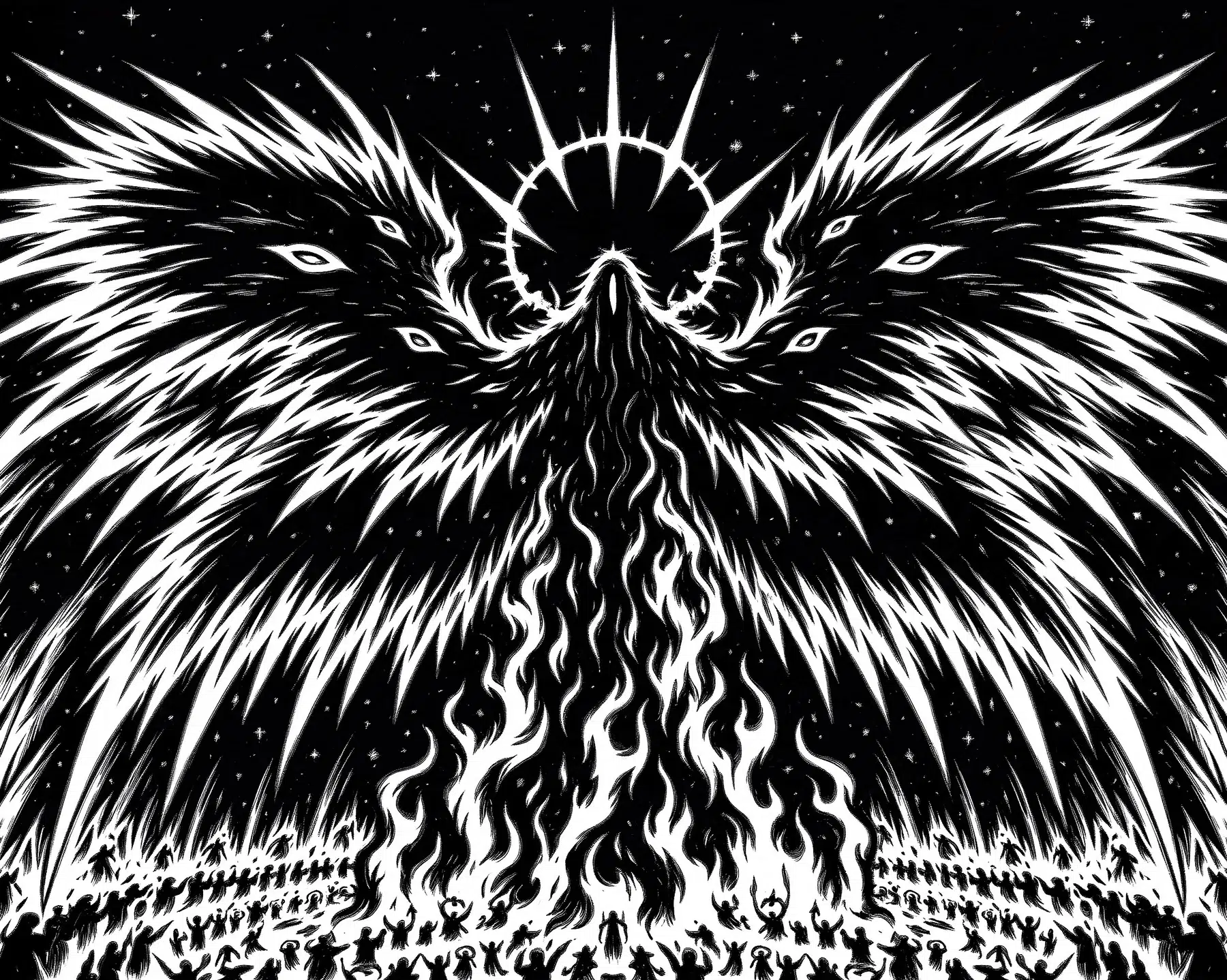
Modern French sites give him wings. Evozen, a French angel-guide site, describes Jeliel as having wings so large that he can draw all his children close to shelter them (my translation of the French). That’s a modern description, not a classical one, and it fits the Seraph reputation. Evozen calls him the angel of love, fidelity and fertility, and lists help in conceiving a child among his effects. It also lists a light blue angel color, a mirror hour of 00:01, and a daily window of 00:20 to 00:39. Astroya lists a birth period of March 26 to 30, the element fire, rose quartz and rhodonite, and Friday as his day.
Those are birthday-angel charts from a modern French tradition, not Lenain and not the Golden Dawn. The calendars don’t agree, and I’ll sort the dates, the hours, and the traits of people born under him in the Birth Angel section below. The one piece most of the tables still share is the hour, a little after midnight.
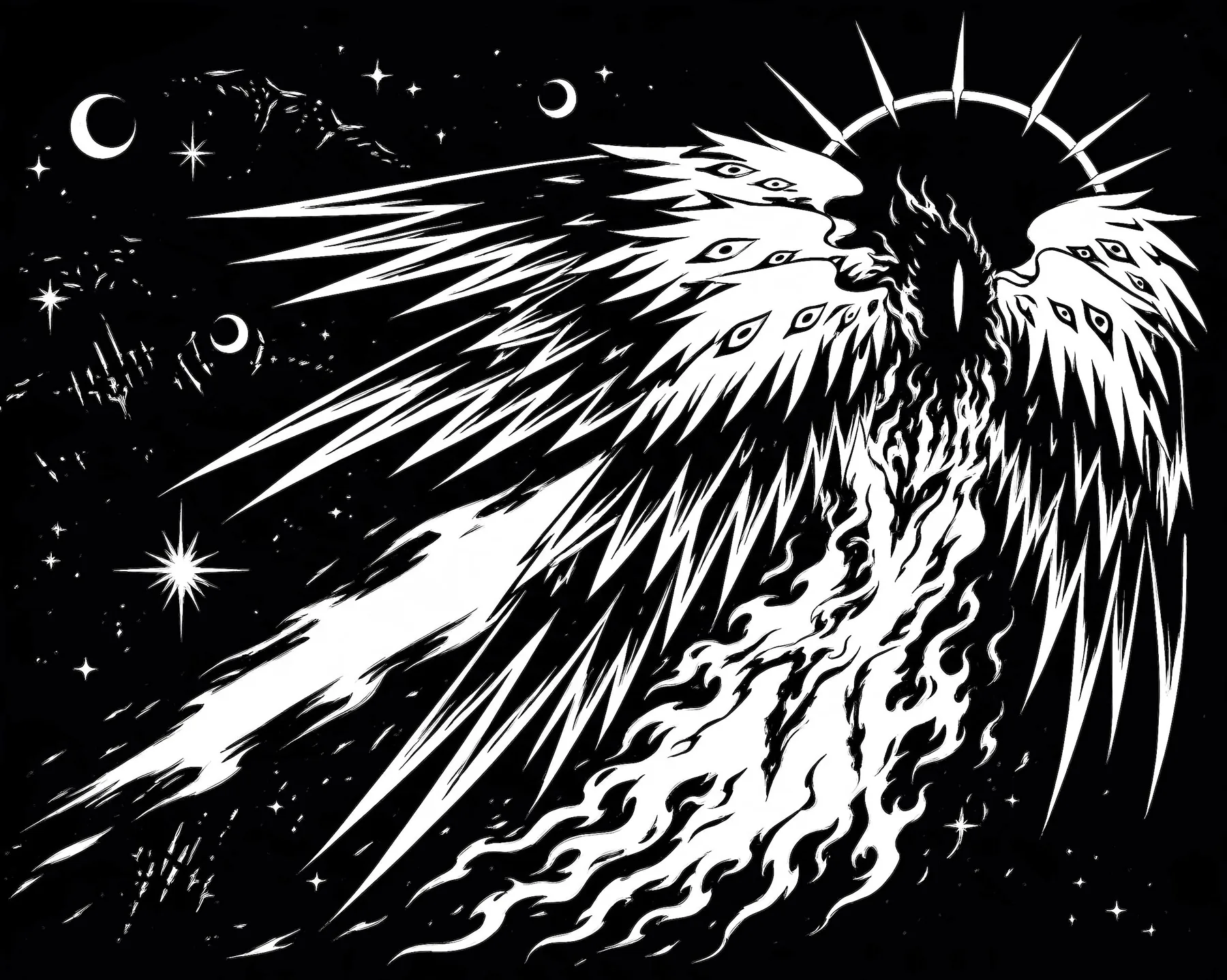
Leo is the sign the Golden Dawn gives him. Pair a Seraph with the lion and you get a calming angel who doesn’t need to raise his voice, because everyone in the room already knows what he is. That’s my picture, not a source’s, but it’s an easy one to hold in your head.
Birth Angel
Most of the pages that come up if you search “jeliel angel” treat him as a birth angel. That’s a later use of the French catalog, and it’s the one thing a Shem guide has to cover that a Goetia guide doesn’t. The dates, though, do not all match, so I’m going to label each scheme rather than pick a winner.
The five-day window almost everyone prints is March 26 to 30. Astroya, Evozen, Angelorum, Astrofame, Symbolikon, and a shorter English page called Over Hell, Under Heaven all use it. If you were born in those five days, these sites say Jeliel is your guardian of birth, no matter the year.
Lenain’s own entry does not give that window. In the English translation I could read, he names five days scattered across the year: 21 March, 1 June, 12 August, 23 October, and 3 January, and a favorable hour from 12:20 to 12:40 in the morning. Later French and English sites keep the idea of five “days of power” or “days of regency,” but they shift the dates. Astrofame, and Evozen’s heart-angel calendar, use 21 March, 2 June, 14 August, 26 October, and 7 January. Symbolikon uses 22 March, 4 June, 18 August, 30 October, and 10 January. Angelorum’s secondary dates are 10 January, 22 March, 4 June, 18 October until noon, and 31 October. I’m not going to pretend those are the same list.
There’s also a system of more than one angel. Astroya says you have two: the angel of your birth date, who rules a five-day stretch, and the angel of your birth hour, who ruled the twenty-minute window in which you were born. They are not always the same angel. Angelorum describes three: a primary angel for the physical life, a secondary for emotional patterns, and a time-of-day angel for intellect. Evozen splits them as a guardian angel (the March 26 to 30 window), a heart angel (those shifted dates through the year), and a spiritual angel who is available every day from 00:20 to 00:39. Same idea, three slightly different maps. The twenty-minute hour, at least, is the piece that keeps showing up.
What he’s said to give the people born under him depends on who’s talking. Lenain’s translation says they have a cheerful spirit and agreeable manners. Astroya calls them loyal in friendship and in love, natural mediators, the person you call when two people have stopped speaking. The same page names the trap: they can forget themselves to keep the peace, say yes when they mean no, and stay too long in a relationship that wears them down. Astrofame describes them as warm, sensual, and deeply loyal, with faithfulness as a cardinal value. The Weebly page adds that Jeliel’s protégés can be idealistic, with a quiet strength and a talent for turning what’s in the imagination into something real, and that they may do well in justice or in constructive work. Symbolikon lists the qualities this angel is said to develop as universal love, peace, fidelity, respect, and truth, and the defects it is said to cancel as pride, rudeness, narcissism, infidelity, selfishness, and avarice.
I’ll believe the loyalty. I’ll also believe the warning about disappearing into other people’s peace. That’s the private side of an angel whose public job is calming a crowd.
One last note on language. Some modern pages, Angelorum among them, write about Jeliel as “she.” The older catalogs don’t give him a body, and they don’t assign a gender. I’m using “he” because that’s how Lenain’s translation and most of the French guides I read still write it. If you work with the name as feminine, you’re in good modern company, and you’re not contradicting a classical description, because there isn’t one.
Older Roots
Jeliel doesn’t have a pagan backstory, and I’m not going to fake one. What he has is a paper trail, and the trail goes like this. The method of pulling names from Exodus 14:19-21 is old Jewish mystical practice. The French Wikipedia’s article on the Shem HaMephorash points to the Sefer Raziel as one source of the tradition. The Renaissance Christian Kabbalists took the system up. Reuchlin, in De Arte Cabalistica (1517), added -iah or -el to each triplet so the names could be spoken, and his list already has Jeliel second. Agrippa repeated the method in Book III of Three Books of Occult Philosophy (1533). Then Lenain in 1823 and the Golden Dawn later in the century built out the calendars and the zodiac slots. Thomas Rudd, in the 1600s, produced a Goetia in which each spirit is paired with one of the 72 angels.
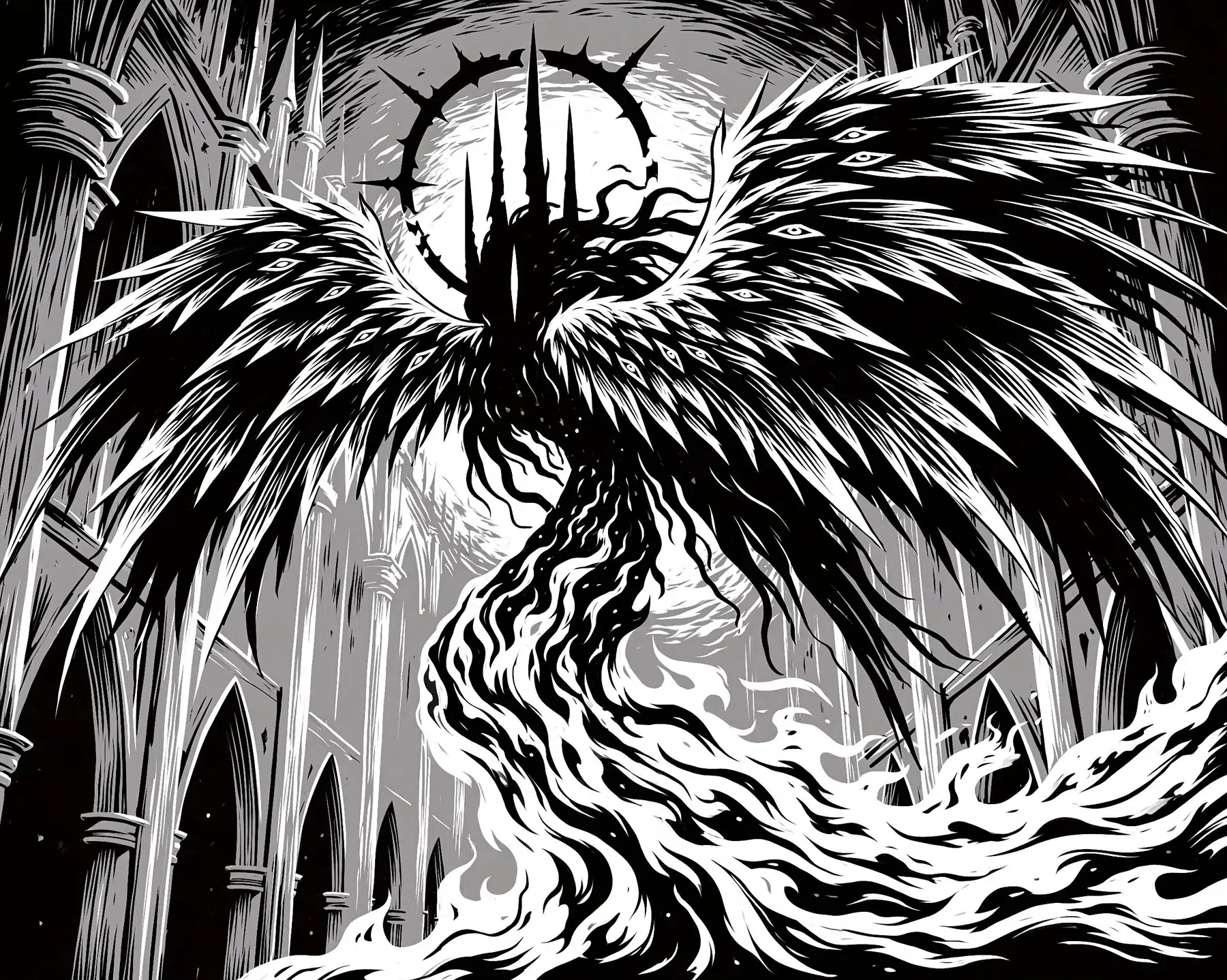
His job description got layered on over centuries, one set of hands after another. Here’s the part I think is a real hook. The very first verse in the set, the one that gives Jeliel his first letter, is about an angel standing between two armies. Read that way, an angel whose name is spelled out partly from the verse of the pillar and the night looks like less of a coincidence and more like a character the method was built to pull out.
That’s a theory, and I’d call it a reading, not a fact. It’s the kind of reading believers have always made of these verses.
Skeptic’s corner: a skeptic would point out that the letter method will turn any three verses of 72 letters into 72 three-letter names, and that the jobs were handed out later by compilers who needed 72 of them. The psalm numbering that slips by one between Bibles doesn’t help the case for a single fixed tradition. That’s a fair argument. The believer’s answer is that people have been working with these names for centuries and getting results, and that a method can be an arithmetic trick and a doorway at the same time.
The Seal: The Jeliel Sigil

This is a custom Jeliel sigil. JELIEL runs around the top ring. The three Hebrew letters ילי sit in the center, and the number 2 is at the bottom. That’s the name twice: the root in Hebrew, the full angel name in Latin letters.
I’m not going to claim a historical source for this drawing, because I don’t have one. What I can say is that the name on it comes straight out of the three verses. The classical Shem HaMephorash method hands you three Hebrew letters per angel, and those are the three in the center.
Modern Encounters and Practice
People are working with Jeliel right now, mostly under the spelling Yeliel, and mostly for love.
The best account I found is a February 2026 post on Reddit’s r/AngelolatryPractices by a user called Brave-Movie-1028. The poster ran the eleven-day Shem ritual from the Gallery of Magick book and asked Yeliel for “the kinds of women I aspire to have.” As part of it, they promised to step through fear and inertia. During the ritual they felt a certainty. Afterward, browsing Instagram, a voice told them what was coming. Someone who just looked like that celebrity did arrive, after a pull took them somewhere out of the blue, and she was the first person they met there.
By their account she was clearly attracted, and it took months before she could finish a sentence around them without shaking. They moved in lock step, thinking of things before the other could say them. She hinted more than once that they should ask her out. They didn’t, they say, because they were complacent and afraid, and she ended up with someone else. The follow-up isn’t a victory lap. They apologized to Yeliel, say they get a sense that all is forgiven, and say the experience changed them:
“I have fundamentally changed as a person. I now have no fear whatsoever around women, nor do I let things slow.”
— Brave-Movie-1028, r/AngelolatryPractices, February 2026
I like this one because it’s the opposite of a testimonial. By the poster’s account the ritual delivered, the other person flinched, and now they’re living with the gap between what was handed to them and what they did with it. It also lines up with Lenain’s profile of Jeliel: the angel of the bond between two people, and a bond is something both of them have to show up for.

A second account comes from the same year, and it got fuller as it went. In August 2026, in a thread on the same subreddit, a commenter called HotThanks2630 said they petitioned Yeliel earlier in the year “to open me up to true love,” then did the rituals from Angels of Love, a Gallery of Magick book by Zanna Blaise. They called the eleven-day petition “one of the most beautiful magickal experiences I’ve had,” and said they were in a relationship with someone “very gentle, tender and sweet.” They were careful about it, too, noting that nothing is perfect and that they were scared of jinxing it.
In September, the same commenter came back on r/GalleryOfMagick with more of the story. They had done the eleven-day ritual in March, asking for “a gentle and tender love,” always in the same place, facing east, after 11 p.m. On one of those nights, they wrote, the living room lit up “in what looked like fairy lights… Angel lights,” with no extra candles in the room. The Monday after the ritual ended, at work, talking to a customer and not thinking about magick at all, a thought arrived that they described as loud and from nowhere:
“Yeliel is here, Yeliel walks with me”
— HotThanks2630, r/GalleryOfMagick, September 10, 2026
They felt something on their shoulder, turned, and “felt flooded with love and safety.” By September they were calling the connection one of their most cherished, and they said the person they met was “everything I asked Yeliel for.”
I went looking for a third and fourth first-person writeup as clean as these two. I didn’t find one I can stand behind. Plenty of pages recommend Yeliel. Very few people sit down and tell you what happened in the room. If you’ve worked with this angel and you want that account in a later revision, the door is open. I’m not going to pad the section with recommendations that aren’t experiences.
Both of the accounts I do have use Yeliel’s name, not Jeliel’s, and both worked from the Gallery of Magick, which is where most of the current English-language practice comes from. Its author, writing as Damon Brand in The 72 Angels of Magick, lays the 72 out as short petitions on an eleven-day schedule. A companion title from the same publisher, Demons of Magick by Gordon Winterfield, gives Agares a conjuration paired with the Shem angel “Yeliel” (YEH-LEE-ELL). I only saw that line in a search snippet of the book’s archive.org text, so I’m treating it as a pointer, not a page I’ve read.
On the public Gallery of Magick blog, Brand is clear that the ordinary method asks you to “set aside some time every day, for eleven days,” and that you can also make a shorter contact on a single day, using the same ritual, to ask whether that angel will help with your specific problem. I’m not going to walk you through the book’s steps. The two Reddit writeups already tell you what that commitment looks like from the inside.
The classical sources never handed Jeliel a single official candle color, incense, or stone. Those tables are later working systems, modern practitioner traditions, and I want that said out loud before I repeat a line from any of them.
In the French birthday-angel tradition, the most complete table I found is Astroya: the dates March 26 to 30, the hours 00:20 to 00:40, the element fire, Aries from 5° to 10°, Friday as the favorable day, a rose candle, incense of rose or benzoin, the stones rose quartz and rhodonite, and Psalm 22, verse 20. Astrofame, which is in the same family of sites, keeps the fire and the midnight hour, then changes the palette: colors of gold, pale blue, and pale green; a pale blue or golden candle; incense of Œdipe and styrax; and a longer stone list of amethyst, aquamarine, jade, labradorite, and turquoise. They also print the psalm as 22:19, which is the English numbering of the same verse. Evozen parts company on the candle, which they make red, and on the angel’s own color, which they make light blue. Their stone is kunzite. Their plant is absinthe, their flower lilac, and they list a heart chakra and, unusually, a metal they call neptunium. I am repeating that last item as Evozen printed it, not as something I found in a grimoire.
Angelorum overlaps with those French tables on the choir (Seraphim), the archangel (Metatron), the sephirah (Keter), the element (fire), and the colors (pale blue and pale green), and they also give kunzite. Then they add a planet pair, Neptune and Saturn, and they assign the tarot’s Two of Wands, Mars in Aries. That card does not match the other modern tarot lists. The Golden Dawn and Burkle’s reading of 777 put Jeliel on the Five of Wands, the card Crowley called Strife, in Leo. The Bene Bellwen handout, following the Aries-first calendar, puts him under the Ace of Wands, reversed, at Aries 6 to 10 degrees. When the tables fight each other like that, I treat them as practitioner traditions. I don’t treat them as a missing page from 1823.
The closest thing Jeliel has to a vocal key, the angel’s counterpart of a Goetic enn, is the psalm verse. Lenain’s instruction is to make the request with the angel’s name and recite that verse, in the favorable hour. The Latin the translation prints is Tu autem Domine ne elongaveris auxilium tuum a me ad defensionem meam conspice. I already gave you the English in the sources section, and I’m not going to print it twice. Modern sites still treat the recitation as an invocation by itself. Angelorum also gives a mantra built from the three Hebrew letters, Yoh-Lah-Yoh, and tells people to use it before a hard conversation, or when a relationship needs to come back into line. That’s a modern practitioner key, not a line from Lenain.
The prayers in circulation are modern too. Astroya suggests a rose candle on a Friday, the name spoken three times, a piece of rose quartz held at the heart, and a short prayer. This is their wording, not mine:
“Jeliel, toi qui secours les cœurs, apaise ce qui s’est durci entre nous. Rends à notre lien sa douceur et sa vérité, et garde-moi en paix, quoi qu’il advienne.”
— “Prière à Jeliel,” Astroya
In English, that’s Jeliel, you who come to the aid of hearts, soften what has hardened between us. Give our bond back its gentleness and its truth, and keep me in peace, whatever comes. Astrofame prints a longer love prayer to be said with Œdipe and styrax, and tells people to say the name three times each morning and set an intention of fidelity or love for the day. I’m not going to copy that page out. The pattern is the same: the name, a candle, a smell, and a request that stays on the gentle side of the line. Astroya even says, in so many words, that you formulate the intention for the bond, never against another person’s will. I think that’s the right instinct.
The old catalogs do not list offerings for him. On the modern pages I read, people mention a candle, incense, and a stone worn or held, and they do not agree on one required set. I haven’t seen an agreed direction in the classical sources or in the main French tables, and I’m not going to invent one. HotThanks2630 faced east after 11 p.m.; that’s their practice, not a rule from the catalogs.
Jeliel has not slipped into popular culture the way some of the louder Goetia names have. I looked for a film, a game, an anime, a novel, or a named card in a commercial tarot or oracle deck. I didn’t find a sourced appearance I can point to. What you will find are modern devotionals, jewelry, and YouTube tracks, and practitioner pages that pair him with a tarot card for a spread. That isn’t the same thing as a character walking into a movie. If a verified credit turns up, it belongs in a revision. I’m not going to invent one.
Two other modern references, Contemplation.info and the Bene Bellwen handout, give practitioners their own summaries. Contemplation.info lists Jeliel as the angel of love, relationships, and reconciliation, someone who helps resolve conflicts and nurture lasting connections. Bene Bellwen lists “Strength,” artful diplomacy, victory, and a “champion of social justice,” described as sprightly, outgoing, and friendly. Those are modern practitioner summaries, not grimoire text, and they don’t line up with Lenain’s riot-calming angel word for word. Look at them together, though, and you can see the same figure coming into focus: a peacemaker with some muscle behind it.
The Counterpart
In the system associated with Dr. Thomas Rudd, each of the 72 Goetia spirits has a Shem HaMephorash angel over it, and the pairing follows the numbering. Jeliel is #2, so the spirit under his seal is #2 in the Ars Goetia: Agares, the duke who rides a crocodile and teaches every language. Our own Shem HaMephorash article puts it in four words: “Angel 2, Jeliel, rules Agares.” Wikipedia’s table of Reuchlin’s angels, citing the Skinner and Rankine edition of The Goetia of Dr Rudd, lists the same pairing.
Look at what each one is for. Agares fetches back people who ran away, and makes the ones standing still run. Jeliel is the angel of the marriage that has to be held together and the mob that has to be calmed. The duke has authority over whether a body stays or goes, and the angel’s whole job description is to keep things together and settled. I’m not saying Rudd designed it that way. I can’t claim that, and I haven’t found a source that does. But once you’ve read both entries, it’s hard not to notice that they work the same ground from opposite sides.
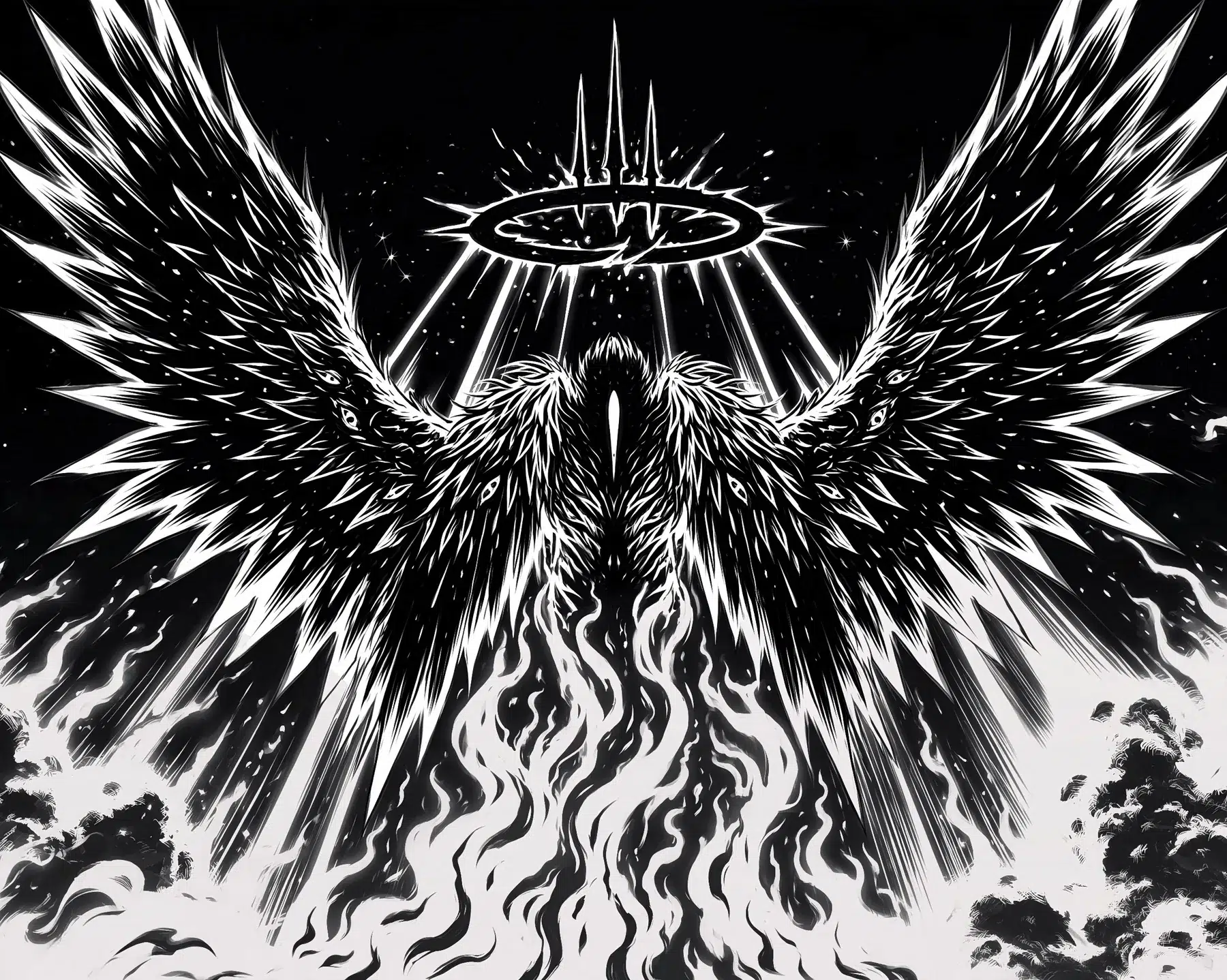
For the guide on Agares, including his own crocodile, his own languages, and how the old catalogs differ on what he rides, start at the Agares post.
777 has a connection from Crowley’s side too. It assigns the Goetic demons to the decans by day and night in a separate run of columns. Agares is in the column titled “Goetic Demons of Decans by Day (Succedent),” next to the image text “Old man, riding a crocodile and carrying a goshawk.” That’s the same old man we met in the Agares guide, on a table that also holds the Shem angels. He sits on row 15 there, the row 777 numbers for Aries, with Bael and Vassago in the neighboring columns. How that row lines up against Jeliel’s Leo slot is a puzzle I haven’t solved from my scan, so I’ll leave it as a note for anyone who wants to dig.
Jeliel Angel FAQs
Who is Jeliel in the Shem HaMephorash?
Jeliel is the second of the 72 angels of the Shem HaMephorash, the names derived from the 72 letters of Exodus 14:19, 20, and 21. He belongs to the Seraphim, the first choir of eight, and in the French tradition he is the angel of the days around March 26 to 30. His Hebrew root is ילי.
What does the Jeliel angel do?
In Lenain’s catalog he puts down mob unrest, helps you win against people who attack you unjustly, rules over kings and princes, and restores peace between spouses and keeps marital fidelity. Modern practitioners mostly call on him, usually as Yeliel, for love, reconciliation, and an easier home life.
What does Jeliel mean?
Lenain’s French catalog gives the sense of a God who comes to help. The Golden Dawn gloss, using the spelling Yelauiel, is “Strength,” which matches the cry for help in his psalm verse.
Which Goetia spirit does Jeliel rule?
In the Rudd system, Jeliel is the Shem angel over Goetia spirit #2, Agares. You can read the other side of that pairing in our Agares guide.
When is Jeliel’s birth period?
The five-day window most modern sites print is March 26 to 30. Lenain’s own catalog instead names five days scattered through the year, and later sites shift those “days of regency” again. The hour, in almost every table, is a twenty-minute window a little after midnight, 12:20 to 12:40 a.m.
How do you work with or invoke Jeliel?
The oldest instruction I can source is Lenain’s: say the request with the angel’s name and recite his psalm verse, in the favorable hour. Modern practice adds a candle, incense, and sometimes a stone, plus, in the Gallery of Magick tradition, an eleven-day petition. The tables do not agree on colors or incense, and I laid those disagreements out above.
Next and Previous
Previous: #1 Vehuiah, already on the site.
Next: #3 Sitael is coming. Lenain gives him “God, the hope of all creatures,” and says you invoke him against adversity, which is a good next door to open after a riot-calmer.
See the full series list in the 72 Shem HaMephorash angels article. This post is part of the Shem Angel Entity Guide.
If Jeliel has authority over the duke on the other face of his seal, what do you think it means that his own name is spelled out of a verse about an angel standing between two armies?
Follow and Support
Follow on X: https://x.com/CrypticChrncles
Patreon: https://www.patreon.com/c/crypticchronicles
BUY MERCH: https://crypticchronicles.com/cryptic-chronicles/categories/shop/
👻 Explore spirit boxes, EMF detectors, haunted collectibles and Aztec death whistles at US Ghost Adventures, and support the show: https://tidd.ly/3UyP4yK
Affiliate disclosure: Cryptic Chronicles may earn a commission from qualifying purchases at no additional cost to you.
Sources
- Tim Hacker, “Shem HaMephorash Angels: The 72 Names Hidden in Three Red Sea Verses”
- Exodus 14:19-21, Hebrew text and translation, Sefaria; Exodus 23:21, Sefaria; Psalm 22, Sefaria; Isaiah 6, Sefaria; Talmud Bavli, Sanhedrin 38b, Sefaria
- S. L. MacGregor Mathers (attributed), Golden Dawn lecture “Shem HaMephorash,” Thelemagick Library transcription (letter method, Yelauiel entry, “Strength,” Psalm 22:20, the -YH and -AL endings, nine choirs)
- William S. Burkle, “Seventy-Two Angels of the Shemhamphorash: Their Derivation, Correspondences, and Invocation,” Societas Rosicruciana in Civitatibus Foederatis, Louisville, Kentucky, November 6, 2015 (PDF). Source for the English translation of Lenain’s Jeliel entry and for Table 5 (Strife: Vehuaiah, Jeliel)
- Lazare Républicain Lenain, La Science Cabalistique (Amiens, 1823); background from the French Wikipedia article on Lenain. The original French text was not available to me
- Aleister Crowley, 777 Revised (Neptune Press reprint, 1955; Celephais Press e-text, 2003), footnote to Cols. CXXIX–CXXXII; Cols. CLV–CLXVI, Goetic demons of the decans; archive.org identifier Liber777Revised (https://archive.org/details/Liber777Revised)
- “Jelial,” Llewellyn Encyclopedia of Angels entry, citing Richard Webster, Praying with Angels (alternate spelling; love and passion in existing relationships)
- Stephen Skinner and David Rankine, eds., The Goetia of Dr Rudd (Golden Hoard, 2007), as cited on Wikipedia, “Shem HaMephorash” (table of Reuchlin’s angels, with Rudd’s demon and verse: #2, Jelial, Seraphim, Agares, Psalm 22:19) and in the Shem article’s table
- S. L. MacGregor Mathers and Aleister Crowley, The Book of the Goetia of Solomon the King (1904), magic circle ladder (Kether / Metatron / Chaioth Ha-Qadesh; Geburah / Kamael / Seraphim), via Joseph H. Peterson’s notes
- “Metatron,” Wikipedia (Sanhedrin 38b and Exodus 23:21)
- Astroya, “Jeliel, Ange Gardien du 26 au 30 Mars” (modern French birthday-angel chart: dates, hours, Metatron / Kether, Aries 5–10°)
- Evozen, “L’ange gardien Jeliel et ses pouvoirs” (modern French chart: wings, candle and angel colors, mirror hour, daily window)
- Bene Bellwen, “72 Shem Angels Reference Handout” (Ace of Wands / Aries 6–10°; “Strength”; “artful diplomacy”)
- “72 Shem Ha-Mephorash Angels,” Contemplation.info
- Damon Brand, The 72 Angels of Magick (Gallery of Magick), and Gordon Winterfield, Demons of Magick (Agares conjuration, Shem angel Yeliel), seen only as search snippets
- Brave-Movie-1028, “Shem ritual- result but screwed it up and need guidance,”, r/AngelolatryPractices, February 2026
- HotThanks2630, comment in “Who’s the best angel to work with to manifest a…”, r/AngelolatryPractices, August 13, 2026
- Damon Brand, “How to Find an Angel,” Gallery of Magick blog (https://galleryofmagick.com/2015/08/11/how-to-find-an-angel/), and “The Missing Magick” (https://galleryofmagick.com/2019/01/01/the-missing-magick/) (eleven-day method described in public posts)
- Angelorum, “2 Jeliel — Angel of Relationships” (https://angelorum.co/shem-hamephorash/jeliel-2-of-wands/) (mantra Yoh-Lah-Yoh, correspondences, three-angel system, Two of Wands)
- Astrofame / Astrocenter, “Jeliel, the Guardian Angel of Faithful and Fertile Love” (https://my.astrofame.com/clairvoyance/article/jeliel-guardian-angel), updated July 7, 2026 (prayer, candle, incense, stones, days of regency)
- Symbolikon, “JELIEL Angel Symbol” (https://symbolikon.com/downloads/jeliel-angel/) (March 26–30, fire, Aries 6–10°, qualities and defects, a third set of regency dates)
- “Angel Jeliel,” Over Hell, Under Heaven (http://macaronisupreme.weebly.com/angel-jeliel.html) (Seraphim, Metatron, Neptune; traits of people born March 26–30)
- HotThanks2630, comment in “New Love Success Stories?” (https://www.reddit.com/r/GalleryOfMagick/comments/1wawyzp/new_love_success_stories/), r/GalleryOfMagick, September 10, 2026 (eleven-day ritual in March, “angel lights”)

0 Comments